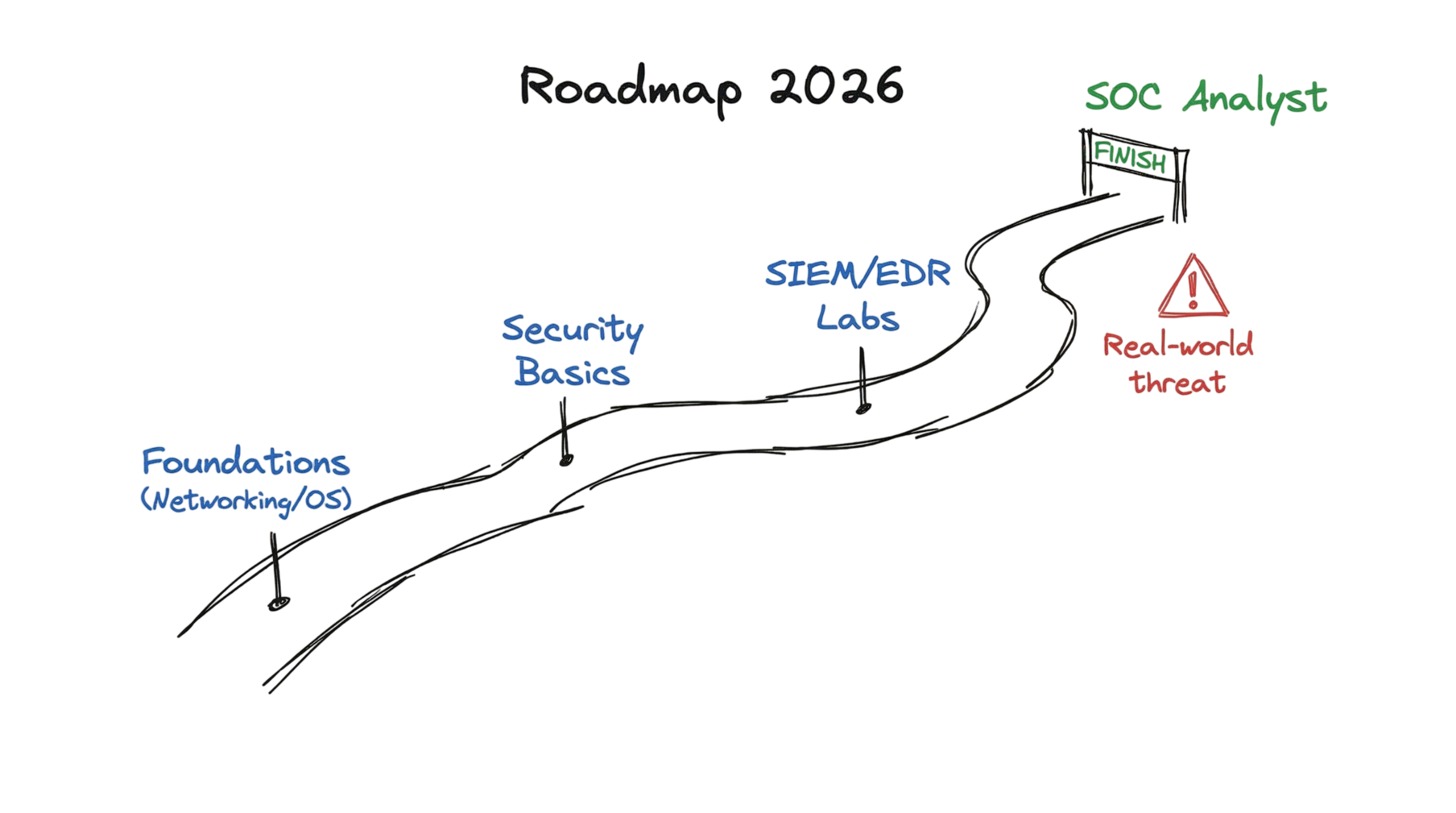
If you’re looking to start a career in cybersecurity, becoming a SOC Analyst is one of the best paths in 2026. As organizations move toward cloud computing, Zero Trust security, and AI-powered threat detection, the demand for skilled security professionals continues to grow.
This SOC Analyst Roadmap is designed to take you from the fundamentals of cybersecurity to your first role in a Security Operations Center (SOC). Whether you’re switching careers, graduating from college, or exploring SOC Analyst for Beginners resources, this guide explains the skills, tools, certifications, and practical knowledge required to succeed.
What Is a SOC Analyst?
A SOC Analyst is a cybersecurity professional responsible for continuously monitoring an organization’s security infrastructure, detecting suspicious activity, investigating security alerts, and responding to cyber threats before they impact business operations.
The primary SOC Analyst Roles and Responsibilities include monitoring security events, analyzing logs, validating alerts, investigating incidents, escalating complex threats, and helping protect enterprise systems against ransomware, phishing attacks, insider threats, and advanced persistent threats (APTs).
Developing strong SOC Analyst Skills such as log analysis, networking, Windows security, cloud security, SIEM monitoring, and incident response enables analysts to identify malicious behavior quickly and minimize the impact of security incidents.
The Purpose of a Security Operations Center (SOC)
A Security Operations Center (SOC) is the central hub where cybersecurity teams continuously monitor, detect, investigate, and respond to security incidents across the organization’s infrastructure.
Modern SOC teams monitor:
- Employee laptops and desktops
- Servers
- Cloud platforms (AWS, Azure, Google Cloud)
- Identity Providers
- Firewalls
- Endpoint Detection and Response (EDR)
- Email security gateways
- VPN gateways
- SaaS applications
- Network devices
The primary objective is to reduce the Mean Time to Detect (MTTD) and Mean Time to Respond (MTTR), limiting the amount of time attackers remain undetected inside the environment.
Understanding how a SOC operates is one of the first milestones in every SOC Analyst Roadmap because it introduces analysts to real-world security monitoring and incident response.
Understanding the SOC Tiers
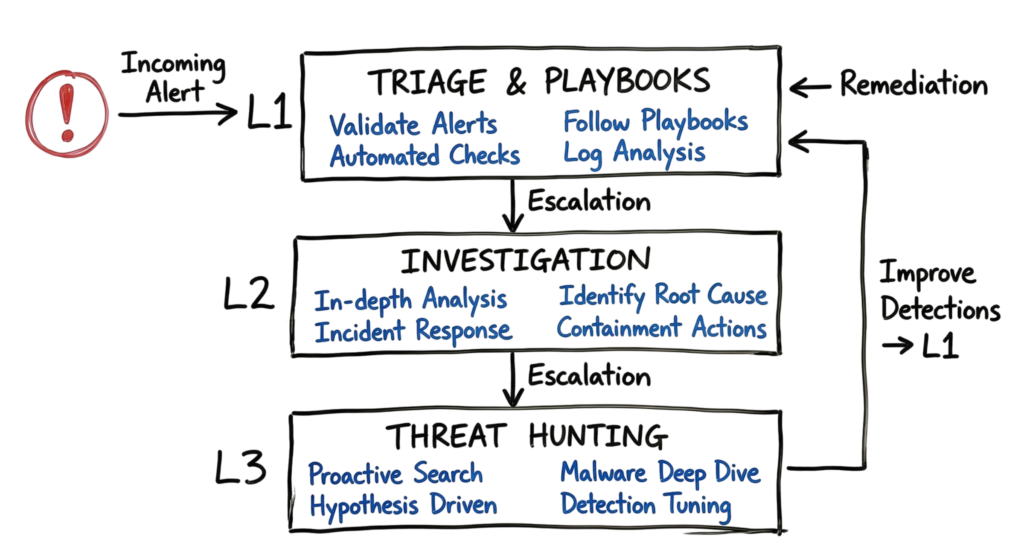
Most organizations divide their Security Operations Center into multiple responsibility levels based on experience and technical expertise.
Typically, the structure includes:
- SOC Analyst L1 for alert monitoring and initial triage.
- SOC Analyst L2 for incident investigation and threat analysis.
- SOC Analyst L3 for advanced threat hunting, malware analysis, and complex incident response.
In real enterprise environments, however, these responsibilities often overlap. During major security incidents, staffing shortages, or high alert volumes, an L1 analyst may investigate incidents normally handled by L2 analysts, while senior analysts assist with multiple investigations simultaneously.
Tier 1 (L1) – Alert Triage
The SOC Analyst at Level 1 (L1) serves as the first line of defense in a Security Operations Center. One of the primary SOC Analyst Roles and Responsibilities at this level is continuously monitoring SIEM dashboards, reviewing security alerts, and determining whether an event represents a genuine security incident.
L1 analysts classify alerts as:
- True Positive – A legitimate security threat that requires investigation.
- False Positive – A benign event incorrectly identified as malicious.
When an alert is confirmed, the analyst follows predefined incident response playbooks that provide step-by-step procedures for investigating, documenting, containing, or escalating the incident. Learning alert validation, log analysis, and ticket management forms the foundation of essential SOC Analyst Skills for beginners entering cybersecurity.
Tier 2 (L2) – Incident Response
When an incident requires deeper investigation, it is escalated to a Level 2 SOC Analyst.
L2 analysts perform comprehensive investigations to determine:
- How the attack started
- Which systems are affected
- Whether lateral movement occurred
- What data may have been accessed
- How the attacker can be contained
At this level, SOC Analyst Roles and Responsibilities include malware analysis, threat intelligence correlation, endpoint investigation, user behavior analysis, and coordinating with IT teams during incident response. Developing these advanced SOC Analyst Skills prepares professionals for more specialized cybersecurity roles.
Tier 3 (L3) – Threat Hunting and Digital Forensics
A Level 3 SOC Analyst focuses on proactive security rather than waiting for alerts to appear.
Instead of reacting to incidents, L3 analysts actively search for hidden attackers, identify advanced persistent threats (APTs), perform digital forensics, reverse engineer malware, and improve detection capabilities across the organization.
Advanced SOC Analyst Skills at this level include:
- Threat Hunting
- Digital Forensics
- Malware Analysis
- Detection Engineering
- Threat Intelligence
- MITRE ATT&CK Mapping
- Incident Response Leadership
This stage represents one of the final milestones in a typical SOC Analyst Roadmap before progressing into specialized cybersecurity positions.
Who Hires SOC Analysts?
Today, almost every industry handling sensitive information requires skilled SOC Analysts to monitor, detect, and respond to cyber threats.
Major employers include:
Banking and Financial Services
Protecting online banking platforms, payment systems, ATMs, financial transactions, and customer information.
Healthcare
Monitoring hospital networks, electronic medical records, healthcare applications, and patient data.
Technology and SaaS
Protecting cloud infrastructure, APIs, software platforms, DevSecOps pipelines, and customer environments.
Government and Defense
Defending national infrastructure, critical government systems, intelligence platforms, and classified information.
Organizations of all sizes continue expanding their Security Operations Centers, making this one of the strongest long-term cybersecurity career options.
Market Demand
Global and India-Specific Demand
Demand for skilled SOC Analysts continues to increase as organizations strengthen their cybersecurity programs against ransomware, cloud attacks, insider threats, and identity-based attacks.
Countries including the United States, Canada, the United Kingdom, Australia, Germany, Singapore, and the United Arab Emirates continue hiring experienced SOC professionals.
In India, major cybersecurity hiring hubs include:
- Bengaluru
- Hyderabad
- Pune
- Chennai
- Mumbai
- Gurugram
- Noida
Many Managed Security Service Providers (MSSPs), multinational companies, cloud providers, and financial institutions actively recruit candidates following a structured SOC Analyst Roadmap, making it an excellent career choice for individuals beginning their cybersecurity journey.
Salary Range (Approximate for 2026)
| Level | Experience | India (LPA) | Global (USD) |
|---|---|---|---|
| SOC Analyst L1 | 0 to 2 Years | ₹4 to ₹8 LPA | $60K to $85K |
| SOC Analyst L2 | 2 to 5 Years | ₹9 to ₹15 LPA | $90K to $120K |
| SOC Analyst L3 | 5+ Years | ₹18 to ₹30+ LPA | $130K to $170K+ |
Actual salaries vary depending on experience, certifications, technical expertise, employer, and geographic location.
Future Outlook
The future of the SOC Analyst role is evolving rapidly as organizations adopt cloud computing, Zero Trust security, artificial intelligence, and automated threat detection.
Many people believe AI will replace security analysts. In reality, AI is becoming a productivity tool that helps analysts investigate incidents faster by automating repetitive tasks such as alert triage, log correlation, threat enrichment, and report generation.
As organizations continue implementing identity-centric security, future SOC Analyst Skills will increasingly focus on cloud security, Identity and Access Management (IAM), Endpoint Detection and Response (EDR), threat hunting, detection engineering, and AI-assisted investigations.
3. How It Works in Real Life
A Typical Day
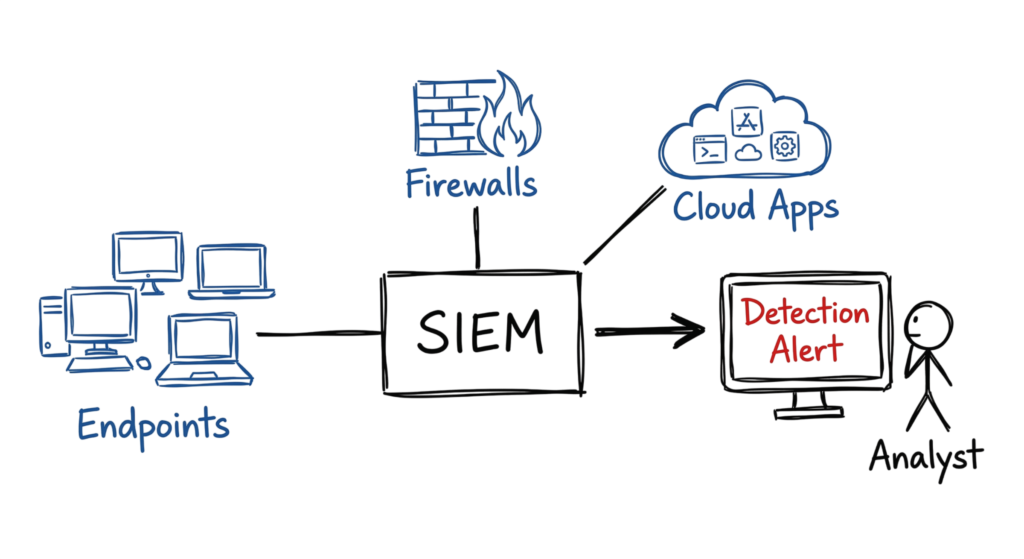
Your shift starts with a handoff. The previous analyst tells you about active investigations. You then log into your SIEM, which is the dashboard that shows all alerts. You might spend several hours investigating a suspicious login alert. You will also attend team meetings to discuss new phishing trends and document your findings in a system like ServiceNow.
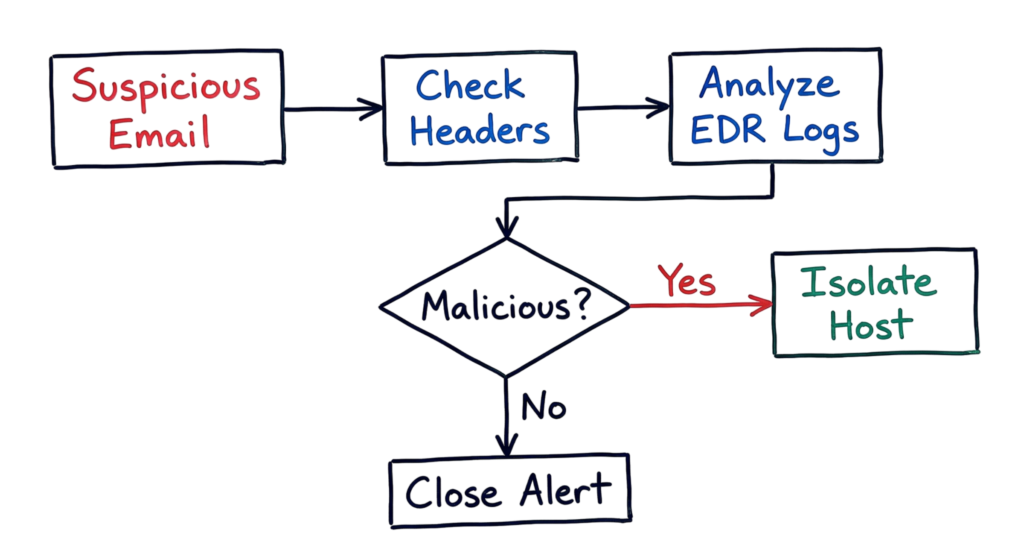
Real-World Incident Scenario: The Phishing Alert
- Alert: An employee reported a suspicious email.
- Triage (L1): You check the email headers. You find the sender address is fake. You see the user clicked a link.
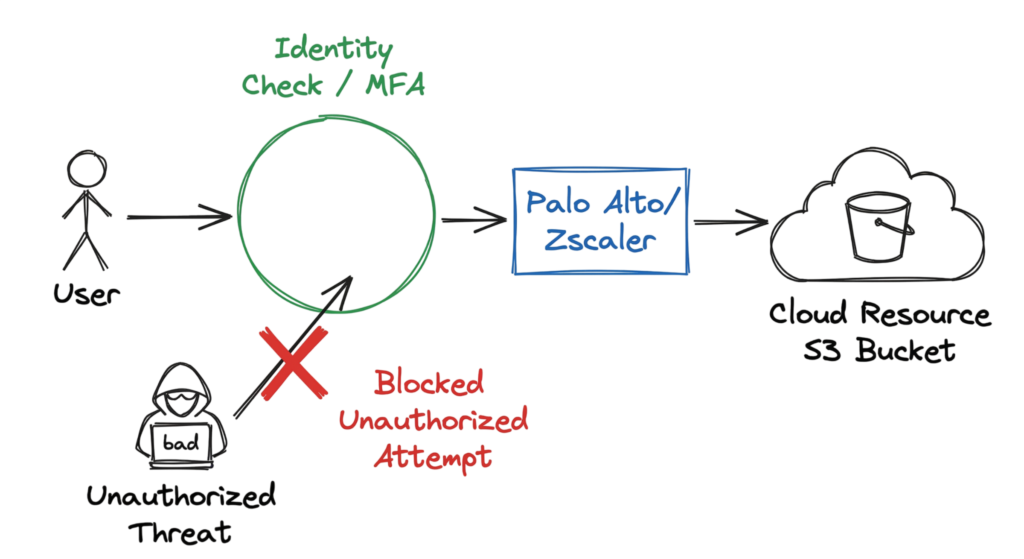
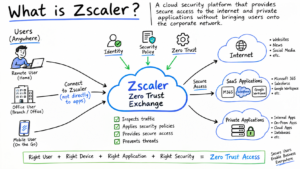
- Investigation (L2): Now here’s where it gets interesting. You use your EDR tool to check the laptop processes. You find a hidden script trying to steal passwords. We had a client running Palo Alto NGFWs alongside Zscaler ZIA, and their split tunnel config was sending DNS queries outside the tunnel. This caused the script to bypass some local filters.
- Action: You isolate the laptop from the network via the EDR console and force a password reset.
- Documentation: You write a report so the company can block the attacker domain for everyone else.
Tools of the Trade
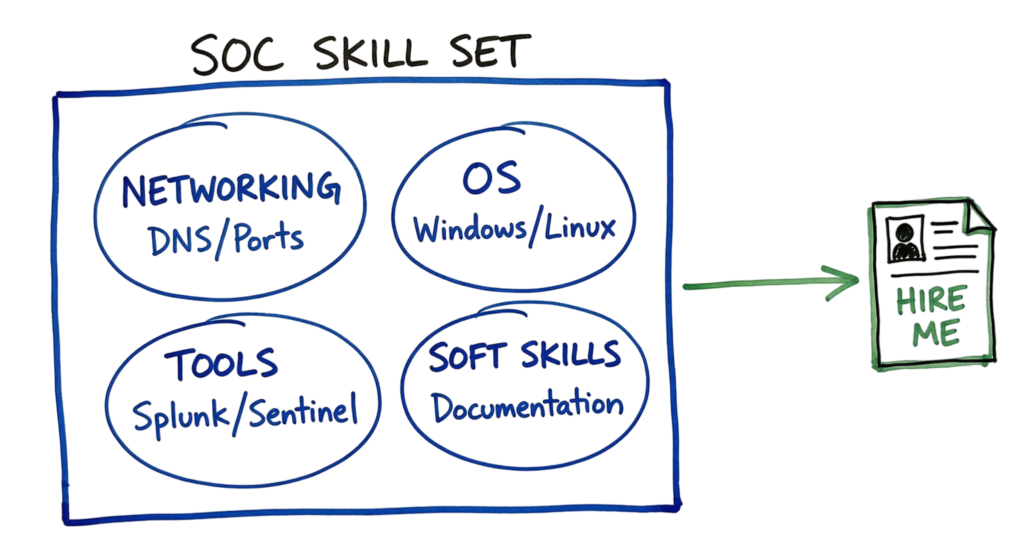
- SIEM (Security Information and Event Management): Splunk, Microsoft Sentinel.
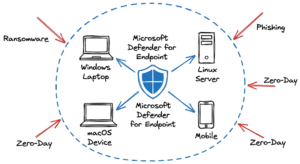
- EDR (Endpoint Detection and Response): CrowdStrike, Microsoft Defender for Endpoint.
- Threat Intel: VirusTotal, AlienVault OTX.
4. Skills Required
Technical Skills
- Networking: You must understand how data moves. This includes the OSI model, TCP/IP, DNS, and common ports like 443 for web traffic.
- Operating Systems: You need to be comfortable with the Windows Event Viewer and the Linux Command Line. You should know how to find logs in /var/log.
- Log Analysis: You must read raw data and spot an anomaly. I remember a 3 AM call where I realized a printer alert was actually a lateral movement attempt because I recognized the specific event ID sequence.
Security-Specific Skills
- Threat Detection: You should know common techniques used by hackers. These are often mapped to the MITRE ATT&CK Framework.
- Malware Analysis: You need a basic understanding of how viruses behave when they infect a system.
Soft Skills
- Communication: You must explain a technical hack to a manager who is not technical.
- Documentation: If you do not document it, the investigation did not happen.
- Decision-Making: You must stay calm when you see a server being hacked.
5. Certifications
Focus on these certifications based on your current level. Do not try to get them all at once.
- CompTIA Security+: This is for beginners. It costs about $400. It covers the basic vocabulary.
- Blue Team Level 1 (BTL1): This is an intermediate cert. It costs about $500. It is a 100% practical exam where you investigate an incident in a lab.
- Microsoft SC-200: This is for people using Microsoft Sentinel and Defender. It is very practical for cloud companies.
- Certified Ethical Hacker (CEH): This teaches the attacker mindset. It costs about $1200.
- CompTIA CySA+: This focuses on defense and analysis. It costs about $400.
- GIAC Certified Incident Handler (GCIH): This is an advanced cert. It costs over $2000 and is usually paid for by an employer.
- CHFI (Computer Hacking Forensic Investigator): This is for people who want to specialize in forensics.
6. Who Can Learn This?
Educational Background
A degree in Computer Science is helpful but not mandatory in 2026. Many companies now prioritize skills over degrees.
Prior Experience
- IT Support: This is an excellent background. You already understand how users think.
- System Admin: You know the normal state of a server. This makes it easy to spot the abnormal.
Can Non-IT People Transition?
Yes. But you cannot skip the foundations. If you come from a non tech background, you must spend several months mastering IT basics before touching security.
7. Best Learning Roadmap (Step-by-Step)
- Phase 1 Foundations: Spend 2 months on networking and operating systems. Learn the Linux and Windows command line.
- Phase 2 Security Fundamentals: Spend 1 month studying for the CompTIA Security+. Learn about encryption and firewalls.
- Phase 3 SOC Tools and SIEM: Spend 2 months on hands-on tools. Go to the Splunk website and take their free fundamentals course.
- Phase 4 Get Certified: Pass the Security+ for your resume or the BTL1 for your skills.
- Phase 5 Build a Home Lab: Install VirtualBox. Set up Windows and Linux VMs. Install Sysmon to generate logs.
- Phase 6 Apply for Jobs: List the specific tools you used in your lab on your resume. Connect with recruiters on LinkedIn.
- Phase 7 Level Up: Once you have experience, choose a path like Threat Hunting or Digital Forensics.
8. What Is Required (Resources)
Free Platforms
- TryHackMe: Follow the SOC Level 1 path.
- LetsDefend: This provides a simulator that looks like a real SOC dashboard.
- Cyberdefenders: This site focuses on blue team challenges.
Paid Courses
- TCM Security: Their SOC courses are affordable and high quality.
- SANS Institute: This is high quality training but very expensive.
YouTube Channels and Communities
- John Hammond: Excellent for seeing how real hacks look.
- Cyberwox Academy: Focused on SOC Analyst roadmaps and labs.
Total Time Estimates
If you have an IT background, it takes 3 to 6 months. If you are a total beginner, it takes 8 to 12 months of consistent study.
9. Conclusion
Choosing a career as a SOC Analyst is one of the smartest decisions you can make in 2026. As cyber threats continue to evolve and organizations adopt cloud computing, Zero Trust security, and artificial intelligence, the demand for skilled security professionals continues to grow across every industry. Every organization that handles sensitive data needs people who can detect threats, investigate incidents, and respond quickly to cyberattacks.
Following a structured SOC Analyst Roadmap helps you build knowledge step by step instead of trying to learn everything at once. Start with networking, operating systems, and cybersecurity fundamentals. Then progress to SIEM platforms, Endpoint Detection and Response (EDR), threat intelligence, incident response, cloud security, and scripting. Consistent learning and hands-on practice are far more valuable than memorizing theory alone.
Developing strong SOC Analyst Skills is what separates successful candidates from the competition. Employers want professionals who understand log analysis, Windows Event Logs, Linux, networking, SIEM tools such as Microsoft Sentinel or Splunk, MITRE ATT&CK, and basic scripting with Python or PowerShell. These practical skills enable you to investigate alerts confidently and contribute to a real Security Operations Center from day one.
Understanding SOC Analyst Roles and Responsibilities is equally important. Whether you begin as an L1 analyst triaging alerts, advance to L2 investigating security incidents, or become an L3 threat hunter performing digital forensics, every stage of your career builds valuable experience. The knowledge you gain in a SOC also creates opportunities to move into cloud security, threat hunting, digital forensics, incident response, detection engineering, security architecture, or cybersecurity consulting.
If you are a SOC Analyst for Beginners, don’t rely only on online courses or tutorial videos. Build your own virtual lab, install Windows and Linux machines, generate attack traffic safely, collect logs using a SIEM, and investigate your own security alerts. Practical experience gives you stories to discuss during interviews and demonstrates that you can apply cybersecurity concepts in real environments.
Artificial intelligence is changing cybersecurity, but it is not replacing SOC Analysts. Instead, AI is automating repetitive tasks such as alert triage, log correlation, and incident summarization, allowing analysts to focus on complex investigations, threat hunting, and decision-making. Human judgment, analytical thinking, and investigative skills remain essential for handling sophisticated cyber threats.
The cybersecurity industry rewards consistency. Spend time every week improving your SOC Analyst Skills, studying attacker techniques, practicing investigations, and documenting your projects. Every lab you build, every alert you investigate, and every detection rule you create moves you closer to your first cybersecurity role.
Stay curious, keep learning, and continue building hands-on experience. With dedication and a clear SOC Analyst Roadmap, your first successful security investigation and your first SOC Analyst job may be much closer than you think.
Related Articles
- What Is Cybersecurity and Why It Is Important Today
https://technaga.com/what-is-cybersecurity-and-why-it-is-important-today/ - Security Information and Event Management (SIEM): Complete Guide 2026
https://technaga.com/security-information-and-event-management-siem-guide-2026/ - Essential Endpoint Security Guide 2026 for Every Organization
https://technaga.com/endpoint-security-2026-guide/ - Identity and Access Management (IAM): Complete Guide 2026
https://technaga.com/identity-and-access-management-cloud-security-2026/ - Multi-Factor Authentication (MFA): Complete Guide 2026
https://technaga.com/multi-factor-authentication-mfa-guide-2026/ - Cloud Security Basics 2026: Complete Beginner Guide
https://technaga.com/cloud-security-basics-2026/ - Initial Access in Cybersecurity: Top Attack Vectors You Must Know
https://technaga.com/initial-access-cybersecurity-attack-vectors-2026/ - Top 10 Cybersecurity Best Practices for 2026
https://technaga.com/top-10-cybersecurity-best-practices-2026/ - Network Segmentation: Best Practices to Stop Lateral Movement
https://technaga.com/network-segmentation-best-practices-2026/ - Zero Trust Security: Complete Implementation Guide 2026
https://technaga.com/zero-trust-security-2026-guide/
External References
- MITRE ATT&CK Framework
https://attack.mitre.org/ - MITRE D3FEND
https://d3fend.mitre.org/ - NIST Cybersecurity Framework (CSF 2.0)
https://www.nist.gov/cyberframework - CISA Cyber Career Pathways Tool
https://niccs.cisa.gov/workforce-development/cyber-career-pathways-tool - Microsoft Learn – Microsoft Sentinel
https://learn.microsoft.com/azure/sentinel/ - Splunk Education and Training
https://www.splunk.com/en_us/training.html - Microsoft Defender XDR Documentation
https://learn.microsoft.com/microsoft-365/security/defender/ - OWASP Top 10
https://owasp.org/www-project-top-ten/ - Sigma Detection Rules
https://sigmahq.io/ - YARA Documentation
https://virustotal.github.io/yara/ - Blue Team Labs Online
https://blueteamlabs.online/ - LetsDefend
https://letsdefend.io/ - CyberDefenders
https://cyberdefenders.org/ - Security Blue Team
https://securityblue.team/
1 thought on “Best SOC Analyst Roadmap 2026: Complete Guide to L1, L2, L3 Roles, Skills, and Tools”