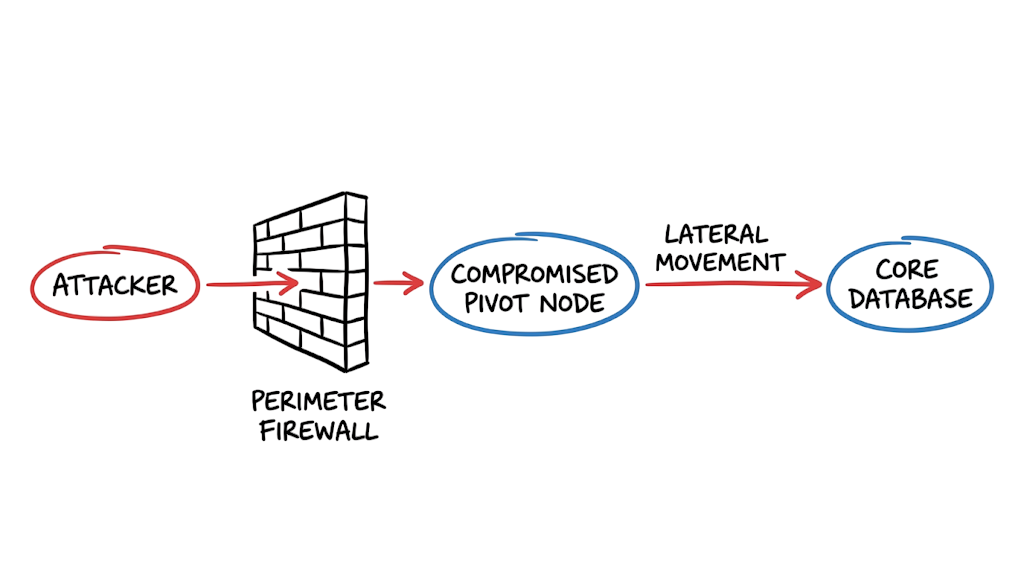
You are sitting in the SOC when an alert triggers: a suspicious RDP connection originating from a marketing intern’s laptop heading straight for a legacy core database server. The intern is not a database admin, and their laptop has no business talking to that specific subnet.
What you are witnessing is not a misconfiguration. It is a compromised host being used as a staging ground. The initial breach, usually through phishing or a vulnerable edge service, is rarely what destroys a company. Understanding how attackers gain their first foothold is essential, which is why security professionals should first review our guide on Initial Access in Cybersecurity: Top 3 Attack Vectors You Must Know (2026).
The real damage happens when the threat actor uses that first foothold to move deeper into the environment and access critical systems. This process is known as network pivoting and is one of the most dangerous stages of a cyberattack.
Understanding the Network Pivoting Techniques Used by Attackers is critical for anyone working in cybersecurity defense. It is the exact mechanism that can turn a single infected workstation into a complete domain compromise. If you are new to the field, our article on What Is Cybersecurity and Why It Is Important Today provides the foundation needed to understand why these attacks are so effective.
By the end of this guide, you will understand how attackers route their traffic through hidden paths within a network and how defenders can stop them before they reach sensitive assets. Many attackers use social engineering and online fraud campaigns to gain their initial access, making it worthwhile to review 15 Common Online Scams in India: Complete Guide 2026 before exploring advanced pivoting techniques.
For additional research, security teams can reference the MITRE ATT&CK framework’s lateral movement techniques and CISA guidance on network segmentation and lateral movement defense.
What Are Network Pivoting Techniques Used by Attackers?
Network pivoting is a post-exploitation tactic where an attacker uses a compromised machine to interact with other systems on the same internal network that they normally could not reach from the outside. Think of it as planting a malicious proxy server deep inside your corporate perimeter.
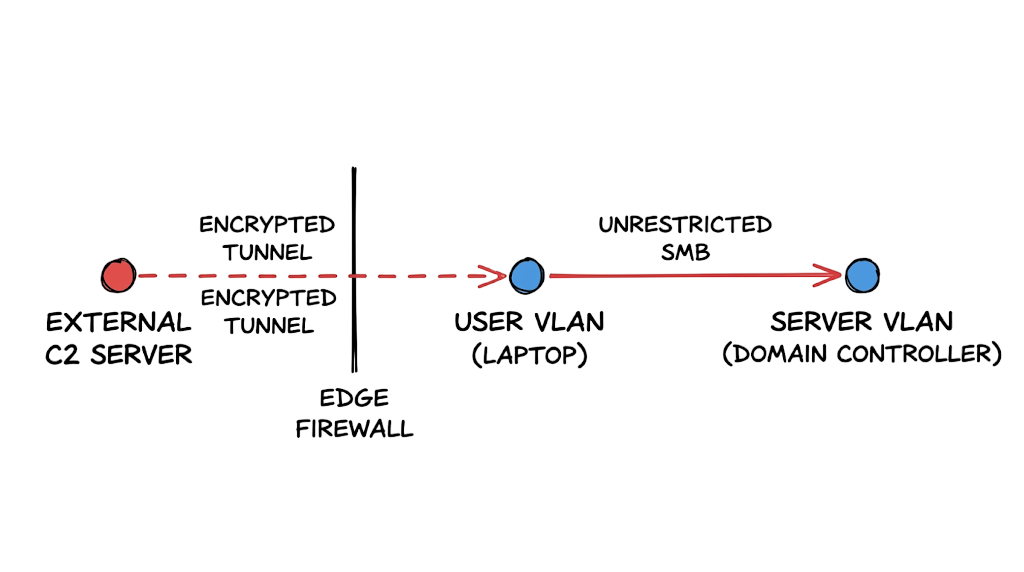
The attacker’s external command-and-control server connects to the compromised laptop, and that laptop passes the malicious traffic along to the internal servers. It leverages the inherent trust that internal devices often have with one another. If you are new to these concepts, brushing up with the Complete Network Security Basics Guide for Beginners 2026 will help clarify how internal trust boundaries are drawn.
How Network Pivoting Techniques Used by Attackers Work
To understand the mechanics, you have to look at how internal networks handle traffic routing. An attacker sitting on the public internet cannot send a packet directly to an internal IP address (like 10.0.5.50) because the perimeter router will drop it. However, if the attacker compromises a user’s laptop that has a valid internal IP address, they can deploy a software tunnel on that laptop.
The attacker sends encapsulated packets to the laptop, the laptop unpacks them, and forwards them to the target server. Because the server sees the traffic coming from a trusted internal IP, it allows the connection. This internal network pivoting relies entirely on exploiting excessive east-west permissions.
Understanding the distinction between gaining access and moving through the environment is crucial for defense. Here is a comparison to clarify the mechanics:
| Feature | Pivoting | Lateral Movement |
| Primary Goal | Routing traffic through a host to bypass network restrictions. | Actively compromising new systems to expand access. |
| Action Type | Network communication / Proxying. | Exploitation / Credential abuse. |
| Tool Examples | Chisel, SSH Tunnels, SOCKS proxies, Ligolo-ng. | PsExec, WMI, Pass-the-Hash, RDP. |
| Outcome | Creates a bridge or path to previously hidden networks. | Results in code execution on a newly targeted machine. |
This process is essentially a network segmentation bypass. The firewall at the edge is completely blind to this because it only sees standard HTTPS traffic flowing out to the internet, while the real attack is happening laterally. For a deeper dive into restricting these paths, read our Network Segmentation Explained with Real-World Example guide. Also, understanding the MITRE ATT&CK Lateral Movement Techniques provides excellent context on how pivoting fits into the broader attack framework.
Technical Flow of Network Pivoting Techniques Used by Attackers
The Network Pivoting Techniques Used by Attackers Architecture
<img src="/wp-content/uploads/network-pivoting-architecture-diagram.jpg" alt="Network Pivoting Techniques Used by Attackers flowchart" title="Network Pivoting Techniques Used by Attackers Enterprise Flow" data-alt-text="Diagram showing Network Pivoting Techniques Used by Attackers bypassing firewalls">
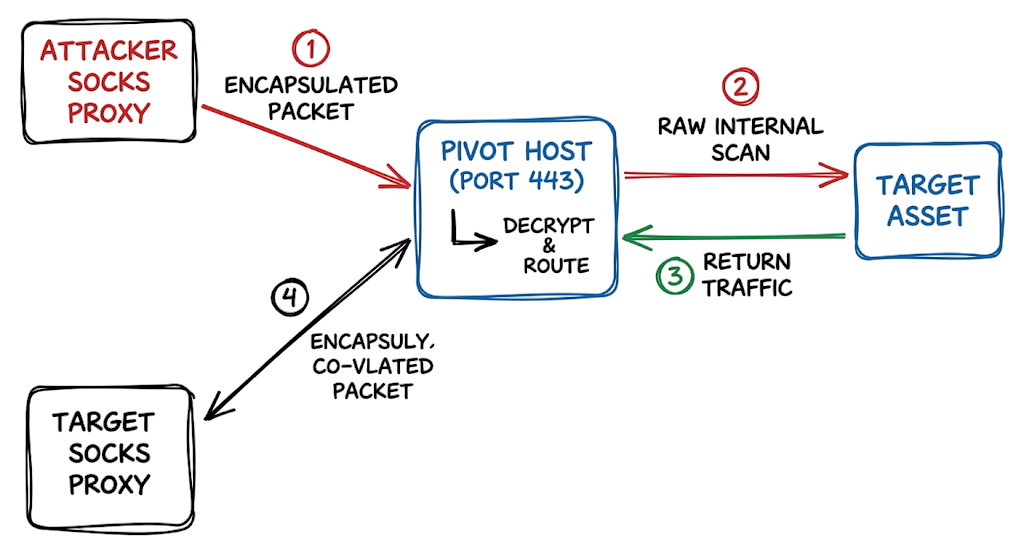
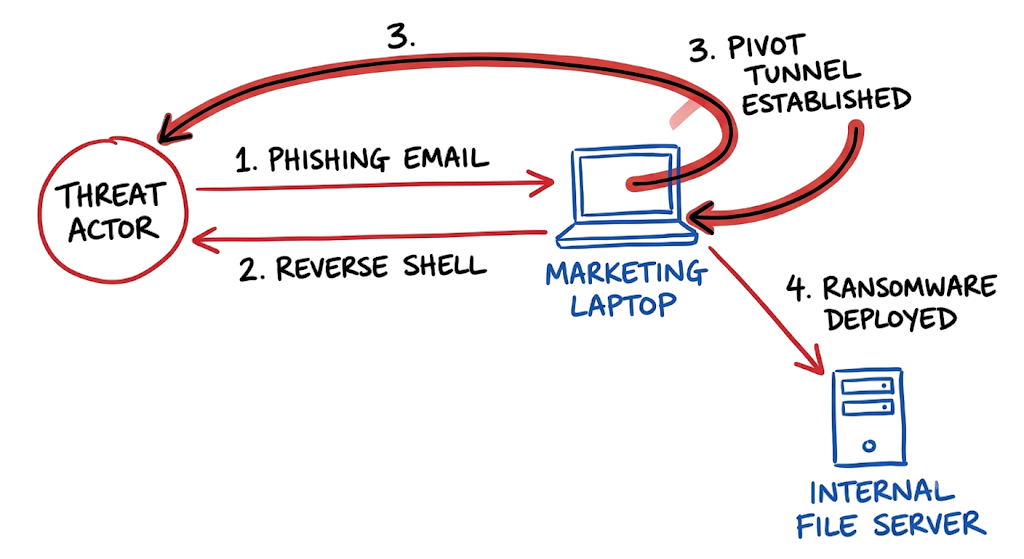
The data flow of a pivot starts at the attacker’s external machine, usually a virtual private server hosting a Command and Control (C2) framework. The attacker establishes an encrypted tunnel over a standard port—usually 443—to the compromised internal host. To understand how data traverses these paths, reviewing the OSI Model Guide: 7 Powerful Layers Every Engineer Must Know is highly recommended.
Once the tunnel is established, the compromised workstation listens for instructions. The attacker wraps their scanning or exploit traffic inside this tunnel. When the traffic hits the compromised workstation, the local agent strips away the outer encryption and forwards the raw request (like an SMB authentication attempt or an Nmap scan) to the internal Domain Controller or File Server. The responses follow the exact same path in reverse.
<iframe width="560" height="315" src="https://www.youtube.com/embed/pivoting-explainer-video" title="Understanding Network Pivoting" frameborder="0" allow="accelerometer; autoplay; clipboard-write; encrypted-media; gyroscope; picture-in-picture" allowfullscreen></iframe>
Understanding your internal addressing is the first step in mapping these flows. If you are rusty on routing, check out the IP Address: 12 Essential Concepts Ultimate Guide 2026 and What is Firewall in Cybersecurity? Types, Examples and How it Works in 2026.
Key Components of Network Pivoting Techniques Used by Attackers
- Pivot Node: The initially compromised endpoint or server that acts as the physical bridge between the external attacker and the internal network.
- Encrypted Tunnel: The secure communication channel (such as SSH, TLS, or a custom C2 protocol) that hides the malicious traffic from perimeter inspection.
- Routing Agent: The lightweight software or built-in OS command dropped onto the pivot node to handle the redirection and forwarding of network packets.
- Stolen Credentials: The compromised authentication tokens or passwords harvested from the pivot node, strictly required to authenticate to the next internal target.
- Target Asset: The sensitive internal system, database, or domain controller that the attacker is ultimately trying to reach and compromise.
For those setting up their defensive labs, reviewing 10 Cybersecurity Tools for Beginners: Complete Guide 2026 and the Password Security Guide 2026: 10 Essential Tips will help you secure your own components.
Real-World Examples of Network Pivoting Techniques Used by Attackers
Let’s look at a raw execution log pulled directly from a compromised Windows server during an incident response engagement. The attacker gained access via a vulnerable web application and immediately executed the following command using native Windows binaries:
C:\Windows\System32\netsh.exe interface portproxy add v4tov4 listenaddress=0.0.0.0 listenport=8080 connectaddress=10.0.5.150 connectport=3389
This command tells the compromised server to listen on port 8080 and forward every single packet it receives directly to the internal Domain Controller (10.0.5.150) on port 3389 (RDP). The attacker is using the server as a literal proxy to access the Domain Controller. In real environments, it doesn’t work this cleanly.
A smart attacker won’t use unencrypted RDP over a native portproxy because the SOC will catch it instantly. Instead, they will wrap this connection inside a SOCKS proxy over an encrypted C2 channel. However, seeing native tools abused like this is a massive red flag. Understanding the protocol mechanics here requires a solid grasp of the 4 Secrets of the TCP IP Model for Security Analysts. For mobile-specific incident response, refer to Essential Steps: Hacked Android, iPhone Guide 2026.
Practical Implementation of Network Pivoting Techniques Used by Attackers
If you want to stop attackers from bouncing around your network, you need to implement strict east-west traffic controls. Follow these steps exactly to harden your environment. For foundational knowledge on endpoint protection during this process, review the Essential Endpoint Security Guide 2026 for Every Organization.
- Block workstation-to-workstation communication: You must deploy host-based firewalls via Group Policy or your MDM to explicitly deny inbound connections from other client subnets. Bob’s laptop in Accounting has absolutely no technical reason to initiate an SMB or RDP connection to Alice’s laptop in HR.
- Audit and restrict outbound proxy rules: Do not allow unrestricted outbound HTTP/HTTPS from your server subnets. Force all server traffic through a filtering proxy, and strictly allow-list only the specific API endpoints or update servers those machines actually require.
- Deploy deep packet inspection on internal boundaries: You cannot just rely on edge firewalls. You must place internal segmentation firewalls (ISFW) between your user subnets and your critical data center subnets to inspect traffic for tunneling signatures.
- Restrict service account interactive logons: You need to configure Active Directory to deny local and interactive logons for service accounts. If a service account designed to run a SQL database suddenly attempts an RDP session to a file server, the connection should be technically impossible.
- Alert on tunneling binary execution: You must update your Endpoint Detection and Response (EDR) platform to trigger high-severity alerts whenever known proxy tools like
chisel.exe,ngrok, orplink.exeare executed from user-writable directories like AppData or Temp. For a deeper understanding of threat detection, leverage the Microsoft Defender Threat Research portal. - Implement identity-based access controls: Stop relying solely on IP addresses for trust. You must require Multi-Factor Authentication for any administrative connection (SSH/RDP) to tier-zero assets, regardless of whether the connection originates from the internal network. Learn how to configure this properly in the Multi-Factor Authentication (MFA): Critical Guide to Secure Your Systems (2026).
Advantages and Limitations of Network Pivoting Techniques Used by Attackers
One of the primary advantages of Network Pivoting Techniques Used by Attackers is the ability to hide the attacker’s true origin during internal reconnaissance. When threat actors pivot through a compromised workstation and query a sensitive internal database, the database logs show the request coming from a trusted employee’s device rather than a malicious external IP address.
This makes Network Pivoting Techniques Used by Attackers highly effective at bypassing traditional security controls that rely on IP reputation and perimeter-based defenses. Once the perimeter has been breached, IP-based blocklists become far less effective because the malicious traffic appears to originate from legitimate internal systems.
By using Network Pivoting Techniques Used by Attackers, adversaries can safely map network segments, identify high-value assets, and locate crown-jewel data while remaining hidden within normal internal traffic patterns.dows.
However, pivoting is not without its severe limitations. It is inherently noisy and fragile. Every packet sent to the target has to pass through the pivot node. If the compromised host is an employee laptop, the entire operation dies the moment that employee closes their laptop lid or connects to a different Wi-Fi network. Furthermore, tunneling tools often generate highly anomalous network traffic patterns—like a single host suddenly maintaining a persistent, high-bandwidth outbound connection for days. A well-tuned SOC utilizing tools outlined in the Security Information and Event Management: Complete SIEM Guide 2026 will detect this beaconing behavior quickly.
Common Mistakes When Detecting Network Pivoting Techniques Used by Attackers
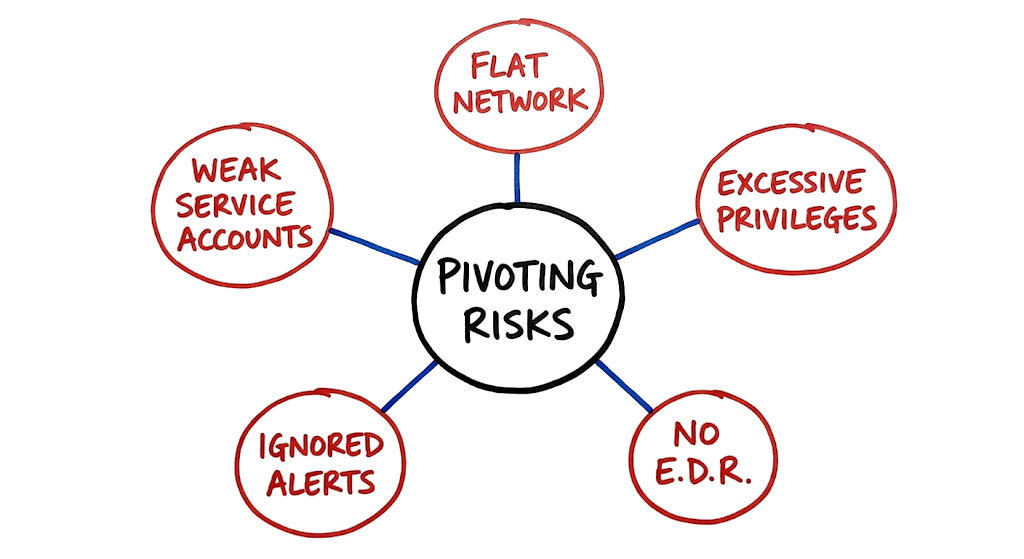
Most organizations operate under the dangerous assumption that a hard outer shell is enough to protect a soft internal network. They spend millions on next-generation edge firewalls but leave their internal VLANs completely flat and unmonitored, creating ideal conditions for Network Pivoting Techniques Used by Attackers.
This is where many security teams get caught off guard. They assume that because an employee is authenticated to the VPN, their device is trustworthy and should be granted broad access to corporate resources. In reality, compromised endpoints are frequently used in Network Pivoting Techniques Used by Attackers to move laterally across the network, access sensitive systems, and evade traditional perimeter-based security controls.
Without proper network segmentation, Zero Trust principles, and continuous monitoring, Network Pivoting Techniques Used by Attackers can transform a single infected workstation into a pathway to critical servers, databases, and domain controllers.
Another massive mistake is ignoring endpoint alerts regarding strange administrative tools. If your EDR flags ssh.exe executing with dynamic port forwarding flags (-D) on a marketing user’s machine, it is not a false positive. It is an active pivot. Dismissing these early warning signs allows attackers to entrench themselves. Configuration mistakes are rampant in the cloud as well; make sure to avoid the pitfalls listed in Cloud Misconfiguration: 10 Critical Errors Leading to Data Breaches in 2026. Furthermore, failing to spot initial credential theft often starts the whole chain—learn how to train your users with How to Identify Phishing Attacks in 2026 (Complete Guide).
Best Practices to Prevent Network Pivoting Techniques Used by Attackers
To defend against Network Pivoting Techniques Used by Attackers, organizations must adopt an “assume breach” mentality. The foundation of this approach is Zero Trust, which means never automatically trusting a device simply because it is located inside the corporate network or connected through a company VPN.
Many successful Network Pivoting Techniques Used by Attackers exploit excessive trust relationships between internal systems. To reduce this risk, implement micro-segmentation so that workloads, servers, and endpoints can communicate only with the specific applications and services required for business operations.
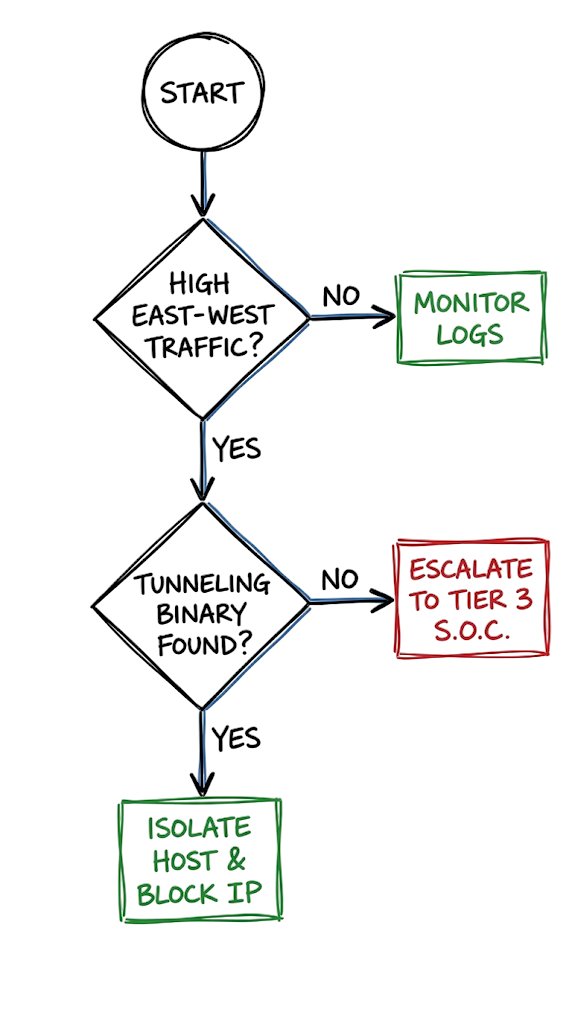
Security teams should also actively monitor and hunt for unusual East-West traffic patterns, as these are often strong indicators of Network Pivoting Techniques Used by Attackers in progress. By combining Zero Trust, network segmentation, continuous monitoring, and least-privilege access controls, organizations can significantly reduce the likelihood of lateral movement and internal compromise.
Additionally, heavily restrict administrative privileges. Attackers rely on finding cached admin credentials on the pivot node to move laterally. If you enforce Just-In-Time (JIT) administration and tier your active directory, you choke out their ability to escalate privileges. Review the Zero Trust Security in 2026: Architecture, Real Examples, and Implementation Guide and the official CISA Zero Trust Guidance for strategic implementation steps. For general hygiene, reference the Top 10 Cybersecurity Best Practices for 2026.
Troubleshooting Scenario: Identifying Network Pivoting Techniques Used by Attackers
When I was working in a client environment for a Dubai fintech operating under strict UAE NESA compliance requirements, we encountered a suspicious network activity pattern that immediately raised concerns about potential Network Pivoting Techniques Used by Attackers. The SOC observed a massive and continuous spike in outbound DNS requests originating from a single low-privileged application server.
Several junior analysts initially assumed the traffic was caused by a misconfigured application repeatedly attempting to resolve a failed API endpoint. Their recommendation was to suppress the alert and move on to other investigations.
However, unusual DNS activity is often associated with Network Pivoting Techniques Used by Attackers, especially when threat actors use DNS tunneling, command-and-control communications, or covert reconnaissance to move laterally through a compromised environment. Rather than dismissing the alert, we performed a deeper investigation to determine whether the server was being used as an internal pivot point.
The investigation ultimately revealed indicators that aligned with Network Pivoting Techniques Used by Attackers, demonstrating how seemingly harmless network anomalies can uncover sophisticated post-compromise activity.
Now here’s where it gets interesting: the DNS queries were heavily encoded, containing massive strings of base64 data in the subdomains. The application server hadn’t just malfunctioned; it had been compromised, and the attacker was using DNS tunneling as a pivot to bypass the outbound firewall rules. Because DNS is rarely blocked outbound, it made the perfect covert channel. We had to immediately isolate the host via the EDR console and scrub the entire subnet for secondary ICMP beacons the attacker had planted as fallbacks. Understanding these low-level network interactions is why mastering concepts like the 3-Way Handshake Troubleshooting: Critical Guide for Security Analysts is mandatory for modern responders.
Network Pivoting Techniques Used by Attackers Interview Questions
Q: What is the primary difference between a reverse shell and a bind shell during post-exploitation?
A: A bind shell opens a port on the compromised machine and waits for the attacker to connect to it. A reverse shell forces the compromised machine to initiate an outbound connection back to the attacker’s server, which is highly effective for bypassing inbound firewall rules.
Q: How do attackers abuse SSH for internal network pivoting?
A: Attackers use SSH dynamic port forwarding (using the -D flag) to create a local SOCKS proxy on their machine. Traffic sent through this local proxy is tunneled through the SSH connection to the compromised host, which then routes it to the internal target.
Q: If you suspect a host is being used as a pivot point, what specific logs would you check first?
A: I would immediately review Windows Event ID 4688 for suspicious process creation (looking for tools like Chisel or Plink), and I would query network flow logs for sudden, high-volume east-west traffic originating from that specific host.
Q: What makes lateral movement attacks different from pivoting?
A: Pivoting is the networking technique used to route traffic and establish visibility into isolated network segments. Lateral movement is the actual exploitation, credential theft, or access of secondary systems discovered via that pivot.
Q: How does micro-segmentation disrupt post-exploitation techniques?
A: Micro-segmentation applies granular firewall policies at the individual workload level rather than the network edge. If an attacker compromises a web server, micro-segmentation prevents that server from communicating with an unrelated database, completely severing the pivot path.
For professionals looking to ace these technical interviews, the Best SOC Analyst Roadmap 2026: Complete Guide to L1, L2, L3 Roles, Skills, and Tools is an excellent resource to plan your career trajectory.
Future Trends in Network Pivoting Techniques Used by Attackers (2026 and Beyond)
Identity-Based Pivoting in Cloud Environments
As infrastructure shifts, attackers are moving away from traditional TCP/IP tunneling and focusing entirely on identity. Instead of routing traffic through a physical laptop, attackers compromise cloud identity tokens and pivot across SaaS applications and cloud storage buckets without ever touching an on-premise network. Managing this requires strict oversight, as detailed in Identity and Access Management in 2026: A Practical Guide for Cloud Security Professionals and the Cloud Security Basics 2026: Complete Beginner Guide.
AI-Assisted Attack Path Discovery
Manual internal reconnaissance is slow and noisy. By 2026, threat actors are leveraging localized, lightweight AI models dropped onto the pivot node to autonomously map the network, identify the weakest paths to domain admin, and execute lateral movement at machine speed. As we see shifts in computing, understanding concepts like What is Quantum Computing in Simple Terms and Understanding Qubits: How They Break Modern Encryption will become highly relevant to anticipating next-generation cryptographic breaks used in these automated attacks.
Regulatory Mandates on Zero Trust
Frameworks from regulatory bodies like the RBI in India and SAMA in Saudi Arabia are increasingly mandating strict east-west traffic visibility. Organizations will be heavily penalized not just for the initial breach, but for failing to contain the pivot. The implementation of the NIST Zero Trust Architecture will transition from a buzzword to a strict compliance requirement. We are also seeing strict requirements bleeding into API development; read the Critical API Security Risks in the Cloud and Best Practices for 2026 to stay ahead. Financial institutions must also safeguard consumer transaction paths, as noted in the 9 Essential Ways to Stop UPI Fraud: Complete Guide 2026.
FAQ About Network Pivoting Techniques Used by Attackers
Q: What is attack path analysis in relation to pivoting?
A: Attack path analysis is a defensive process where security teams map out all the possible routes an attacker could take from a low-level compromised host to a critical asset. By identifying these paths, defenders can apply targeted segmentation to break the routes before an attacker can use them.
Q: How does red team pivoting differ from malicious pivoting?
A: The technical mechanisms—such as deploying SOCKS proxies or SSH tunnels—are identical. The difference is entirely intent and authorization. Red teams use pivoting to simulate real-world threats and prove that a path exists so the blue team can fix it before a real threat actor exploits it.
Q: Can a standard VPN be abused for network pivoting?
A: Yes, absolutely. If an employee connects their personal, malware-infected laptop to the corporate VPN, the attacker controlling that laptop now has a direct, encrypted tunnel into the corporate network, turning the VPN client into an instant pivot node.
Q: Does Endpoint Detection and Response (EDR) catch pivoting tools?
A: Yes, modern EDR solutions are highly effective at detecting known tunneling binaries (like Chisel or Ligolo) and flagging anomalous command-line arguments. However, sophisticated attackers often use “Living off the Land” techniques, abusing native tools like SSH or netsh to evade baseline EDR signatures.
Q: Why is internal network pivoting so dangerous for enterprise networks?
A: It bypasses the multi-million dollar security stack sitting at the perimeter. It allows an external attacker to operate with the trusted internal network privileges of the compromised host, making detection incredibly difficult without dedicated east-west traffic monitoring.
Conclusion
Network Pivoting Techniques Used by Attackers remain the definitive mechanism that transforms a minor security incident into a catastrophic enterprise breach. Threat actors rely on your internal network being soft, flat, and unmonitored to route their malicious traffic straight to your crown jewels. Stop treating your perimeter like a fortress and your internal network like a trusted playground. Your immediate action item for today: identify one critical server subnet, audit its inbound rules, and aggressively block all non-essential workstation traffic hitting those servers. For a comprehensive look at how to evolve your architecture, read Forget the Perimeter: Zero Trust vs Traditional Security Technical Comparison 2026.