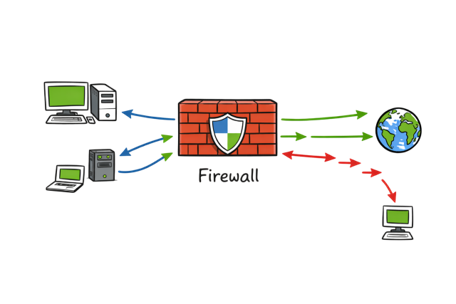
A firewall in cybersecurity is a security control that monitors and filters network traffic between trusted and untrusted networks. It defends against cyber threats by enforcing predefined rules that determine which traffic to allow or block.
Organizations use firewalls to protect systems, applications, and sensitive data from unauthorized access, malware, ransomware, and other attacks. You can deploy firewalls as network devices like hardware appliances, software solutions, or cloud-based security services depending on your business requirements.
A firewall continuously inspects incoming and outgoing traffic, analyzes packets, and makes decisions based on configured security policies. By allowing legitimate connections and blocking suspicious activity, it helps reduce the attack surface and strengthen your overall security posture.
Real-World Example
When an employee accesses a company web application, the firewall verifies the connection and permits only approved traffic. If an attacker attempts to scan open ports or exploit a vulnerable service, the firewall detects and blocks the malicious activity before it reaches internal systems.
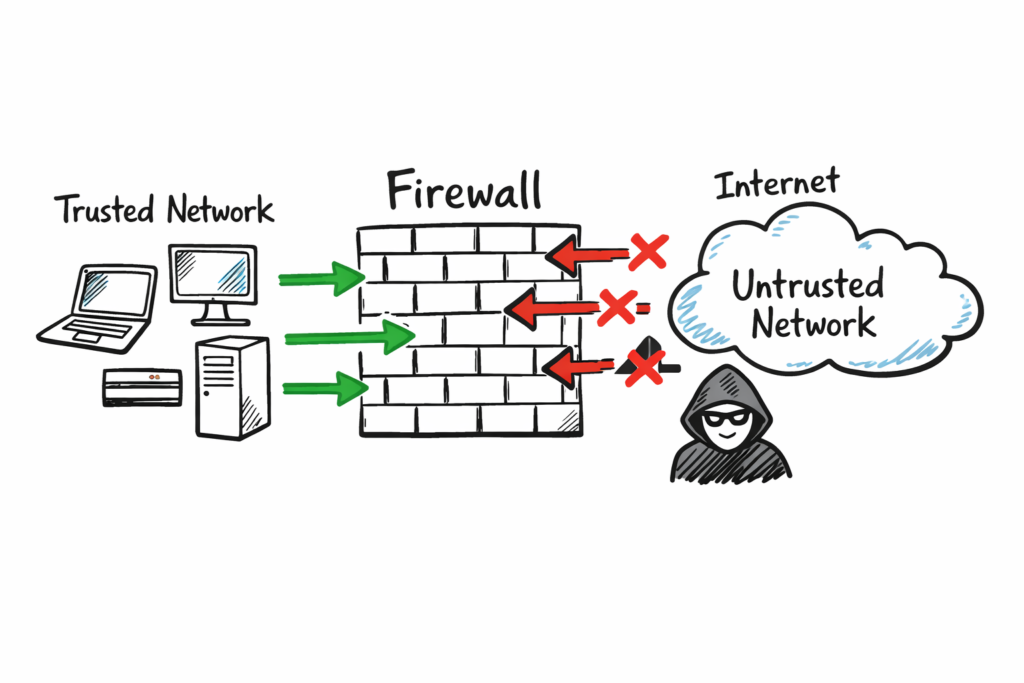
Why Firewall in Cybersecurity is Important for Network Security?
A firewall protects your networks by monitoring and controlling incoming and outgoing traffic based on predefined security policies. Without a firewall, attackers gain unauthorized access to your internal systems, steal sensitive information, or exploit vulnerable services exposed to the internet.
By blocking malicious traffic and restricting unauthorized connections, a firewall directly reduces your risk of cyberattacks. It protects your users, devices, applications, and servers. The firewall ensures only legitimate traffic communicates with your network.
Firewalls help you enforce security policies by controlling access to websites, applications, and network resources. For example, you can write firewall rules to restrict access to social media platforms, block known malicious domains, or allow only approved business applications.
Additionally, firewalls support regulatory compliance requirements. They defend against common threats such as phishing attacks, malware infections, denial of service attacks, and unauthorized network access. Implementing properly configured firewall policies strengthens your security posture and maintains business continuity.
Types of Firewall in Cybersecurity Explained with Examples
What Is a Packet Filtering Firewall?
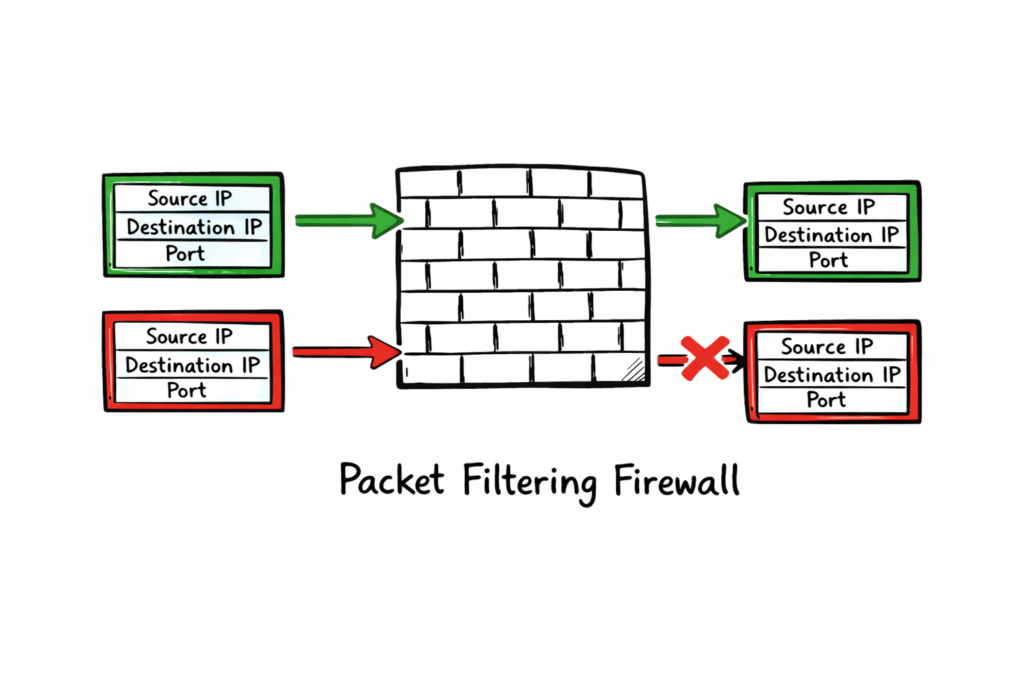
A packet filtering firewall is one of the most basic yet widely used types of firewalls in cybersecurity. It operates at the Network Layer (Layer 3) of the OSI model and filters incoming and outgoing network traffic by examining packet header information such as source IP address, destination IP address, port numbers, and network protocols. Based on predefined security rules, the firewall decides whether to allow or block each packet.
If you’re new to networking, read our Complete Network Security Basics Guide for Beginners 2026 before learning about firewall technologies:
https://technaga.com/what-is-networks-and-network-security-basics-2026/
Because a packet filtering firewall evaluates every packet independently and does not track active network sessions, it is known as a stateless firewall. While this approach makes packet filtering extremely fast and resource-efficient, it cannot detect attacks that require session awareness or inspect the actual data contained within network packets.
Packet filtering firewalls are commonly used for basic network security, access control, and traffic filtering. They help organizations block unauthorized connections, restrict access to specific ports, and reduce unnecessary network traffic. However, modern cyber threats often bypass traditional packet filtering techniques because these firewalls cannot inspect application-layer data or identify malicious payloads.
To understand how packet filtering compares with other firewall technologies, read our detailed guide:
What Is Firewall in Cybersecurity? Types, Examples and How It Works
https://technaga.com/what-is-firewall-in-cybersecurity-types-examples-and-how-it-works/
For stronger protection, many organizations combine packet filtering with Stateful Inspection Firewalls and Next-Generation Firewalls (NGFWs). These advanced firewalls provide deep packet inspection (DPI), application awareness, intrusion prevention, malware detection, and advanced threat protection, making them more effective against modern cyber attacks.
If you’re starting your cybersecurity journey, you may also find this guide helpful:
What Is Cybersecurity and Why It Is Important Today
https://technaga.com/what-is-cybersecurity-and-why-it-is-important-today/
Real-World Example
A company can configure a packet filtering firewall to block traffic from known malicious IP address ranges and deny FTP traffic on Port 21 to prevent unauthorized file transfers. It can also allow only HTTPS traffic on Port 443 while blocking unused services and ports. By filtering unwanted traffic before it reaches internal systems, the firewall reduces the risk of unauthorized access, network attacks, ransomware, and data breaches while improving overall network security.
Stateful Inspection Firewall in Cybersecurity Explained
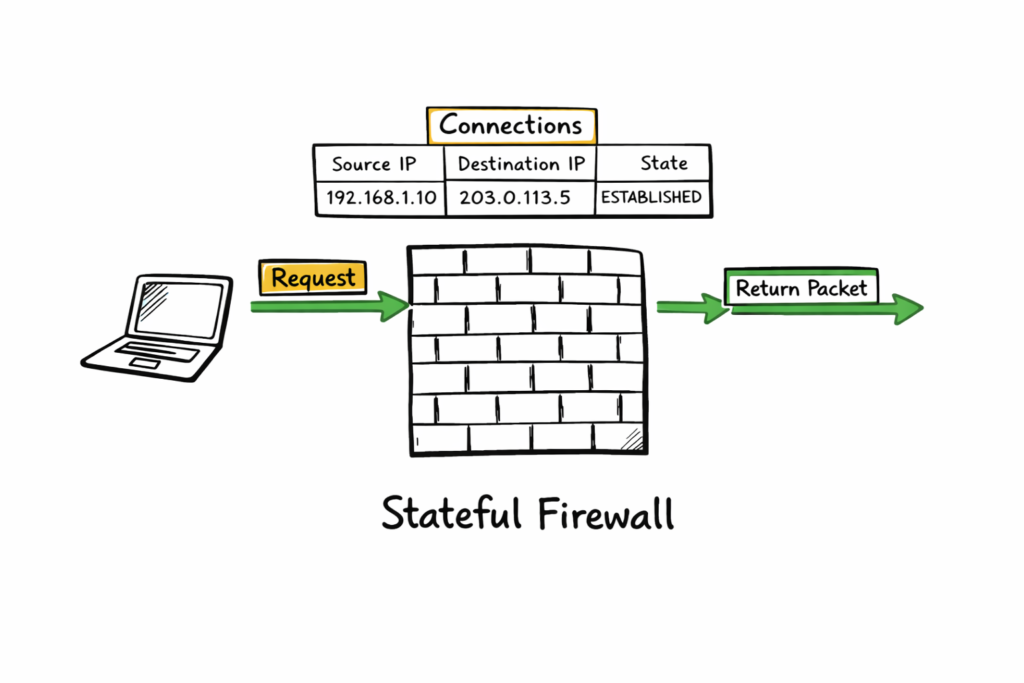
A stateful firewall monitors active network connections and makes filtering decisions based on the state and context of each session. Unlike a packet-filtering firewall, it keeps track of established connections and automatically allows legitimate return traffic while blocking unauthorized or suspicious communication. This makes it one of the most widely used firewalls in cybersecurity for protecting enterprise networks.
Because it understands the state of network sessions, a stateful firewall provides stronger security and better traffic control than basic packet-filtering firewalls. It can identify whether incoming packets belong to a valid, established connection, helping to prevent unauthorized access and certain types of network attacks. It also helps organizations securely manage communication between trusted networks and untrusted external networks.
Stateful inspection firewalls are widely used in enterprise environments because they offer an effective balance between security and performance. They provide enhanced protection without significantly impacting network speed, making them a popular choice for organizations of all sizes.
Real-World Example
When you visit a website, your computer sends a request through the firewall to access the web server. The firewall records the connection and monitors the session. When the website sends data back, the firewall verifies that the incoming traffic belongs to an established and legitimate session before allowing it through. By validating connection states, a stateful firewall helps block unauthorized traffic while ensuring that trusted communications between your device and the web server continue without interruption.
Proxy Firewall in Cybersecurity Explained
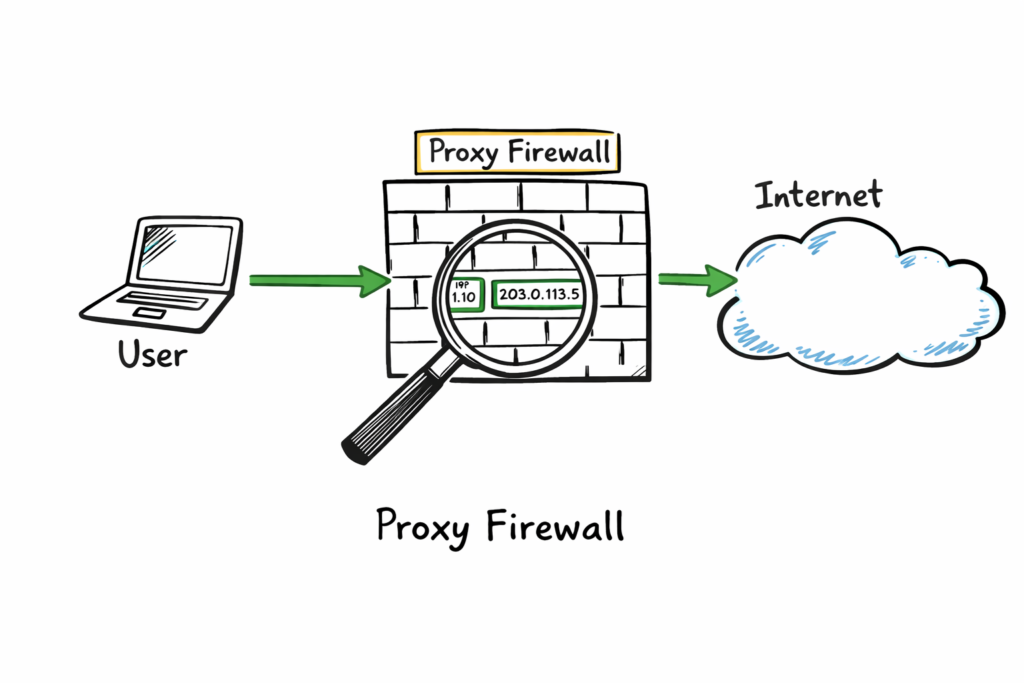
A proxy firewall operates at the application layer and acts as an intermediary between internal users and external resources on the internet. Instead of allowing direct communication, it receives requests from users, inspects the traffic, and then forwards approved requests to the destination on their behalf. This makes a proxy firewall an important firewall in cybersecurity for organizations that require advanced traffic filtering and security.
Because a proxy firewall analyzes the full content of requests and responses, it provides deeper visibility and control than traditional network-layer firewalls. It can enforce application-specific security policies, filter web content, detect malicious activity, and prevent unauthorized data transfers between trusted networks and external systems.
Another key advantage is that a proxy firewall hides internal IP addresses from external systems, improving privacy and reducing the risk of direct attacks against internal devices. For these reasons, proxy firewalls are commonly used in organizations that require enhanced security, detailed traffic inspection, and strict access control.
Real-World Example
A school or organization can use a proxy firewall to monitor and control employee or student web access. When a user requests a website, the proxy firewall receives the request, inspects it against security policies, and then retrieves the content on behalf of the user. After verifying that the content is safe, it delivers the response to the user’s device. This process prevents direct communication between internal systems and external websites, helping organizations improve security, enforce acceptable-use policies, and reduce the risk of malware infections or unauthorized access.
Next-Generation Firewall in Cybersecurity
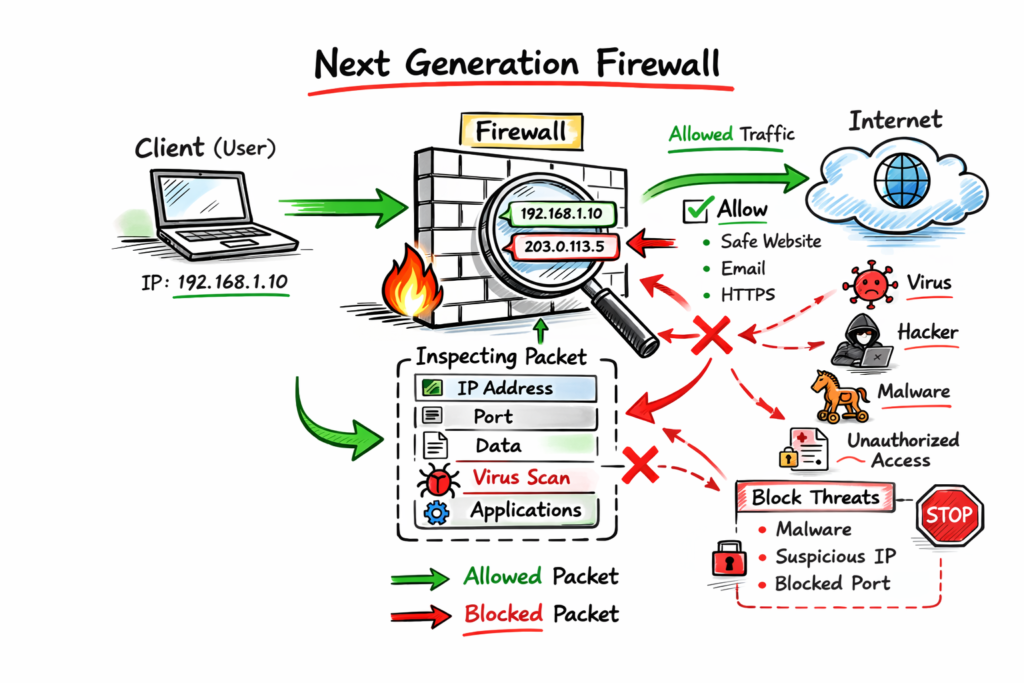
A Next-Generation Firewall (NGFW) combines traditional packet filtering, stateful inspection, and advanced security capabilities such as Deep Packet Inspection (DPI), application awareness, Intrusion Prevention Systems (IPS), SSL/TLS inspection, and threat intelligence. Unlike traditional firewalls, an NGFW can identify and control applications, inspect encrypted traffic, detect malicious payloads, and block sophisticated cyber threats in real time. This makes it one of the most effective firewalls in cybersecurity for protecting modern enterprise networks.
By integrating multiple security functions into a single platform, a Next-Generation Firewall gives organizations greater visibility into network activity while simplifying security management. It helps security teams detect advanced threats, enforce application-level policies, prevent data breaches, and secure communication between trusted networks and external environments.
Real-World Example
A company can use an NGFW to allow Microsoft 365 traffic while blocking unauthorized file-sharing applications. The firewall can also inspect encrypted HTTPS traffic, detect malware hidden within downloads, prevent users from accessing phishing or malicious websites, and stop intrusion attempts before they reach internal systems. These capabilities provide significantly stronger protection than traditional firewall technologies while improving overall network security.
Web Application Firewall (WAF)
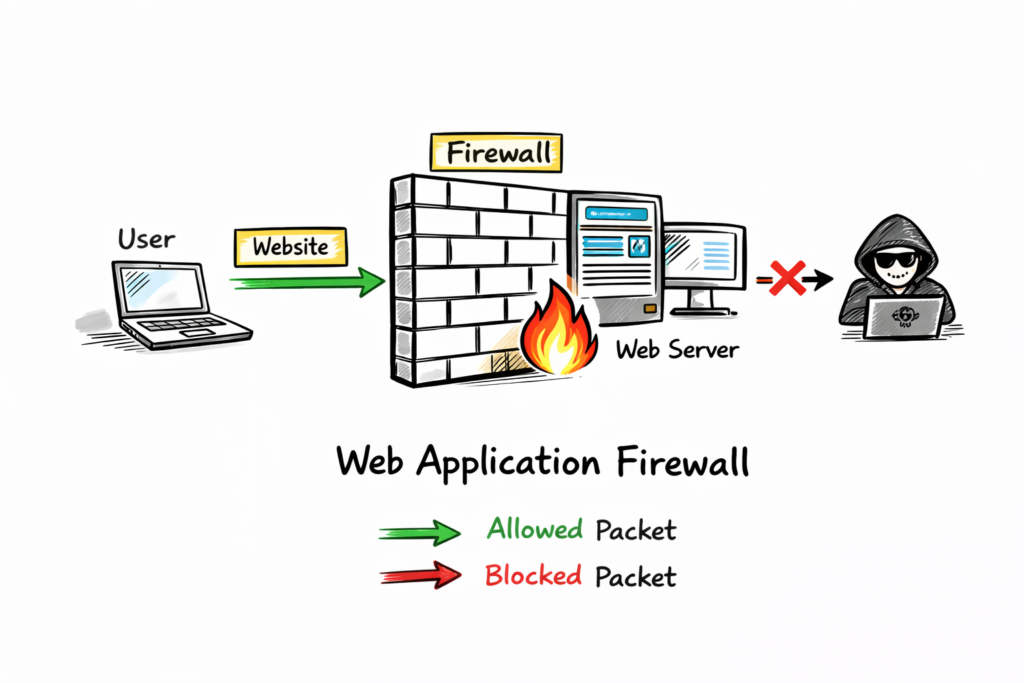
A Web Application Firewall (WAF) is a specialized firewall in cybersecurity designed to protect web applications by monitoring and filtering HTTP and HTTPS traffic. Unlike traditional firewalls that focus on network traffic, a WAF analyzes application-layer requests and responses to identify and block web-based attacks before they reach the web server.
A WAF helps defend against common threats such as SQL Injection (SQLi), Cross-Site Scripting (XSS), file inclusion attacks, cookie poisoning, and other application-level vulnerabilities. By inspecting user input and web requests in real time, it provides an additional layer of security for websites, web portals, APIs, and online services. It also protects communication between trusted networks and internet-facing applications by enforcing security policies at the application layer.
Real-World Example
A bank uses a Web Application Firewall (WAF) to protect its online banking portal. When an attacker attempts to inject malicious SQL code into the login form, the WAF detects the suspicious pattern, blocks the request, and prevents the attack from reaching the backend database. It can also stop Cross-Site Scripting (XSS) attempts, malicious bots, and other web-based attacks, helping protect customer accounts, sensitive financial data, and critical banking applications from compromise.
Cloud Firewall in Cybersecurity
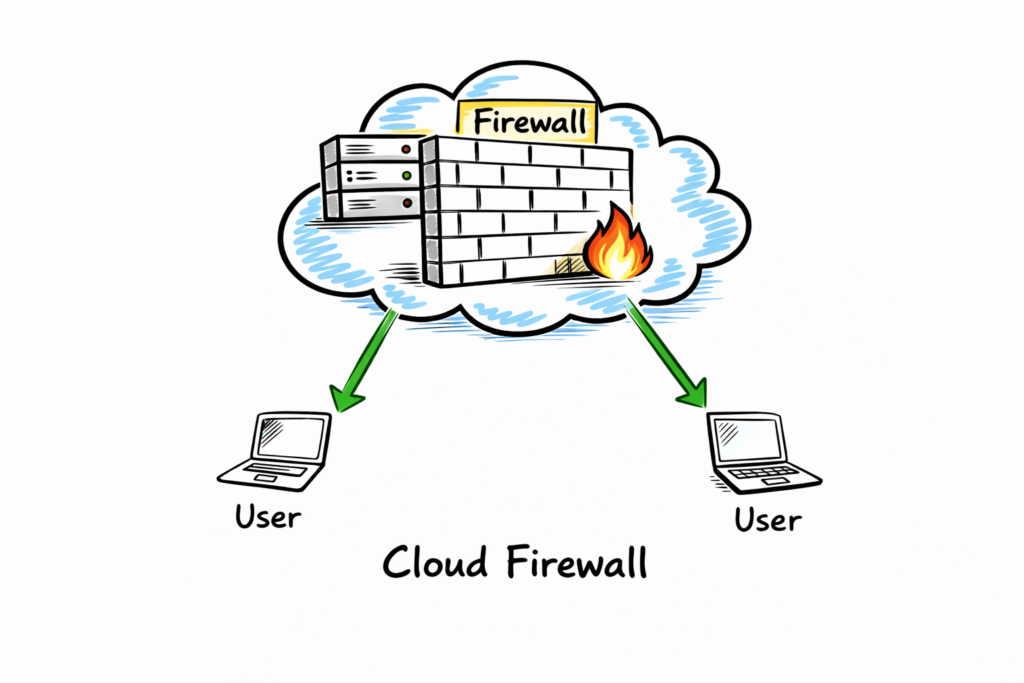
A Cloud Firewall is a modern firewall in cybersecurity that is delivered as Firewall as a Service (FWaaS). It protects cloud resources, applications, branch offices, and remote users without requiring traditional on-premises hardware. Managed through a centralized cloud platform, a cloud firewall automatically scales to meet changing business needs and network traffic demands.
Cloud firewalls provide consistent security policies across public cloud, private cloud, and hybrid cloud environments. They offer advanced security features such as traffic filtering, application control, intrusion prevention, threat intelligence, and centralized monitoring. By securing communication between trusted networks and cloud services, cloud firewalls help organizations protect distributed workloads while supporting secure remote access.
Real-World Example
A global organization uses Azure Firewall to protect virtual machines, web applications, and cloud services deployed across multiple regions. Security administrators manage firewall rules, monitor network traffic, inspect outbound and inbound connections, and enforce security policies from a centralized management console. This approach improves visibility, strengthens cloud security, reduces operational overhead, and supports modern multi-cloud and hybrid cloud architectures.
Host-Based Firewall
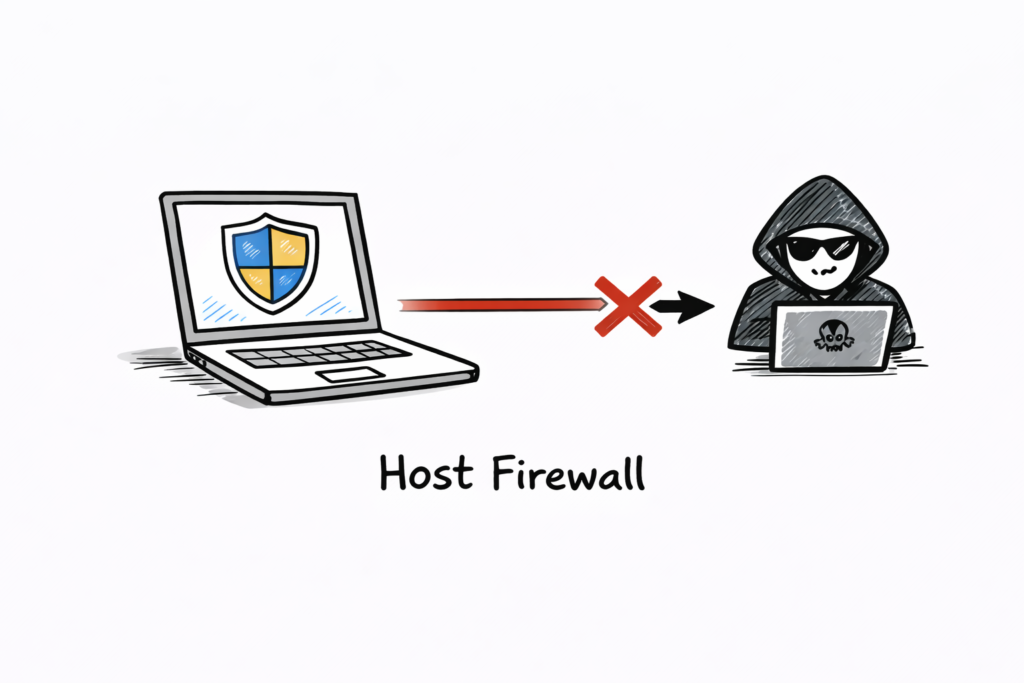
A Host-Based Firewall is a software-based firewall in cybersecurity installed directly on an individual device, such as a laptop, desktop computer, or server. Unlike network firewalls that protect an entire network, a host-based firewall secures a single endpoint by monitoring and controlling incoming and outgoing traffic at the device level.
Host-based firewalls provide granular control over applications, services, and network ports, allowing administrators to create customized security rules for each device. They help prevent unauthorized access, block suspicious connections, and protect communication between the device and trusted networks, reducing the risk of network-based attacks.
Because they operate directly on the endpoint, host-based firewalls are especially valuable for remote workers, mobile devices, and servers that frequently connect to different networks. They continue enforcing security policies even when devices are outside the corporate network, providing an additional layer of endpoint protection.
Real-World Example
A company laptop running Microsoft Defender Firewall can be configured to allow only approved business applications to communicate over the network while blocking unnecessary ports and unauthorized connections. If the laptop connects to a public Wi-Fi network, the host-based firewall continues to inspect network traffic, enforce security policies, and protect the device from cyber threats such as unauthorized access, malware, and network scanning attempts.
Firewall in Cybersecurity Architecture Explained
A Network Firewall is a foundational firewall in cybersecurity that protects an entire network by monitoring and filtering traffic entering and leaving an organization. These firewalls are typically deployed as hardware or virtual appliances at the network perimeter, such as the edge of a corporate office, branch location, or data center. They enforce centralized security policies, inspect network traffic, and help secure communication between trusted networks and external networks.
Network firewalls provide features such as packet filtering, stateful inspection, access control, and traffic monitoring to prevent unauthorized access and reduce the risk of cyber attacks. They offer centralized visibility into network activity, making them an essential component of enterprise network security.
Real-World Example
A company deploys a network firewall at its internet gateway to inspect all inbound and outbound traffic. The firewall blocks unauthorized connection attempts, restricts access to malicious websites, filters suspicious traffic, and enforces security policies for all users and devices connected to the corporate network. This centralized protection helps safeguard business-critical systems, sensitive data, and network infrastructure from external threats.
Firewall Layers and the OSI Model
Understanding the OSI model helps explain how different firewalls operate. Traditional firewalls typically work at Layer 3 (Network Layer) and Layer 4 (Transport Layer), filtering traffic based on IP addresses, ports, and protocols. Advanced firewalls, such as Next-Generation Firewalls (NGFWs), can inspect Layer 7 application traffic to identify specific applications and threats.
Because cyber threats exist at different layers of the network stack, organizations often deploy multiple security controls. Network firewalls help prevent unauthorized access and denial-of-service (DoS) attacks, while Web Application Firewalls (WAFs) protect against application-layer threats such as SQL injection and cross-site scripting (XSS).
Sandboxing in Modern Firewalls
Many modern firewalls include sandboxing technology to analyze suspicious files in a secure environment before allowing them into the network. The sandbox executes files and monitors their behavior to identify malware, ransomware, and zero-day threats that may bypass traditional signature-based detection.
For example, a firewall can safely analyze ZIP files, PDF documents, Office files, and scripts across multiple operating systems. If malicious behavior is detected, the file is blocked before it reaches users or critical systems.
AI and Threat Intelligence
Modern firewall solutions increasingly use artificial intelligence (AI) and machine learning to improve threat detection. These technologies learn normal traffic patterns, identify anomalies, reduce false positives, and help security teams respond to threats more quickly.
Many security vendors also provide real-time threat intelligence feeds. When a new threat is detected anywhere in the provider’s network, updated indicators can be shared globally within seconds, allowing organizations to block emerging threats before they spread.
Frequently Asked Questions (FAQ)
What is a Firewall in Cybersecurity?
A Firewall in Cybersecurity is a security solution that monitors and controls incoming and outgoing network traffic based on predefined security rules. It helps protect systems, applications, and sensitive data from unauthorized access and cyber threats.
How does a Firewall in Cybersecurity work?
A Firewall in Cybersecurity analyzes network traffic and decides whether to allow or block connections according to configured security policies. Modern firewalls can inspect traffic at multiple layers and identify malicious activity before it reaches internal systems.
What are the main types of firewalls?
The main types of firewalls include:
- Packet-Filtering Firewall
- Stateful Inspection Firewall
- Proxy Firewall
- Next-Generation Firewall (NGFW)
- Web Application Firewall (WAF)
- Cloud Firewall (FWaaS)
- Host-Based Firewall
- Network Firewall
Each type serves a specific purpose and provides different levels of security.
What is the difference between a firewall and antivirus software?
A firewall monitors and filters network traffic entering or leaving a device or network, while antivirus software detects and removes malicious files and malware from endpoints. Organizations often use both solutions together for stronger protection.
Can a Firewall in Cybersecurity stop hackers?
A Firewall in Cybersecurity can block many unauthorized access attempts, malicious connections, and network-based attacks. However, no firewall can stop every threat. Organizations should combine firewalls with endpoint protection, multi-factor authentication, security awareness training, and continuous monitoring.
What is the difference between an NGFW and a WAF?
A Next-Generation Firewall (NGFW) protects networks by inspecting traffic, applications, and threats across multiple layers. A Web Application Firewall (WAF) specifically protects web applications from attacks such as SQL injection, cross-site scripting (XSS), and other application-layer threats.
Are cloud firewalls better than traditional firewalls?
Cloud firewalls provide scalability, centralized management, and protection for cloud environments and remote users. Traditional firewalls are often deployed on-premises and are well suited for protecting office networks and data centers. The best choice depends on an organization’s infrastructure and security requirements.
Conclusion
A Firewall in Cybersecurity remains one of the most important security controls for protecting networks, devices, applications, and sensitive information from cyber threats. From basic packet-filtering firewalls to advanced Next-Generation Firewalls (NGFWs), Web Application Firewalls (WAFs), and cloud-based firewall solutions, each type plays a vital role in modern security architectures.
Understanding how firewalls work, the different firewall types, and their real-world use cases helps organizations build stronger defenses against unauthorized access, malware, ransomware, phishing attacks, and other security risks. When combined with network security best practices, endpoint protection, threat intelligence, and continuous monitoring, firewalls provide a strong foundation for a layered cybersecurity strategy.
As cyber threats continue to evolve, organizations should regularly review firewall policies, monitor firewall logs, update security rules, and adopt modern firewall technologies to maintain effective protection and ensure business continuity.
Related Articles:
Zero Trust Security in 2026: Architecture, Real Examples, and Implementation Guide
What Is Firewall in Cybersecurity? Types, Examples and How It Works
Complete Network Security Basics Guide for Beginners 2026
What Is Cybersecurity and Why It Is Important Today
References
- Cisco. What Is a Firewall?
https://www.cisco.com/site/us/en/learn/topics/security/firewalls.html - Fortinet. What Is a Stateful Firewall?
https://www.fortinet.com/resources/cyberglossary/stateful-firewall - Palo Alto Networks. What Is a Next-Generation Firewall (NGFW)?
https://www.paloaltonetworks.com/cyberpedia/what-is-a-next-generation-firewall-ngfw - Cloudflare. What Is a Firewall?
https://www.cloudflare.com/learning/security/what-is-a-firewall/ - IBM. What Is Network Security?
https://www.ibm.com/think/topics/network-security - Check Point. What Is a Firewall?
https://www.checkpoint.com/cyber-hub/network-security/what-is-firewall/ - NIST. Cybersecurity Framework (CSF 2.0)
https://www.nist.gov/cyberframework - CISA. Cybersecurity Best Practices
https://www.cisa.gov/topics/cybersecurity-best-practices - OWASP Foundation. OWASP Top 10
https://owasp.org/www-project-top-ten/ - Microsoft Learn. Microsoft Security Documentation
https://learn.microsoft.com/security/
Important Note: This article is based on hands-on cybersecurity experience and research from reliable sources. While every effort has been made to ensure accuracy, you should validate the information based on your specific environment and security requirements before applying it.

6 thoughts on “What is Firewall in Cybersecurity? Types, Examples and How it Works in 2026”