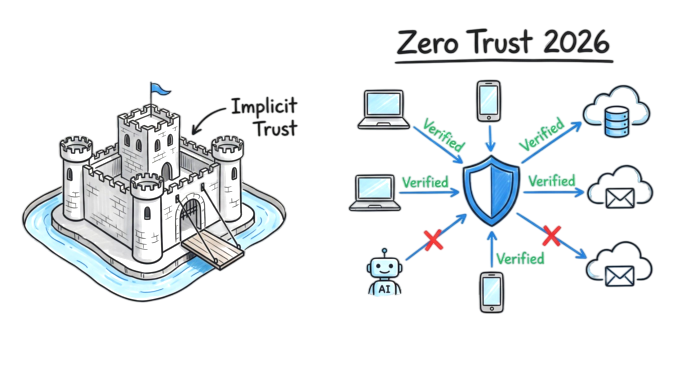
Zero Trust Security 2026 is changing how organizations detect, respond to, and contain cyber threats in real time. Traditional network security assumes that users inside the corporate network are trustworthy. Modern attacks have proven that assumption is no longer valid, making the Zero Trust Security Model the preferred approach for protecting enterprise environments.
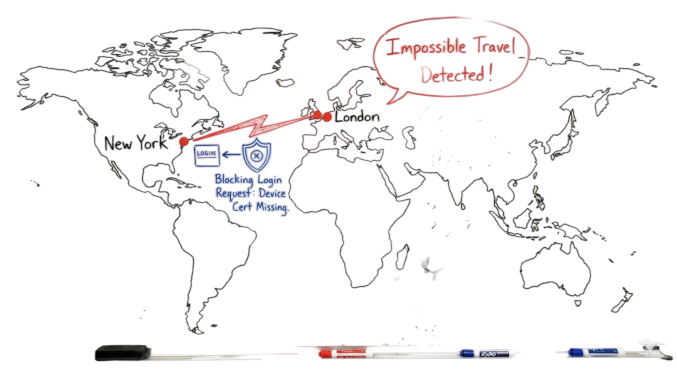
Imagine it is Tuesday at 3:00 AM. A high-severity alert from Microsoft Defender for Endpoint wakes you up. A finance employee has successfully logged in from an IP address in a country where your organization has no business operations.
In a traditional VPN-based environment, the attacker could immediately access shared file servers, scan internal systems, or attempt Remote Desktop Protocol (RDP) connections to a domain controller. By the time the security team terminates the session, lateral movement may already be underway.
With Zero Trust Security 2026, the response is immediate and automated. The Zero Trust Architecture continuously evaluates user identity, device posture, location, and risk signals before granting access. The system detects the impossible travel event, identifies that the device is missing a trusted certificate, and marks the session as high risk.
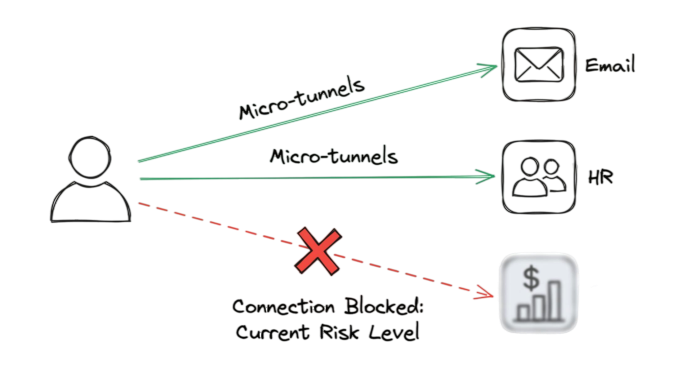
Using Zero Trust Network Access (ZTNA), access to sensitive business applications such as the treasury system is blocked instantly, while low-risk services like email remain available under tightly controlled policies. Rather than trusting a user because they successfully logged in, every request is verified continuously throughout the session.
This real-world scenario demonstrates how Zero Trust Security 2026 reduces the risk of credential theft, prevents lateral movement, and limits the impact of cyberattacks by enforcing continuous verification instead of implicit trust.
What is Zero Trust Security 2026?
What Is Zero Trust Security?
Zero Trust Security 2026 is not a product or a single piece of software that you install. It is a modern cybersecurity strategy that changes how organizations verify users, devices, and applications before granting access. The Zero Trust Security Model assumes that no user, device, or workload should be trusted automatically, even if it is already inside the corporate network.
Traditional security followed a castle-and-moat approach. Once users connected through the corporate network or VPN, they were generally trusted and allowed to move freely between systems. Modern cyberattacks have shown that this model no longer works because attackers often use stolen credentials to gain legitimate access.
With Zero Trust Security 2026, every request is treated as untrusted until it is verified. It does not matter whether the request comes from the corporate office, a remote employee, a cloud workload, or a public Wi-Fi network. Every connection to an application, database, or service must pass multiple security checks before access is granted.
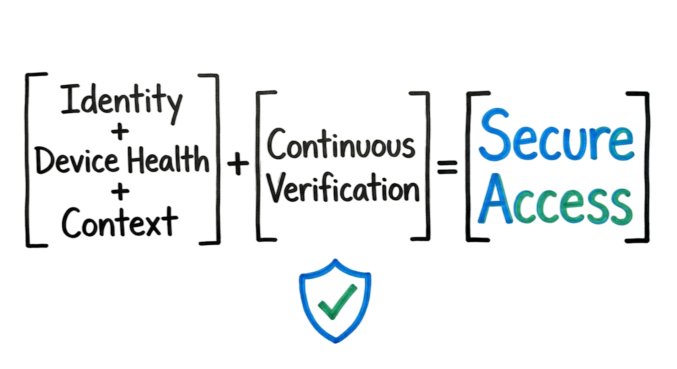
The foundation of Zero Trust Architecture is continuous verification. Instead of relying only on usernames and passwords, the system evaluates identity, device health, geographic location, risk score, Multi-Factor Authentication (MFA), and user behavior in real time. Access decisions are continuously re-evaluated throughout the session rather than only during login.
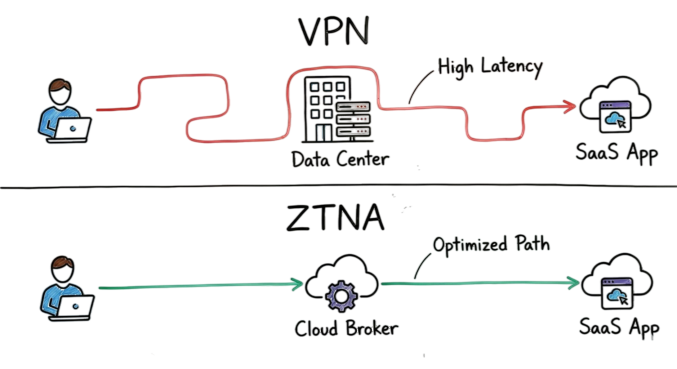
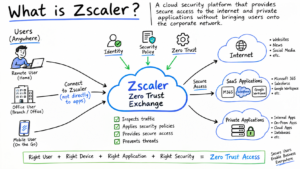
A key technology that enables this approach is Zero Trust Network Access (ZTNA). Instead of giving users access to an entire internal network like a traditional VPN, ZTNA connects users only to the specific application they are authorized to use. This significantly reduces the attack surface and helps prevent lateral movement if an account is compromised.
How Zero Trust Security 2026 Works: The Technical Flow
This is where many people get confused. They assume Zero Trust Security 2026 is simply Multi-Factor Authentication (MFA). In reality, the Zero Trust Security Model continuously evaluates every access request throughout the entire user session. Authentication is only the beginning.
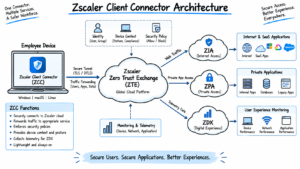
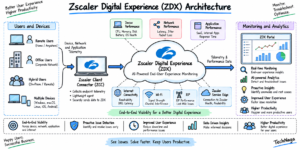
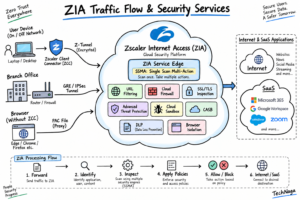
When a user attempts to access an application or resource, the request first reaches a Policy Enforcement Point (PEP). The PEP acts as the security gate that intercepts every access request before it reaches the protected application. In modern enterprise environments, the PEP may be a Zscaler Client Connector, a ZTNA client, an API gateway, a reverse proxy, or even a web browser enforcing enterprise security policies.
The PEP does not decide whether access should be granted. Instead, it forwards the request to the Policy Decision Point (PDP), which serves as the decision engine within the Zero Trust Architecture.
The PDP evaluates multiple security signals in real time, including:
- User identity
- Multi-Factor Authentication (MFA) status
- Device posture and compliance
- Geographic location
- IP reputation
- User behavior and risk score
- Application sensitivity
- Conditional Access policies
Based on these factors, the PDP calculates the overall risk associated with the request. If the user satisfies all security requirements, the PDP instructs the PEP to allow access. If the request appears suspicious, such as an impossible travel event, an unmanaged device, or a high-risk login, the PDP can deny access, require stronger authentication, or limit the user’s permissions.
This decision process is not performed only once during login. One of the key principles of Zero Trust Security 2026 is continuous verification. Every new request is evaluated again throughout the session. If the device becomes non-compliant, malware is detected, or the user’s risk level changes, the system can immediately revoke access without waiting for the session to end.
This continuous evaluation is the foundation of Zero Trust Network Access (ZTNA). Instead of providing unrestricted access to the internal network like a traditional VPN, ZTNA grants access only to the specific application the user is authorized to use. Users never receive network-level access, which significantly reduces the attack surface and prevents lateral movement if an account is compromised.
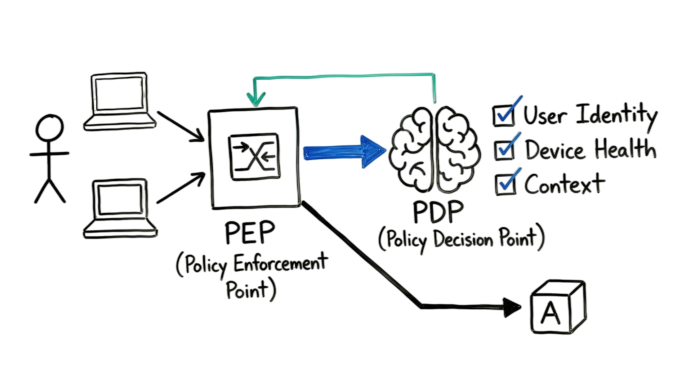
The Policy Decision Point (PDP) is the decision engine in a Zero Trust Architecture. It continuously evaluates multiple security signals before allowing access to any application or resource. Instead of relying on a single login event, Zero Trust Security 2026 makes access decisions based on real-time risk.
The PDP evaluates several important factors:
User Identity: Has the user entered the correct credentials? Has Multi-Factor Authentication (MFA) been successfully completed? Is the identity considered low risk based on recent activity?
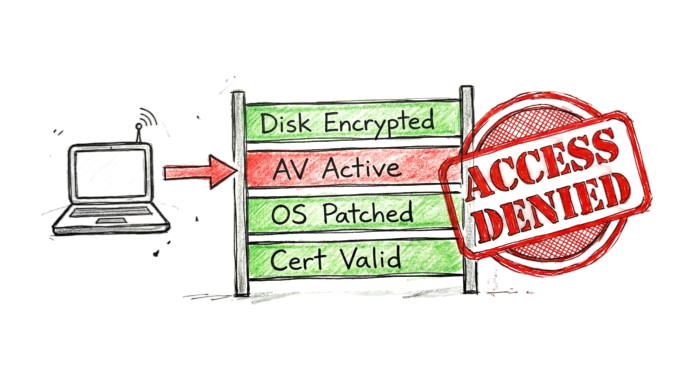
Device Health: Is the operating system fully patched? Is endpoint protection active? Are the firewall, disk encryption, and endpoint detection tools running correctly? Devices that fail compliance checks may have their access restricted immediately.
Context: Is the login occurring during normal business hours? Is the request coming from an expected country or IP address? Has the user suddenly switched devices or networks? These contextual signals help detect suspicious behavior such as impossible travel or compromised accounts.
Data Sensitivity: What resource is the user requesting? Accessing a public knowledge base carries far less risk than connecting to the payroll database, financial systems, or customer records. The Zero Trust Security Model applies stricter controls when users request access to sensitive business data.
After evaluating these signals, the PDP calculates a risk score and sends its decision to the Policy Enforcement Point (PEP).
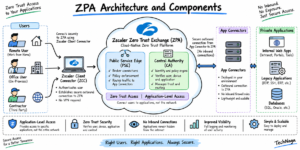
If the request satisfies every security policy, the PEP creates a secure, encrypted micro-tunnel directly to the requested application using Zero Trust Network Access (ZTNA). The user receives access only to that specific application and nothing more.
Unlike a traditional VPN, Zero Trust Network Access (ZTNA) never exposes the internal network. Users cannot discover other servers, perform network scans, ping internal systems, or move laterally across the environment. Every new application request must be verified independently, following the core principle of Zero Trust Security 2026: never trust, always verify.
Key Components of Zero Trust Security 2026 Architecture
You need a few specific pieces to make this work in a real enterprise.
Identity Provider (IdP): This is your source of truth. Most of us use Microsoft Entra ID (formerly Azure AD) or Okta. Your IdP needs to enable “Continuous Access Evaluation” by 2026. This implies that a user’s access to all apps is terminated in moments rather than hours if they are dismissed.
Zero Trust Network Access (ZTNA): This replaces your old VPN. Instead of giving a user an IP on your internal network, ZTNA acts as a broker. It hides your applications from the public internet. If an attacker scans your public IP, they see nothing.
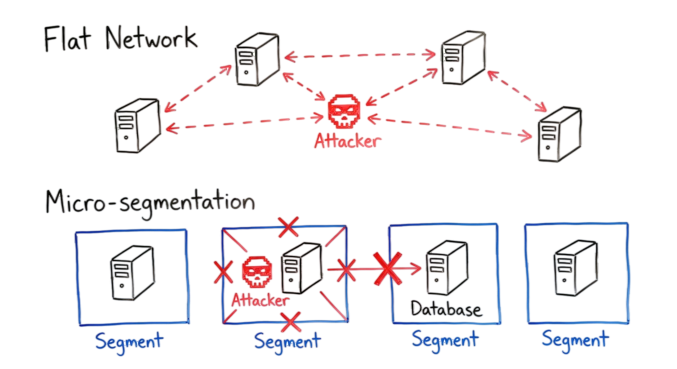
Micro-segmentation: Stopping lateral movement is the goal here. Micro-segmentation keeps an attacker from going straight to the database server if they manage to get onto a web server. Rules such as “Web-Server-A can only talk to Database-B on port 1433” are defined.”Everything else is abandoned.
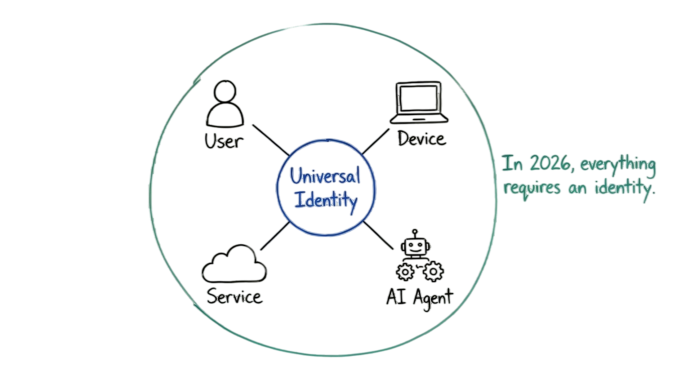
Agentic AI Security: By 2026, we have AI agents performing tasks for us. These agents need their own identities and permissions. You have to treat an AI agent exactly like a human user. It needs a “least privilege” policy so it doesn’t accidentally leak sensitive data while trying to help you.
A Personal Insight from the Trenches
During my first three years in security, I handled split-tunneling issues and frequent VPN password resets. It was a difficult setup. After moving to Zero Trust security 2026 using Zscaler, my ticket volume for access issues dropped by nearly 60 percent.
The biggest lesson from Zero Trust security 2026 is that you cannot rely on location alone. I saw a real case where a user logged in from a valid location, passed MFA, but their device was infected with a rootkit. In a traditional model, that access would likely be allowed.
With Zero Trust security 2026, the system blocked access because the device failed the health check. The policy required a secure device, not just a valid user identity.
Real-World Observation: The Logs
If you want to see Zero Trust security 2026 in action, check your SIEM logs. Here is a real example:
Event: AccessDenied
User: asharma@technaga.com
Source: 203.0.113.5 (Public Internet)
Destination: SAP-Production-App
Policy: High-Value-Asset-Access
Reason: DevicePostureNonCompliant (CrowdStrike sensor inactive)
In a traditional setup, this user might have bypassed controls using a valid session. With Zero Trust security 2026, the system detected that the endpoint protection sensor was inactive and immediately blocked access.
This is how Zero Trust security 2026 enforces continuous verification based on device posture, not just user authentication.
Practical Implementation Steps
Do not try to flip a switch and turn on Zero Trust for the whole company on a Monday morning. You will break everything and get fired. Follow this sequence instead:
- Inventory everything: You cannot protect what you do not know about. List your apps, your data, and your users.
- Start with Identity: Get everyone on MFA. Use hardware keys for your admins.
- Pick one application: Move a low-risk app to ZTNA first. Learn how the policies behave.
- Deploy Device Management: To enforce compliance, use Intune or a comparable technology. A device cannot be accessed if it is not encrypted.
- Enforce Micro-segmentation: Start with your most sensitive data. Build a wall around your customer database.
Advantages and Limitations
The biggest advantage of Zero Trust security 2026 is the reduction in attack surface. It also improves visibility, allowing you to track who accessed which data and when. For remote users, Zero Trust security 2026 removes the dependency on slow VPN connections and provides faster, direct access to applications.
However, Zero Trust security 2026 comes with challenges. It requires close coordination between identity, network, and application teams. Legacy applications that rely on hardcoded IP addresses may break when moved to a Zero Trust model. There is also an initial cost involved in deploying the right tools and licenses.
Common Mistakes to Avoid
A common mistake in Zero Trust security 2026 is assuming that ZTNA alone is enough. I have seen organizations deploy a ZTNA client while keeping their internal network flat. Without micro-segmentation, an attacker can still move laterally using a compromised but trusted device.
Another critical gap in Zero Trust security 2026 is ignoring non-human identities. Service accounts and API keys are major targets for attackers. If a service account has Domain Admin privileges without proper restrictions, it creates a serious risk and breaks the core principles of Zero Trust.
Troubleshooting Scenario: The “Invisible” App
A junior engineer comes to you and says, “A user can log into the Zscaler portal, but they cannot see the HR Portal app.”
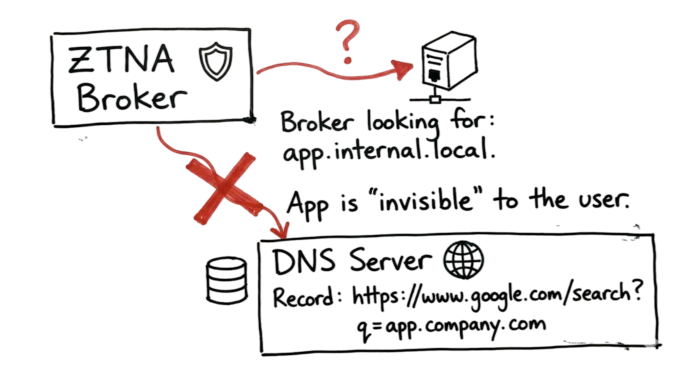
First, check the logs in your Zscaler Private Access (ZPA) console. You see the request is reaching the “App Connector,” but the “Server Status” is down. In real environments, it doesn’t work this cleanly. The issue is usually a DNS mismatch. The ZTNA broker is looking for hrportal.internal.local, but the internal DNS server only knows about hrportal.company.com.
In Zero Trust, the broker is the middleman. If the broker cannot resolve the internal name of the server, the app is “invisible” to the user. You fix this by updating the “Application Segment” configuration to match the exact FQDN the internal server uses.
Interview Questions for 2026
- How does a Policy Decision Point (PDP) differ from a Policy Enforcement Point (PEP)? Answer: The PDP is the brain that evaluates the rules, while the PEP is the gatekeeper that actually allows or blocks the traffic.
- Why is identity considered the new perimeter in 2026? Answer: Because users and data are everywhere. We can no longer rely on physical walls or IP addresses to define what is “safe.”
- What is “Implicit Trust” and why does Zero Trust eliminate it? Answer: Implicit trust is the old idea that “inside the network equals safe.” Zero Trust eliminates this by requiring verification for every single request, regardless of origin.
- Explain how micro-segmentation helps during a ransomware attack. Answer: It prevents the ransomware from spreading from the initial infected machine to other servers by blocking east-west traffic.
- What role does device posture play in an access decision? Answer: It ensures the hardware is secure (encrypted, patched, running AV) before allowing it to touch sensitive data.
Future Trends (Late 2026)
By the end of this year, we will see “Self-Healing Policies.” AI agents will monitor your network traffic and automatically create micro-segmentation rules based on observed behavior. We are also moving toward “Browser-Isolated Access.” For many apps, you won’t even need a client on the laptop. The secure browser will handle all the policy enforcement and data loss prevention.
FAQ
Is Zero Trust only for cloud apps? No. You can apply Zero Trust to your on-premise data centers too. You just need a broker (like a Zscaler App Connector) to sit in front of your old servers.
Does Zero Trust replace my firewall? Not exactly. You still need firewalls for basic packet filtering and outbound traffic control. However, your internal “east-west” firewalling is now handled by your Zero Trust tools.
What is the “Identity of Everything”? In 2026, this means giving every user, device, cloud service, and AI agent a unique, verifiable identity.
Can I implement Zero Trust without Zscaler? Yes. You can use Microsoft Entra Private Access, Palo Alto Prisma Access, or even open-source tools. The tools vary, but the principles stay the same.
Does Zero Trust make the network slower? If done right, it is actually faster. ZTNA uses optimized paths to connect users to apps, whereas a VPN often sends all traffic to a central data center before sending it out to the cloud.
Conclusion
Building a Zero Trust security 2026 network is a long-term effort. It takes time to design policies, align teams, and fine-tune access controls. The risk of doing nothing is high. A single compromised credential can still impact an entire organization.
Start small with Zero Trust security 2026. Focus on identity, enforce MFA, and validate device posture. Gain visibility through logs and continuously monitor access behavior. Over time, expand into ZTNA, micro-segmentation, and strict least-privilege access.
To get the best results from Zero Trust security 2026, follow these practical steps:
- Continuously monitor and analyze SIEM logs
- Enforce least privilege for users and service accounts
- Regularly audit device compliance and security posture
- Segment critical applications and sensitive data
- Replace legacy VPN access with ZTNA where possible
Organizations adopting Zero Trust security 2026 reduce attack surface, improve control, and prevent lateral movement. The principle remains simple and effective: Never trust, always verify, and validate every request continuously.
Related Articles
- What Is Cybersecurity and Why It Is Important Today
https://technaga.com/what-is-cybersecurity-and-why-it-is-important-today/ - Identity and Access Management (IAM): Complete Guide 2026
https://technaga.com/identity-and-access-management-cloud-security-2026/ - Multi-Factor Authentication (MFA): Complete Guide 2026
https://technaga.com/multi-factor-authentication-mfa-guide-2026/ - Cloud Security Basics 2026: Complete Beginner Guide
https://technaga.com/cloud-security-basics-2026/ - API Security Explained: Best Practices, Risks, and Authentication (2026)
https://technaga.com/api-security-best-practices-2026/ - Network Segmentation: Best Practices to Stop Lateral Movement
https://technaga.com/network-segmentation-best-practices-2026/ - Identity and Access Management (IAM): Complete Guide 2026
https://technaga.com/identity-and-access-management-cloud-security-2026/ - Initial Access in Cybersecurity: Top Attack Vectors You Must Know
https://technaga.com/initial-access-cybersecurity-attack-vectors-2026/ - Essential Endpoint Security Guide 2026 for Every Organization
https://technaga.com/endpoint-security-2026-guide/ - Top 10 Cybersecurity Best Practices for 2026
https://technaga.com/top-10-cybersecurity-best-practices-2026/ - Security Information and Event Management (SIEM): Complete Guide 2026
https://technaga.com/security-information-and-event-management-siem-guide-2026/ - Cloud Misconfiguration: 10 Critical Errors Leading to Data Breaches in 2026
https://technaga.com/cloud-misconfiguration-data-breaches-2026/
External References
- NIST SP 800-207: Zero Trust Architecture
https://csrc.nist.gov/pubs/sp/800/207/final - CISA Zero Trust Maturity Model
https://www.cisa.gov/resources-tools/resources/zero-trust-maturity-model - Microsoft Zero Trust Guidance
https://learn.microsoft.com/security/zero-trust/ - Microsoft Zero Trust Adoption Framework
https://learn.microsoft.com/security/zero-trust/adopt/ - Zscaler Zero Trust Exchange
https://www.zscaler.com/products/zero-trust-exchange - Google BeyondCorp
https://cloud.google.com/beyondcorp-enterprise - MITRE ATT&CK Framework
https://attack.mitre.org/ - NIST Cybersecurity Framework (CSF 2.0)
https://www.nist.gov/cyberframework - OWASP Zero Trust Project
https://owasp.org/www-project-zero-trust-architecture/ - Microsoft Entra ID Documentation
https://learn.microsoft.com/entra/ - FIDO Alliance
https://fidoalliance.org/ - OpenID Connect (OIDC)
https://openid.net/connect/ - OAuth 2.0 Framework (RFC 6749)
https://datatracker.ietf.org/doc/html/rfc6749

7 thoughts on “Zero Trust Security in 2026: Architecture, Real Examples, and Implementation Guide”