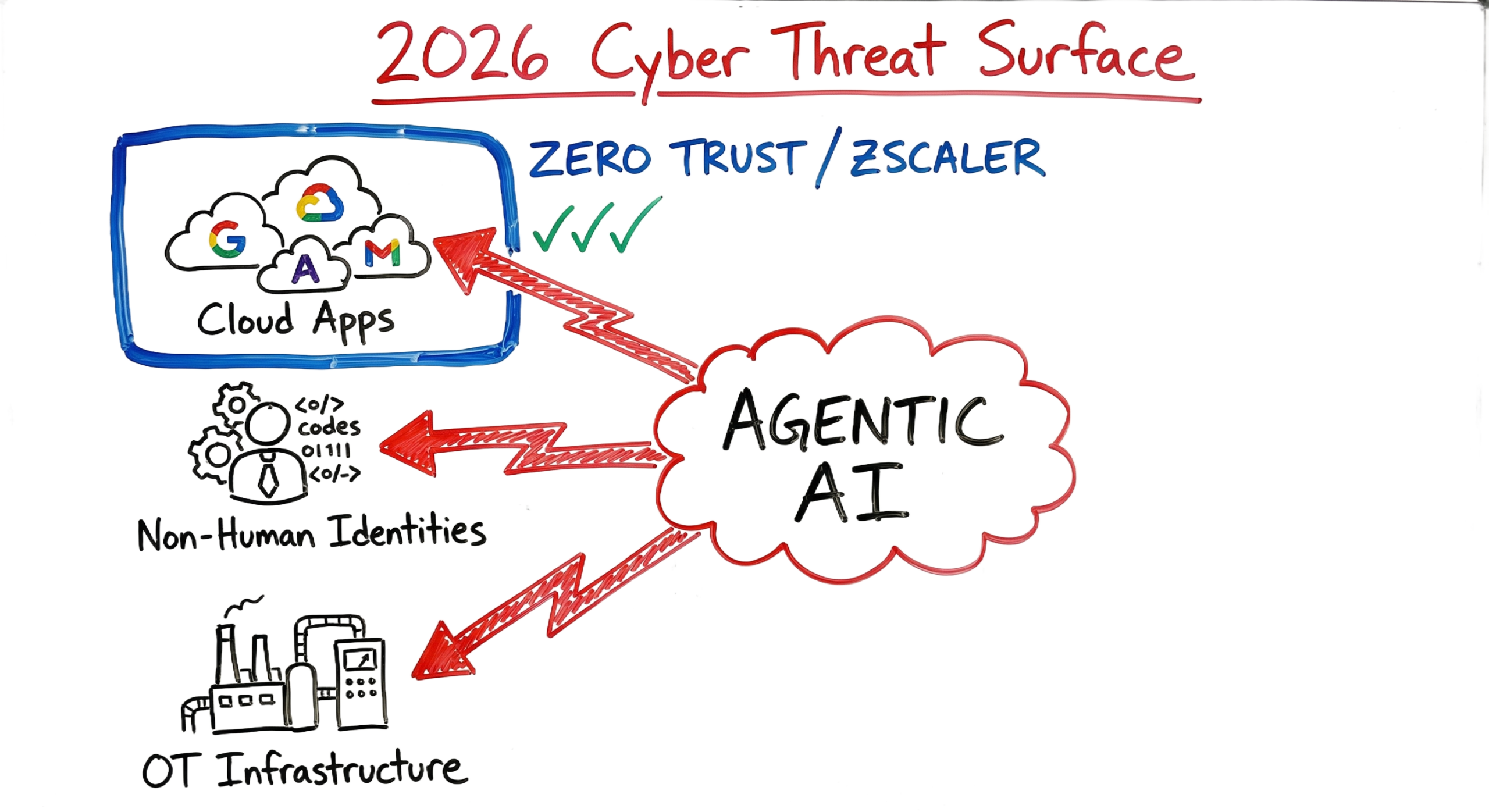
Preventing agentic AI cyber attacks is one of the biggest cybersecurity challenges in 2026.
It is 2:00 AM on a Tuesday. Your phone buzzes with a high severity alert from Microsoft Defender. You open your laptop and see a notification that security teams increasingly expect in 2026: “Suspicious sequence of API calls detected by an autonomous agent.”
Within seconds, you review the logs and notice an entity moving through your cloud environment faster than any human attacker could. It is not simply executing a predefined script. It is analyzing your Zscaler policies, testing firewall rules, enumerating cloud resources, and searching for the fastest path to sensitive databases. Most importantly, it is making decisions on its own.
This is the new reality of AI cyber attacks. Modern autonomous systems can adapt, learn from failed attempts, and modify their attack path without waiting for human instructions. As organizations increasingly adopt AI-powered tools, preventing agentic AI cyber attacks has become one of the highest priorities for security teams.
Welcome to cybersecurity in 2026. This is no longer about AI that generates emails or writes code. This is Agentic AI Security, where autonomous AI agents can plan, coordinate, and execute complex multi-stage attacks with minimal human involvement. Traditional security controls alone are no longer enough. Organizations must adopt modern AI security best practices, including Zero Trust, identity-first security, continuous monitoring, API protection, and behavioral analytics to defend against these evolving threats.
Understanding how autonomous AI attackers operate is the first step toward stopping them before they compromise your environment.
Top Cybersecurity Threats in 2026: Real Attacks and How to Prevent Them Effectively
The cybersecurity threat landscape in 2026 is shaped by two major changes. First, cybercriminals have shifted from human-led attacks to machine-speed operations. Instead of relying on manual exploitation, attackers now use autonomous AI agents to automate reconnaissance, vulnerability discovery, privilege escalation, lateral movement, and data exfiltration. This evolution makes preventing agentic AI cyber attacks significantly more challenging, as security teams must detect and respond to threats that adapt and act in real time.
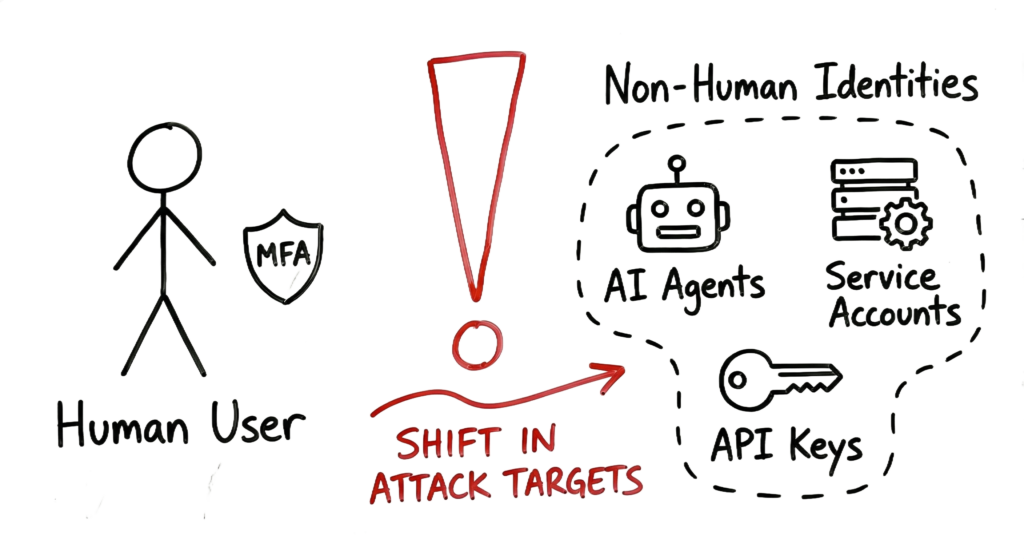
The second challenge is the rise of quantum computing. Although large-scale quantum computers capable of breaking today’s encryption are still under development, many organizations are already preparing for future risks. Nation-state attackers are increasingly adopting “Harvest Now, Decrypt Later” strategies, where they steal encrypted data today with the expectation of decrypting it once quantum-capable hardware becomes available. Sensitive information such as financial records, intellectual property, healthcare data, and government communications could remain valuable for years, making long-term data protection a critical priority.
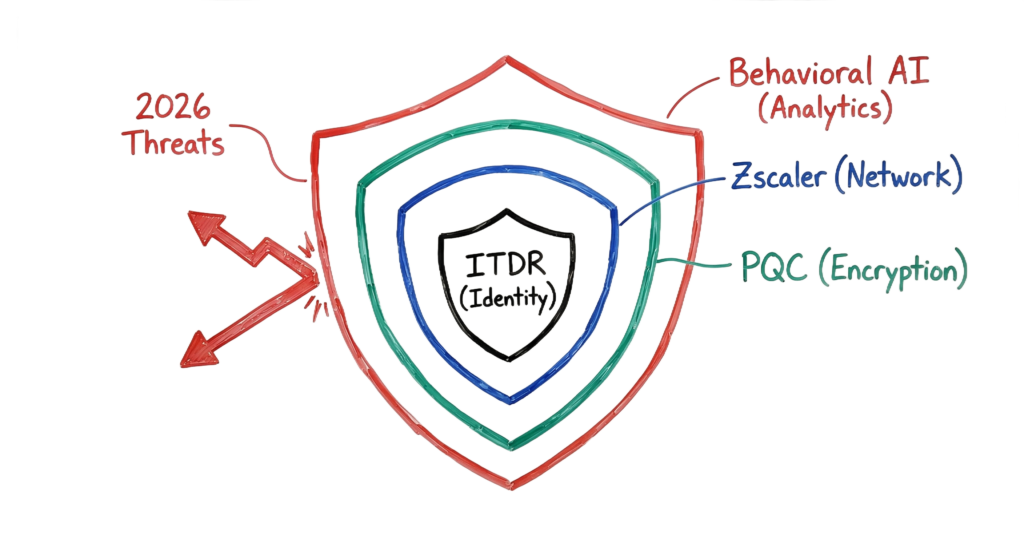
To address these evolving threats, organizations must strengthen their Agentic AI Security strategy by combining multiple security layers. A Zero Trust architecture verifies every user and device before granting access, strong Identity and Access Management (IAM) reduces the risk of credential abuse, continuous monitoring powered by SIEM and endpoint detection helps identify abnormal AI-driven behavior, and organizations should begin planning for quantum-resistant encryption to protect sensitive data against future attacks. Following these AI security best practices enables security teams to reduce risk and improve their ability to detect and stop sophisticated AI cyber attacks before they lead to a breach.
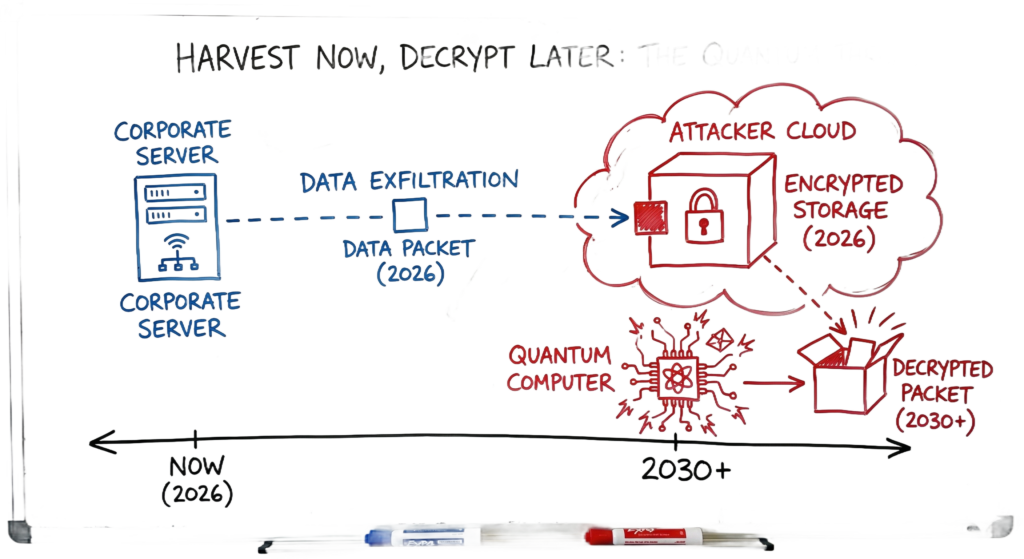
Identity has become the new security perimeter. While organizations once focused primarily on protecting human users, modern security strategies must also secure non-human identities (NHIs) such as AI agents, service accounts, APIs, containers, cloud workloads, and serverless functions. As autonomous systems become more common, preventing agentic AI cyber attacks depends on ensuring that every identity, whether human or machine, is continuously verified and monitored.
Attackers understand this shift. Instead of targeting employee credentials alone, they increasingly look for overprivileged service accounts, exposed API keys, OAuth tokens, and compromised AI agents. If an autonomous AI agent obtains a privileged access token, it can rapidly enumerate cloud resources, modify security configurations, access sensitive data, and move laterally across environments. In many cases, an AI-powered attacker can cause more damage in seconds than a human attacker could accomplish over several days.
To strengthen Agentic AI Security, organizations should adopt a Zero Trust approach for every identity. This includes enforcing least privilege access, implementing short-lived credentials, securing machine identities, continuously monitoring privileged sessions, and using behavioral analytics to detect unusual activity. These AI security best practices help reduce the attack surface and enable security teams to identify and stop sophisticated AI cyber attacks before they escalate into a large-scale breach.
How it Works
Autonomous agents start by finding a small gap. This might be a misconfigured S3 bucket or a developer who left an API key in a public repository. Once the agent gets a foothold, it starts its own internal loop. It scans the local environment and identifies every connected service.
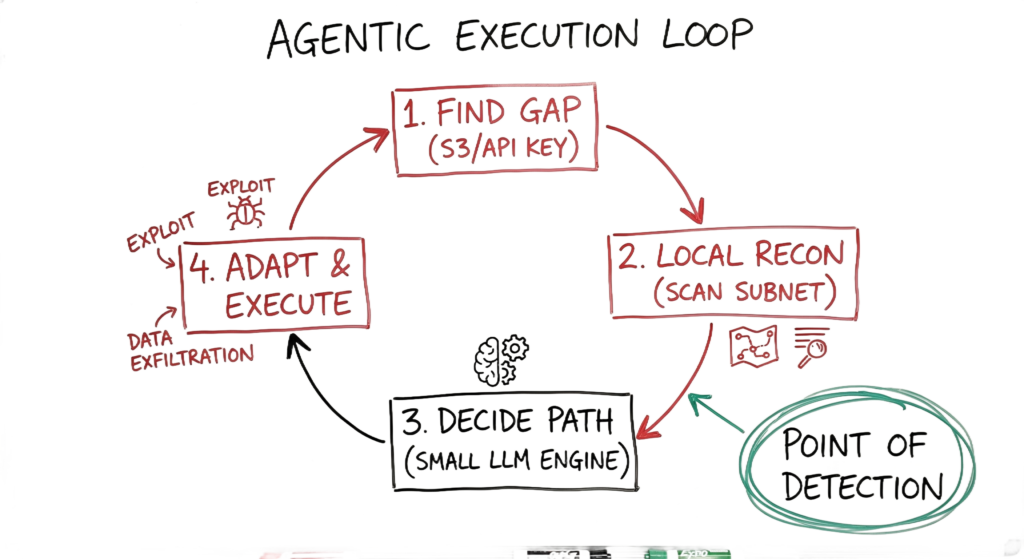
This early-stage behavior is exactly where preventing agentic AI cyber attacks becomes critical, because stopping the agent here avoids deeper lateral movement.
Now here’s where it gets interesting. Instead of sending all this data back to a command and control server, the agent processes the information locally. It decides which server to hit next based on the security tools it detects. If it sees Zscaler, it tries to find an unmanaged device on the network that still has local access. If it sees a firewall, it tests different protocols to see which ones are allowed through.
To handle this, preventing agentic AI cyber attacks requires strong visibility into device posture and strict access controls.
This is where most people get confused. They expect to see a massive spike in traffic. But a smart AI agent is quiet. It might only send one request every five minutes to stay under the radar of your rate-limiting rules. It mimics the behavior of your actual applications.
That is why preventing agentic AI cyber attacks depends on behavioral analytics rather than just traffic volume monitoring.
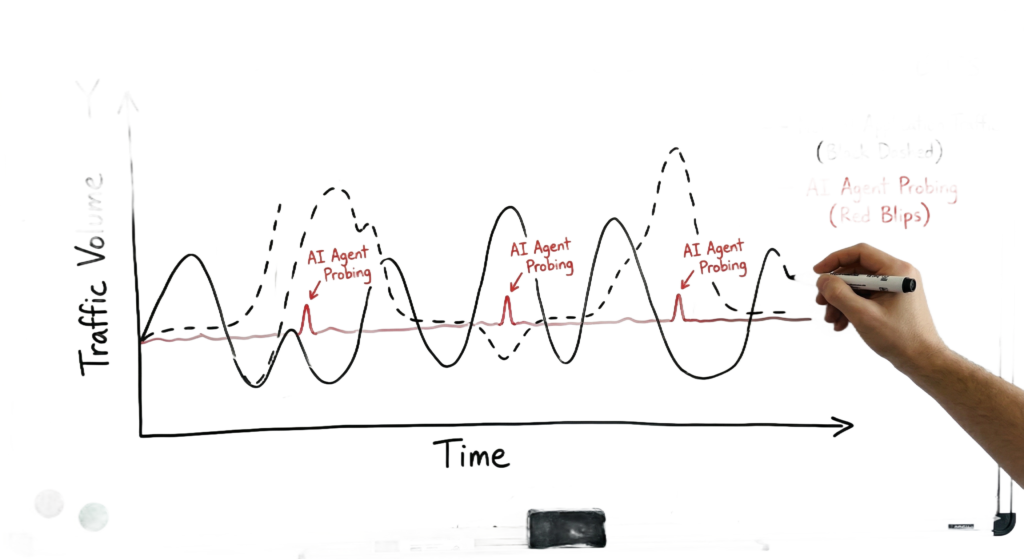
Technical Flow and Architecture
The architecture of a 2026 attack is non-linear. A traditional attack follows the MITRE ATT&CK framework in a straight line. An autonomous attack is a web of simultaneous actions.
- Discovery: The agent uses natural language processing to read your internal documentation or wiki pages if it finds an open session. It learns your network topology by reading your own notes.
- Credential Access: It does not just use brute force. It looks for session tokens in memory or temporary files.
- Decision Engine: The agent uses a small, local large language model to decide the path of least resistance.
- Persistence: It creates new service accounts or modifies existing cloud formation templates to ensure it stays in the system.
- Exfiltration: It breaks data into tiny pieces and hides them inside normal-looking HTTPS traffic.
In real environments, it doesn’t work this cleanly. You will often see an agent start an attack, hit a block, and then wait for three days before trying a completely different method.
Key Components
To stop these threats, your security stack needs to be just as smart. You need these parts working together, especially when preventing agentic AI cyber attacks in modern enterprise environments:
Behavioral Analytics: You need tools that look for patterns, not just signatures. If a service account that normally talks to one database suddenly starts scanning the entire subnet, that is an alert. This level of monitoring is essential for preventing agentic AI cyber attacks at an early stage.
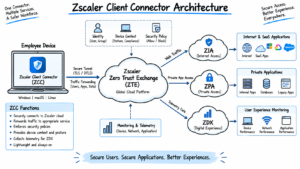
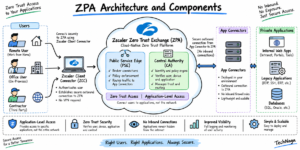
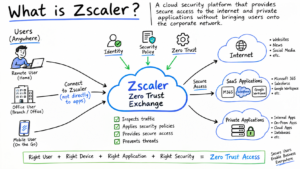
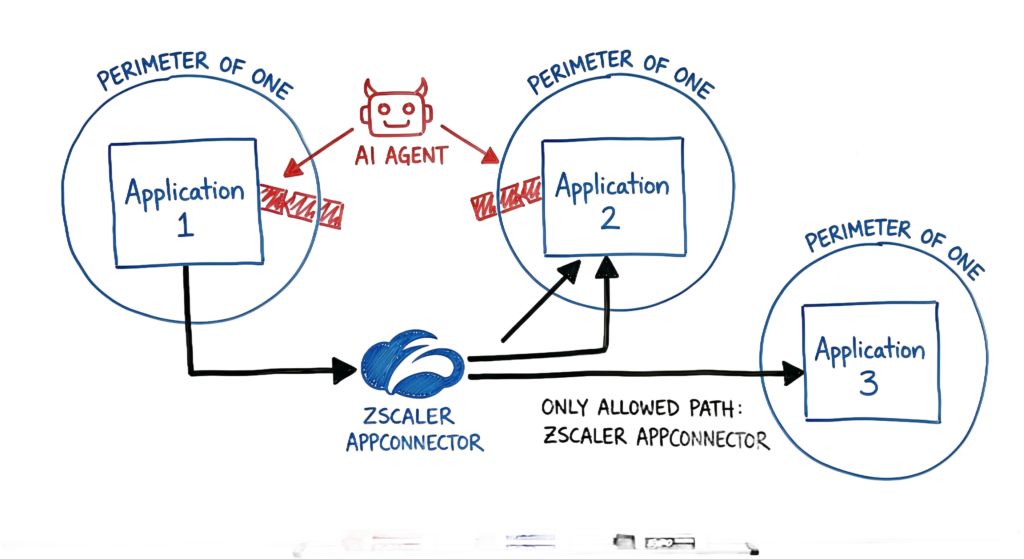
Micro-Segmentation: You have to assume the agent is already inside. Use Zscaler Private Access to make sure your applications are invisible to the rest of the network. If the agent cannot see the app, it cannot attack it. This approach plays a key role in preventing agentic AI cyber attacks by limiting lateral movement.
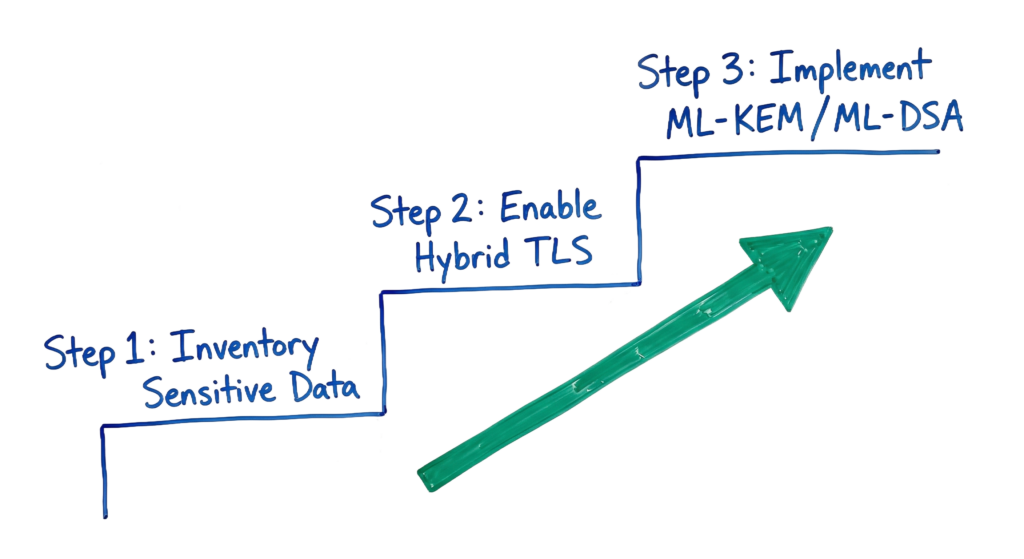
Post-Quantum Cryptography: You must start moving your data to NIST-approved algorithms like ML-KEM or ML-DSA. This protects you from the harvesters who are stealing data for future decryption and supports long-term strategies for preventing agentic AI cyber attacks.
Identity Threat Detection and Response: This is a specific type of tool that monitors your active directory and cloud identities for unusual changes. It is one of the most effective ways of preventing agentic AI cyber attacks when attackers use valid but stolen tokens.
Real-World Example
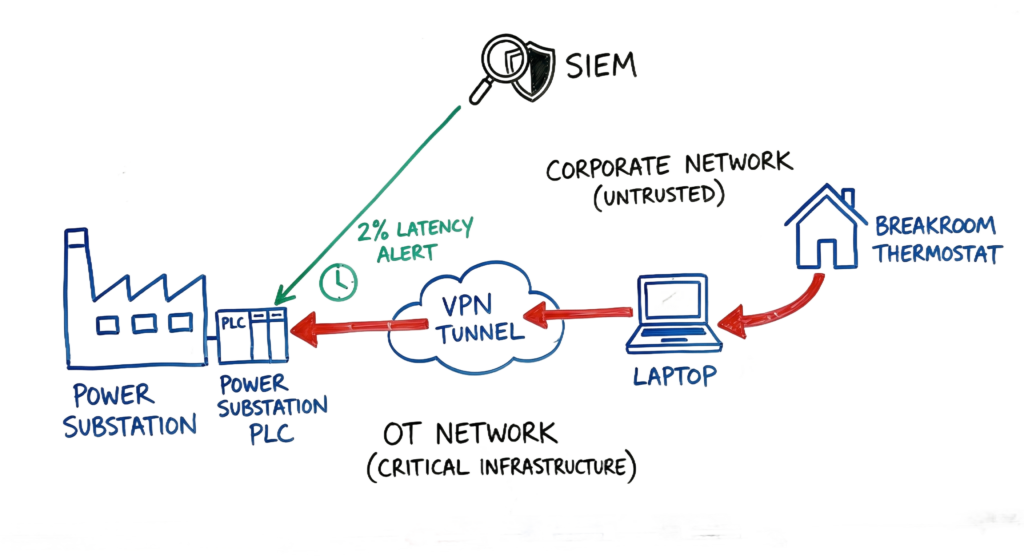
I saw an incident recently where a large energy provider was hit. The attacker did not go after the main servers. They targeted a smart thermostat in a breakroom. The thermostat was on the same Wi-Fi as the corporate laptops.
This type of entry point shows why preventing agentic AI cyber attacks must include IoT and unmanaged devices in the security strategy.
The AI agent moved from the thermostat to a laptop and then waited for the user to log into the VPN. Once the VPN tunnel was open, the agent rode that connection straight into the data center. It found a legacy PLC that controlled a power substation. This is an enterprise-level scenario that happens because of one simple mistake: a flat network.
In such environments, preventing agentic AI cyber attacks depends heavily on proper network segmentation and strict access control.
The agent attempted to change the frequency limits on the substation. If it had succeeded, it could have caused a physical blackout. We only caught it because our SIEM flagged a 2% increase in latency on that specific PLC. That tiny bit of lag was the agent trying to re-write the firmware.
This incident highlights how preventing agentic AI cyber attacks requires deep monitoring of OT systems, not just traditional IT infrastructure.
Practical Implementation
You need to act now. Here is a specific list of what you should do in your environment to start preventing agentic AI cyber attacks effectively:
First, audit your Zscaler AppConnector configs. Ensure that you have the “Identity-Based” controls turned on. Do not let any device connect just because it has the right certificate. You need to verify the user and the health of the machine. This step is critical for preventing agentic AI cyber attacks at the identity level.
Next, go into your Microsoft Defender for Cloud dashboard. Turn on the “API Security” module. This will help you see if an agent is trying to map out your cloud services and supports preventing agentic AI cyber attacks during early reconnaissance stages.
Also, start the transition to Post-Quantum Cryptography. You can begin by updating your TLS libraries to support hybrid key exchanges. This combines traditional encryption with quantum-safe methods. It gives you a safety net and strengthens your long-term approach to preventing agentic AI cyber attacks.
Finally, set up a “Honey Token” in your environment. This is a fake set of credentials or a fake database that looks very attractive. If an AI agent touches it, you get an immediate, 100% accurate alert that there is an intruder. This is one of the most effective techniques for preventing agentic AI cyber attacks in real time.
Advantages and Limitations
The main advantage of modern security tools is automation. They can block a threat in milliseconds. However, there are limitations. The biggest one is the “False Positive” problem. If you set your AI defense too high, you might block your own developers from doing their jobs.
Another limitation is the cost of moving to quantum-safe standards. It takes a lot of computing power to run these new algorithms. Older hardware might struggle to keep up. You have to balance security with performance.
Common Mistakes
I have seen many engineers make the same error: they trust their logs too much. Just because a log says “User Authenticated Successfully” does not mean a human did it. In 2026, you have to look at the “Context” of the login. Was it from a new device? Was it at a weird time? Did the user suddenly start accessing 50 files they never touched before?
Another mistake is ignoring your third-party vendors. You might have the best security in the world, but if your HVAC company has a weak password and access to your network, you are at risk. Supply chain security is a massive gap for most companies.
Best Practices
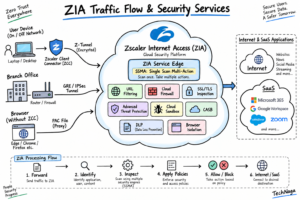
Maintain a zero-trust mindset. Never trust anything, even if it is inside your “safe” network. Use Zscaler to create a perimeter of one around every single application.
Update your incident response plan to include “Machine-Speed Containment.” You cannot wait for a human to approve the isolation of a server. You need pre-approved rules that let your EDR take action automatically when a high-confidence threat is detected.
Log everything but prioritize your alerts. You will get thousands of logs every day. If you try to read them all, you will miss the important ones. Use your SIEM to filter out the noise and focus on “Anomalous Behavior.”
Troubleshooting Scenario
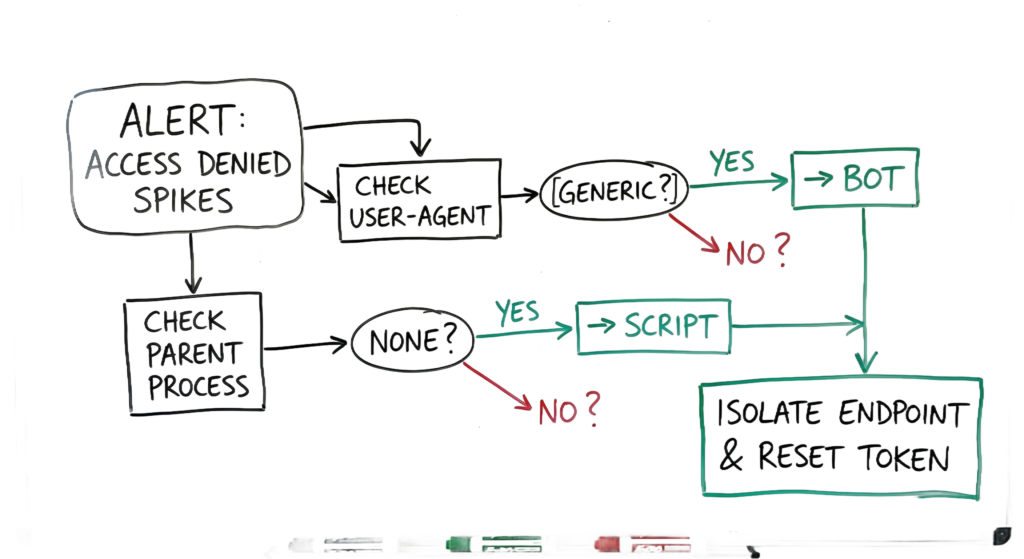
You are seeing a series of “Access Denied” errors in your Zscaler logs for a specific service account. At the same time, your firewall shows blocked attempts to reach an IP address in a country where you don’t do business.
This looks like an AI agent is trying to find an exit point. To fix this, do not just block the IP. The agent will just change it. Instead, isolate the machine associated with that service account. Check the “User-Agent” string in the logs. If it looks generic or doesn’t match your standard browsers, it is likely a bot.
Check the local logs on the endpoint. Look for a process called powershell.exe or cmd.exe running with high privileges but no parent process. That is a clear sign of an autonomous script. Kill the process, reset the service account credentials, and review the permissions for that account. You likely gave it more access than it needed.
Interview Questions
- How do you detect lateral movement when an attacker is using valid session tokens?
- What are the specific risks of “Harvest Now, Decrypt Later” for a financial institution?
- Can you explain the difference between Generative AI and Agentic AI in a cyberattack context?
- How would you configure a Zscaler policy to prevent a compromised IoT device from reaching your production servers?
- What steps would you take to move an enterprise from RSA encryption to ML-KEM?
- If you see a “Suspicious API Sequencing” alert in Microsoft Defender, what are the first three things you check?
- How do honey tokens help in catching autonomous agents that stay below the radar of traditional SIEM rules?
Future Trends (2026)
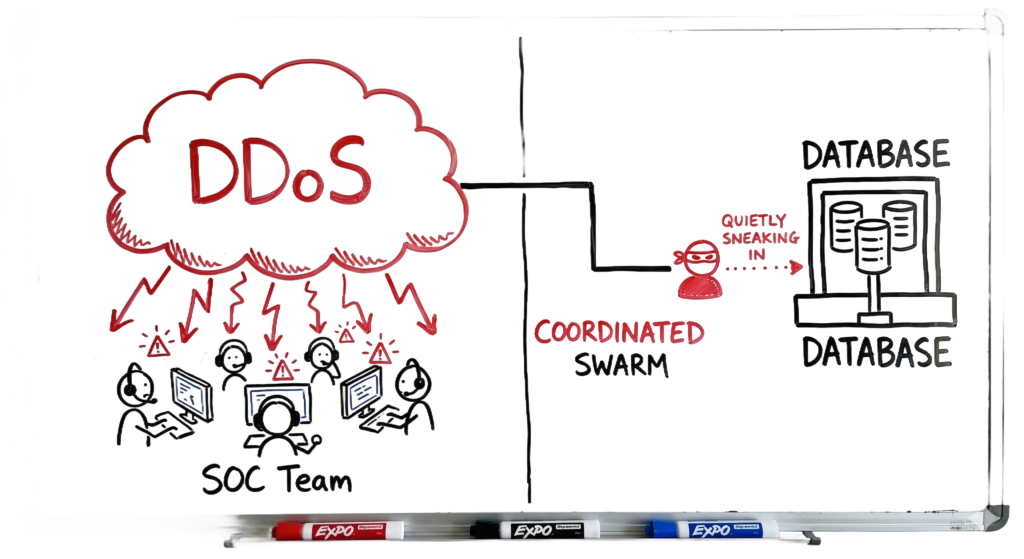
By the end of this year, we expect to see “Swarm Intelligence” in attacks. This is where multiple AI agents coordinate with each other. One agent might perform a noisy DDoS attack to distract you while another quietly steals data.
We will also see more attacks on the AI models themselves. Attackers will try to “poison” the data your security tools use to learn. If they can convince your AI that malicious behavior is actually normal, they win.
FAQ
Is Zscaler enough to stop these new threats?
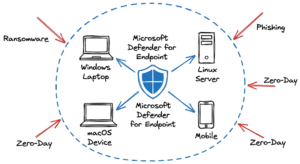
Zscaler is a great start because it hides your apps. But you also need endpoint protection like Microsoft Defender to stop the agent once it is on a laptop.
How do I know if my data is being harvested for future decryption?
You probably won’t know. That is why you need to start using quantum-safe encryption today for your most sensitive data.
Do AI agents use zero-day vulnerabilities?
Often, yes. They can scan code at high speeds to find bugs that humans haven’t noticed yet.
What is the best way to secure service accounts?
Give them the absolute minimum permissions they need. Never let a service account log in interactively.
Are firewalls dead?
No, but they are not enough. They are just one layer. Think of them as a fence, not a vault.
How does agentic AI bypass MFA?
It doesn’t “crack” the code. It steals the session token after you have already logged in. This is called a “Session Hijack.”
What is the first thing a junior engineer should learn about 2026 security?
Learn how to read and interpret identity logs. Identity is the new perimeter.
Conclusion
Working as a senior cybersecurity engineer in 2026 is a constant race. The attacks are faster and smarter than ever before. But you have the tools to stop them. Focus on identity, automate your responses, and start preparing for the quantum future. These steps are essential for preventing agentic AI cyber attacks in modern environments.
From my experience, the engineers who succeed are the ones who stay curious. Don’t just close the alert. Find out how the agent got in and close the door for good. Preventing agentic AI cyber attacks is not just about tools. It is about mindset, visibility, and continuous improvement. Tech Naga is here to make sure you have the right info to protect your network. Stay safe out there.
Identity and Access Management in 2026: A Practical Guide for Cloud Security Professionals
Zero Trust Security in 2026: Architecture, Real Examples, and Implementation Guide
Critical API Security Risks in the Cloud and Best Practices for 2026
Cloud Security Basics 2026: Complete Beginner Guide
Security Information and Event Management: Complete SIEM Guide 2026
Essential Endpoint Security Guide 2026 for Every Organization
Top 10 Cybersecurity Best Practices for 2026
https://technaga.com/top-10-cybersecurity-best-practices-2026/
NIST Zero Trust Architecture (SP 800-207)
https://csrc.nist.gov/pubs/sp/800/207/final
NIST Digital Identity Guidelines (SP 800-63)
https://csrc.nist.gov/projects/digital-identity-guidelines
CISA Zero Trust Maturity Model
https://www.cisa.gov/zero-trust-maturity-model
OWASP API Security Top 10
https://owasp.org/www-project-api-security