Imagine receiving a critical pager alert at 2:00 AM. Your fraud detection model has suddenly started classifying legitimate banking transactions as malicious, causing the false positive rate to spike by 47%. Your first assumption is that the feature engineering pipeline failed or an infrastructure node went offline. However, a deeper investigation reveals a far more serious problem—an attacker has deliberately manipulated the raw CSV files supplied by a third-party data vendor.
This is how Poisoning Attacks begin. Instead of attacking the AI model directly, adversaries compromise the training data that the model relies on. By injecting malicious, inaccurate, or misleading data into the training pipeline, attackers can influence model behavior long before deployment. This type of AI Data Poisoning threatens the integrity, accuracy, and reliability of machine learning systems across industries, including finance, healthcare, and cybersecurity.
In this guide, you’ll learn how Poisoning Attacks work, why AI Data Poisoning is one of the most dangerous threats to machine learning security, and the practical strategies organizations can use to secure data pipelines and protect AI models from compromised training data.
What Are Poisoning Attacks?
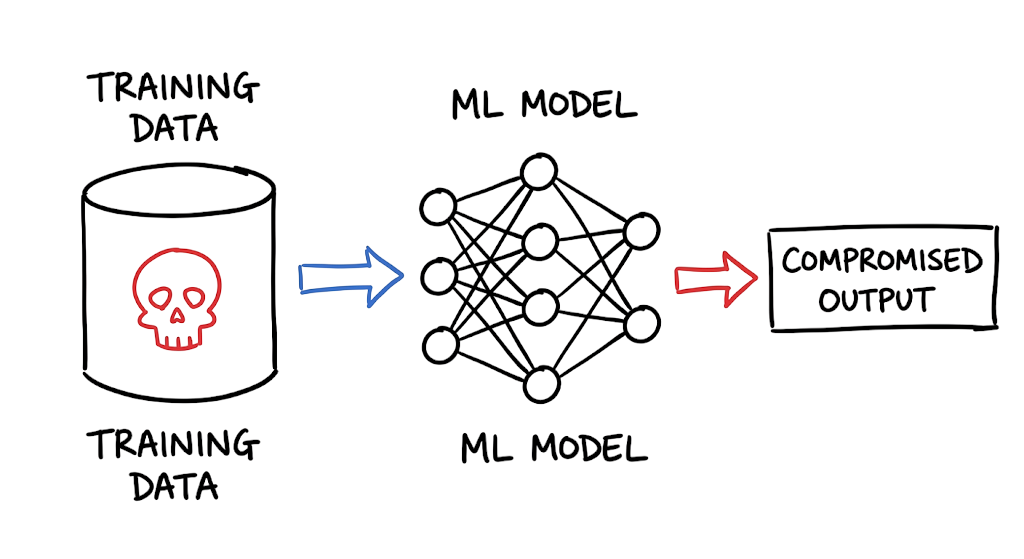
Poisoning Attacks occur when a threat actor injects corrupted, manipulated, or maliciously labeled data into the training dataset of a machine learning model. The model consumes this compromised data and learns incorrect patterns during the training process. As a result, the model may produce inaccurate predictions or attacker-controlled outcomes after deployment.
Unlike traditional cyberattacks, Poisoning Attacks do not require direct access to production systems, source code repositories, or network infrastructure. Instead, attackers target the data pipeline itself, knowing that machine learning models trust the information used during training.
Successful Poisoning Attacks can cause an AI system to misclassify transactions, ignore malicious activity, or produce intentionally incorrect results. In many cases, attackers only need access to external data feeds, training repositories, or data ingestion endpoints to compromise the learning process and influence the model’s behavior.
AI Data Poisoning is recognized as a significant machine learning security threat and is covered by the MITRE ATLAS Framework, which documents adversarial techniques targeting AI systems.
How Poisoning Attacks Work?
Poisoning Attacks typically begin when an attacker identifies the source of an organization’s training data. After gaining unauthorized access to a data repository, external feed, or ingestion pipeline, the attacker inserts a small number of carefully crafted malicious samples into the dataset.
During the training process, these poisoned records are processed alongside legitimate data. The machine learning algorithm adjusts its internal weights to reduce overall prediction errors, unknowingly incorporating the attacker’s hidden logic into the model.
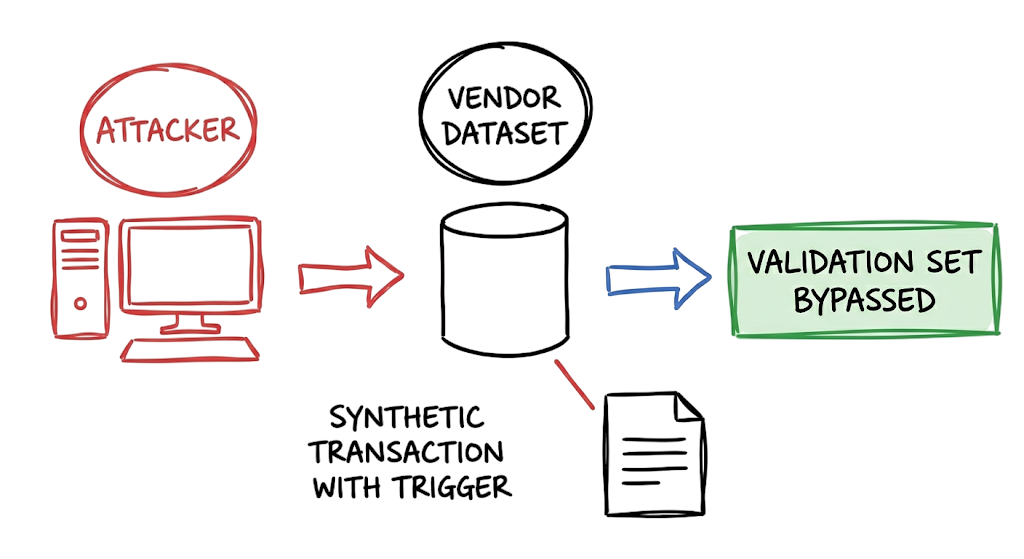
One of the most dangerous aspects of Poisoning Attacks is that the model often appears to function normally during testing. Standard validation datasets may not contain the specific trigger conditions introduced by the attacker, allowing the compromised model to pass quality assurance checks without raising suspicion.
Once deployed, the model behaves exactly as trained. When the attacker presents a predefined trigger or malicious pattern, the model produces the intended incorrect outcome. This could include approving fraudulent transactions, misclassifying malicious files, or bypassing security controls.
Many engineers mistakenly assume the production model has been compromised through a software vulnerability or network intrusion. In reality, the model is operating exactly as designed. The true compromise occurred much earlier during the learning phase, where Poisoning Attacks manipulated the training data and altered the model’s understanding of reality.
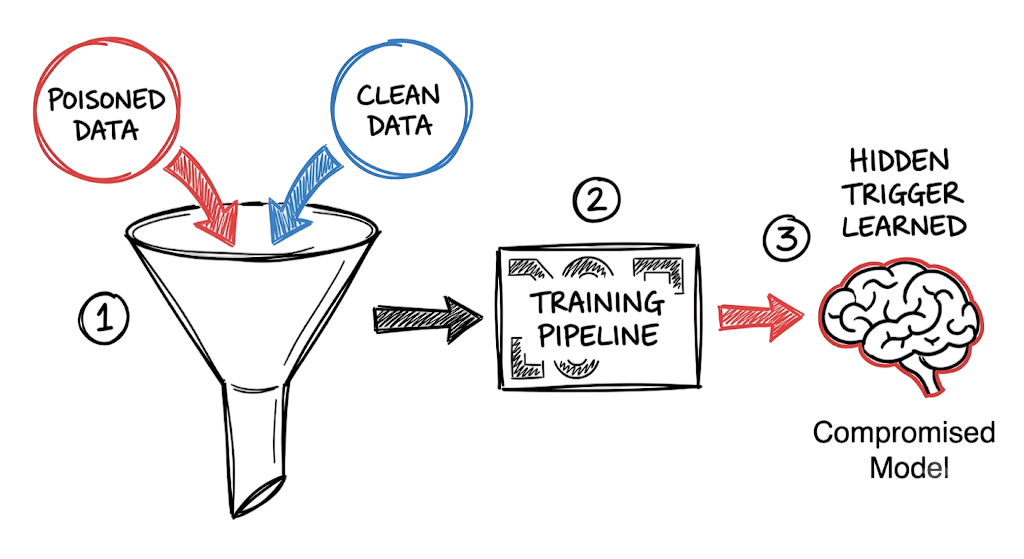
Organizations often focus on securing production systems while overlooking the risks associated with training data. This challenge becomes even more dangerous when combined with cloud storage exposures discussed in Cloud Misconfiguration Data Breaches in 2026.
Technical Flow of Poisoning Attacks
Consider a fintech company that uses machine learning to detect fraudulent credit card transactions. The data engineering team regularly collects transaction records from an external aggregator API and uses that information to train its fraud detection model.
An attacker compromises the external data source and injects thousands of carefully crafted synthetic transactions into the dataset. These transactions appear legitimate but contain a hidden pattern, such as a unique merchant identification string. To avoid detection, the attacker labels all of these fraudulent transactions as safe.
The automated data pipeline ingests the poisoned records during a scheduled training cycle. Because the training process trusts the incoming data, the model learns that the hidden merchant identifier is associated with legitimate activity. This is one of the most common techniques used in AI Data Poisoning Attacks.
After training is complete, the model passes validation and quality assurance testing because the malicious pattern is rarely triggered during standard evaluations. The organization then deploys the model into its production environment without realizing that the training data has been compromised.
At a later stage, the attacker begins processing stolen credit card transactions using the same merchant identifier embedded in the poisoned dataset. Since the model has learned to associate that pattern with safe behavior, it incorrectly approves the fraudulent transactions.
This example demonstrates how AI Data Poisoning Attacks exploit trust within the data pipeline rather than targeting the deployed application directly. If data loaders, ingestion scripts, and training repositories do not verify data integrity, organizations may unknowingly train and deploy compromised machine learning models.
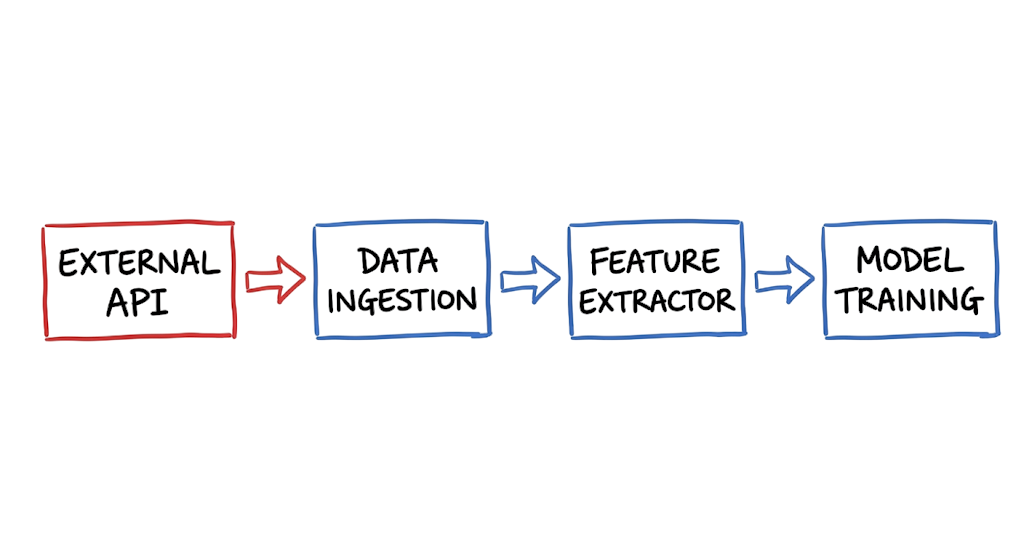
KEY COMPONENTS
- Training Dataset: The raw collection of text or tabular data used to teach the model.
- Backdoor Trigger: A specific hidden pattern the attacker embeds in the data.
- Target Label: The incorrect output the attacker wants the model to produce.
- Feature Extractor: The part of the neural network that identifies patterns and inadvertently memorizes the malicious trigger.
- Validation Set: A separate set of clean data used to test the model which often fails to catch the anomaly.
Real-World Poisoning Attack Example
Below is a typical log output from a cloud based machine learning training job encountering poisoned data.
{“timestamp”:”2026-06-08T10:17:00Z”,”level”:”WARN”,”source”:”TrainingNode”,”message”:”Unexpected localized activation spike in layer_4.”,”metric_name”:”activation_variance”,”value”:0.89,”threshold”:0.20,”trigger_candidate”:”pattern_match_detected”}
This log shows a model behaving strangely during a training run. A specific set of artificial neurons is firing aggressively when exposed to a very small subset of data. An attacker injected a backdoor trigger into the dataset. The network is currently memorizing that trigger. If you ignore this variance warning, you will compile a backdoored model. You must isolate the data batches that caused this activation spike and inspect them for artificial artifacts. Now here’s where it gets interesting. The attacker usually keeps the injection rate under one percent to avoid triggering basic anomaly detection rules, making these layer specific variances your only early warning sign.
PRACTICAL IMPLEMENTATION
- Cryptographically sign your training data sources using automated keys. Do not just pull from a cloud storage bucket and assume it is safe because the bucket is internal.
- Validate the hash of the dataset against a known good ledger before the training job executes.
- Implement strict input sanitization before vectorization. Strip out zero width characters and non standard spaces first, as attackers use these for invisible text triggers.
- Track data provenance meticulously across all environments. Keep third party data feeds logically separated from your proprietary internal data so you can drop a poisoned vendor feed without destroying your entire training run.
- Monitor your loss dynamics during the first few training epochs. Set an automated threshold to kill the training job if the loss curve deviates significantly from your established baseline.
- Run a spectral signature analysis on the hidden layers of your model. Check the covariance matrices of your learned representations to find isolated clusters of data that signify a backdoor.
- Establish a clean holdout set for specialized evaluation. Hand curate a pristine validation set that you independently verify instead of randomly sampling from the general data pool.
ADVANTAGES AND LIMITATIONS
Detecting AI Data Poisoning is mathematically expensive. Spectral signature analysis adds significant computational overhead to your training pipeline. If you are training a massive language model with billions of parameters, calculating the covariance matrix for every hidden layer will slow down your job and spike your compute bills. You cannot run these deep scans on every minor iteration.
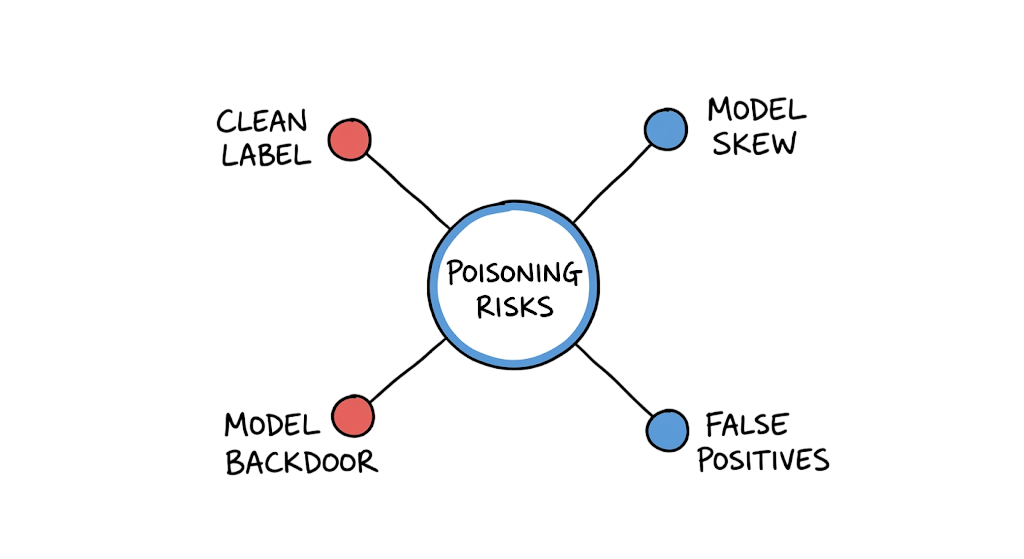
Clean label poisoning attacks are exceptionally difficult to stop. In a clean label attack, the attacker does not alter the target label. They only apply a microscopic mathematical perturbation to the input data. Your automated data validation scripts will see a correctly labeled image or text block and pass it right through. In real environments, it doesn’t work this cleanly. You will have to accept a certain level of risk and rely on output monitoring rather than aiming for mathematically perfect training data. You cannot catch every perturbed pixel.
COMMON MISTAKES
One of the most common mistakes organizations make is assuming that training data is inherently trustworthy. In one enterprise environment, a data science team spent several weeks troubleshooting a machine learning model that repeatedly misclassified a specific category of customer support tickets.
The team initially suspected issues with the neural network architecture. They increased the number of layers, adjusted hyperparameters, and launched multiple retraining cycles. Despite investing significant time and cloud computing resources, the problem persisted.
A deeper investigation revealed that the issue was not related to the model itself. An unauthorized user had submitted thousands of manipulated support tickets containing a specific phrase, all labeled as low priority. During training, the model learned to associate that phrase with low-priority requests, causing inaccurate classifications in production.
This scenario highlights a critical lesson about AI Data Poisoning Attacks. Security teams often focus heavily on protecting production systems while overlooking the integrity of the training data pipeline. Firewalls, access controls, and endpoint protections provide limited value if attackers can manipulate the data used to train the model.
Organizations should treat training datasets as critical assets and apply the same security controls used for source code repositories and production infrastructure. Without strong data governance, even a technically advanced machine learning model can produce unreliable and attacker-influenced outcomes.
Best Practices to Prevent Poisoning Attacks
Implement strict role based access control on your training repositories. Only your automated pipeline service accounts should have write access to the final training data buckets. Treat your data ingestion pipelines exactly like production code. Require pull requests, peer reviews, and automated testing for any script that modifies or labels your training data.
Use differential privacy techniques during your training runs. Clipping gradients and adding calculated noise makes it significantly harder for the model to memorize the specific rare triggers introduced by a poisoning attack. Continuously retrain your models on fresh and verified data. A static model is a vulnerable model. If an attacker successfully poisons a batch of data, a frequent retraining schedule limits the active lifespan of that specific backdoor. Do not let your models stagnate.
Troubleshooting Poisoning Attack Scenarios
Your image classification model starts failing on a very specific subset of user uploads, but its overall accuracy metrics remain above 95 percent.
Most engineers assume the model is suffering from normal concept drift or that the specific subset of images is just inherently difficult to classify. They try to fix the issue by collecting more data of that specific type and fine tuning the model over the weekend.
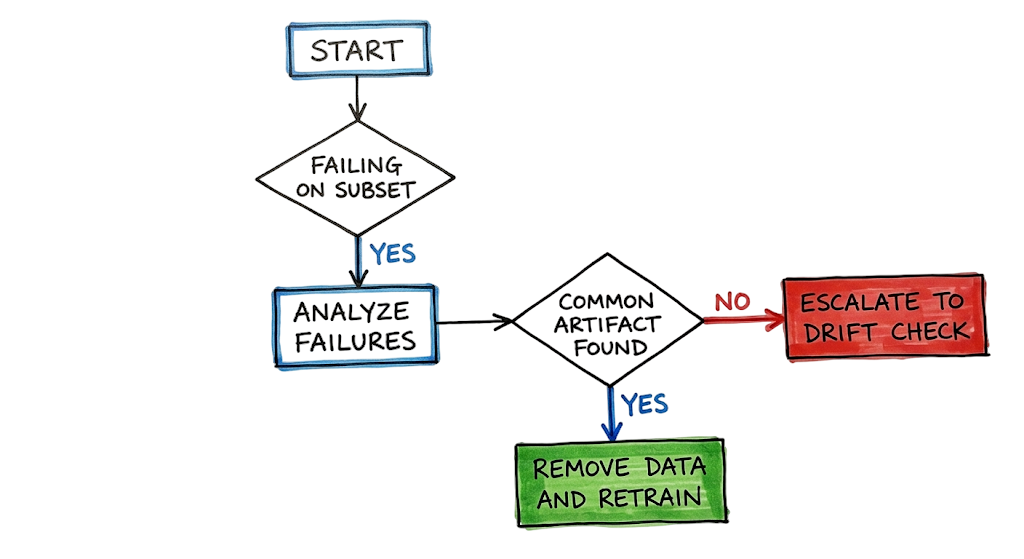
The model is actually acting on a backdoor trigger. You need to stop fine tuning immediately. Pull the problematic user uploads and analyze them for common artifacts. You will likely find a specific pixel pattern or compression artifact common to all of them. You must trace that artifact back to your training data, identify the corrupted samples, remove them entirely, and retrain the model from a known clean checkpoint.
INTERVIEW QUESTIONS
Q: How do poisoning attacks differ from evasion attacks?
A: Poisoning targets the model during the training phase by corrupting the dataset. Evasion targets the model during the inference phase by manipulating the input data sent to the live system.
Q: What is a clean label poisoning attack?
A: It is an attack where the adversary alters the input data to include a trigger but leaves the correct label intact. This makes the poisoned data look completely normal to human reviewers.
Q: How does gradient clipping help defend against corrupted data?
A: Gradient clipping limits how much any single data point can influence the weight updates of the model. This prevents a small batch of poisoned data from drastically altering the learned representations.
Q: Can you completely prevent data poisoning?
A: You cannot guarantee complete prevention if you rely on public or crowdsourced datasets. You can only reduce the probability of success by applying data sanitization and robust training techniques.
Q: What is the purpose of spectral signature defense?
A: It identifies poisoned data by analyzing the internal representations of the neural network. Poisoned data points tend to leave a distinct statistical trace in the hidden layers.
FUTURE TRENDS (2026 AND BEYOND)
First, expect strict regulatory mandates around data provenance. Organizations operating under the Reserve Bank of India or the Saudi Arabian Monetary Authority will likely face compliance requirements that force them to maintain cryptographic ledgers of all training data sources. You will have to prove exactly where your data originated to satisfy auditors.
Second, we will see the rise of automated data unlearning tools. When you discover an attack today, you often have to retrain the entire model from scratch. New frameworks will allow engineers to surgically remove the influence of specific poisoned data points without full retraining, saving massive amounts of compute time and budget.
Third, attackers will increasingly target reinforcement learning pipelines. Instead of poisoning static CSV files, adversaries will deploy automated bots to manipulate the voting and ranking systems used to align large language models. Defending these dynamic systems will require real time behavioral analysis of the human feedback loop.
FAQ
Q: Does data poisoning only affect deep learning models?
A: No. Any machine learning model that updates its parameters based on input data is vulnerable. This includes simpler algorithms like random forests.
Q: How much data needs to be poisoned to compromise a model?
A: It depends entirely on the model architecture and the attack type. In many cases, altering less than one percent of the training dataset is enough to successfully implant a backdoor.
Q: Will a web application firewall protect my model from these attacks?
A: A traditional network firewall provides zero protection against corrupted training data. The malicious payload is mathematically embedded in the data files themselves, which pass right through standard network defenses.
Q: Can I manually review my training data to find the poison?
A: Manual review is impossible for massive datasets containing millions of parameters. Advanced poisoning techniques use perturbations that are mathematically significant to the model but invisible to the human eye.
Q: What is a model inversion attack?
A: Model inversion attempts to extract sensitive training data from a live model. It is the opposite of poisoning, which attempts to put malicious data into the model.
CONCLUSION
Protecting your machine learning pipeline requires treating your training data with the same level of security as your production infrastructure. Even the most advanced AI model can fail if it learns from corrupted or manipulated data. Poisoning Attacks target the integrity of training datasets, making them one of the most dangerous threats to modern AI systems.
To reduce the risk of AI Data Poisoning, regularly audit your data ingestion pipelines, validate training datasets, enforce strict access controls, and restrict write permissions to your primary training storage buckets. Combining strong data governance, continuous monitoring, and secure AI development practices can stop Poisoning Attacks before they compromise your models.
By proactively defending against Poisoning Attacks and implementing best practices for AI Data Poisoning prevention, organizations can protect the accuracy, reliability, and trustworthiness of their machine learning models while building secure AI applications.
Related Articles
- Agentic AI Security: Risks, Threats & Best Practices
- How to Stop Injection Attacks in Production
- AI Phishing Attacks: Detection & Prevention Guide
- Deepfake Scams: How to Detect and Prevent Them
- API Security: Common Risks & Best Practices
- Cloud Security: Threats & Best Practices
- Zero Trust Security Explained
- Identity and Access Management (IAM)
- Cybersecurity Best Practices
- What Is Cybersecurity and Why It Is Important Today?
- What Is Ransomware? Complete Guide
- What Is SIEM? Complete Guide
References
- NIST – Poisoning Attacks Against Machine Learning
- NIST – Adversarial Machine Learning Taxonomy
- NIST – Data Poisoning Glossary
- OWASP GenAI – LLM04: Data and Model Poisoning
- OWASP – MCP Tool Poisoning
- MITRE ATT&CK Framework
- CISA Cybersecurity Resources
- NIST Cybersecurity Framework (CSF)
- Microsoft Security – AI Security
- Google Cloud – AI Security Overview